

Last updated: October 2026 | Researched and reviewed by Daniel Etheridge, CRNA
If you are considering Union University’s CRNA program, this article will give you the information you need: cost, admission requirements, deadlines, and outcomes.
Union’s Nurse Anesthesia Track is a 36-month, 97-credit entry-level BSN-to-DNP in Jackson, Tennessee, about halfway between Memphis and Nashville. It is a front-loaded hybrid: the core DNP courses run online, while your first year of anesthesia training happens in person on the Jackson campus, followed by two years of clinical rotations.
This is a competitive seat. Union averages 300 applications a year, interviews about 100, and accepts 30 to 34. The Class of 2025 passed the National Certification Exam at 93% on the first attempt against a national average of 83.2%, and every graduate was employed within six months.
Key Takeaways
- 36 months, 97 credits, DNP
- Fall start in Jackson, TN
- $45,528/yr tuition and fees
- Final deadline Jan 15, 2027
- CCRN + 40 shadow hours required
- 1 year ICU; NICU and PICU count
- 93% first-time pass (2025)
- No GRE required
Union University Nurse Anesthesia Program Quick Facts:
| Degree | DNP (entry level, BSN to DNP), Nurse Anesthesia Track |
| Length | 36 months, 97 credits, full-time |
| Location | Jackson, TN |
| Class starts | Fall (August), one cohort per year |
| Application deadline | Rolling; priority October 1, final January 15 (next: January 15, 2027 for the August 2027 cohort) |
| Class size | 30–34 students accepted (from ~300 applications) |
| Cost | $45,528 per year tuition + mandatory fees (2026-27); ≈$136,000 over 3 years (estimate) |
| GRE / CCRN | GRE not required · CCRN REQUIRED at application |
| ICU requirement | 1 year within the last 3 years (by matriculation); SICU, CTICU, CCU, MICU, PICU, NICU, flight accepted |
| Clinical sites | 37 sites |
| Accreditation | COA 10-year reaccreditation in 2022; next review spring 2032 |
One of 9 CRNA Schools in Tennessee
Union is one of 9 accredited CRNA programs in Tennessee and the only one between Memphis and Nashville. The nearest alternatives are the University of Tennessee Health Science Center in Memphis, about 85 miles west, and the Nashville-area programs at Vanderbilt and the Middle Tennessee School of Anesthesia.
Union also offers DNP completion options for practicing CRNAs. Those are different programs. Everything on this page covers the entry-level BSN-to-DNP track.
Union University CRNA Program Overview
Union is a private Christian university in Jackson. The anesthesia track is intentionally face-to-face during the first year: you are on campus for the sciences, anesthesia basics, simulation, and workshops, including more than 60 hours of whole-cadaver dissection in gross anatomy. Each first-year student is paired with a faculty mentor.
The program is accredited by the Council on Accreditation of Nurse Anesthesia Educational Programs (COA). It earned a 10-year reaccreditation in 2022 and is fully accredited through 2032, with its formal review scheduled for spring 2032. A 10-year award is the longest the COA gives.
Union University CRNA Program Admission Requirements
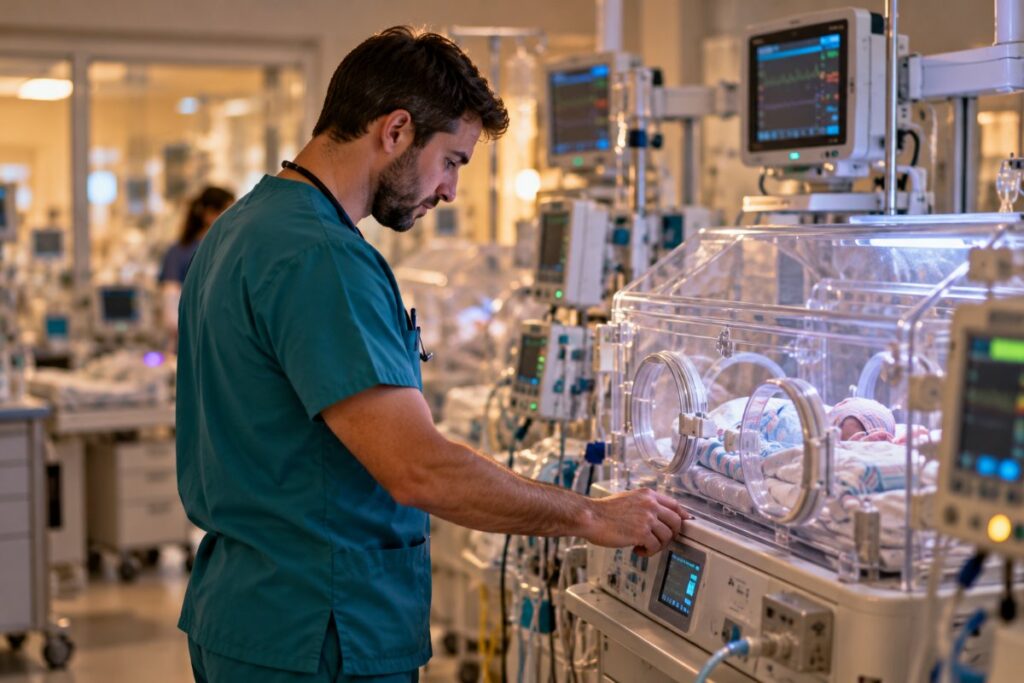
To be considered for the Union nurse anesthesia track, you will need:
- A BSN from an accredited program and an unencumbered RN license
- A GPA of at least 3.0 for your last 60 hours, and a science GPA of 3.0 (A&P I and II, General Chemistry I and II, and Statistics)
- One year of critical care experience within the last 3 years, not counting orientation
- Current CCRN certification — required at application and kept valid until school starts
- A minimum of 40 hours of shadowing, completed and documented at the time of application
- Experience as a preceptor
- Three letters of reference (up to four), one from your current supervisor — a manager or director, not a charge nurse
- A personal statement, resume, and an in-person interview in Jackson
Charge nurse experience and unit leadership work (policy development, practice change or evidence-based practice projects, teaching BLS/ACLS/PALS) are listed as preferred.
The critical care list is generous: surgical ICU, cardiothoracic ICU, coronary ICU, medical ICU, pediatric ICU, neonatal ICU, and flight nursing all count. Other backgrounds can be considered if you can show competence with unstable patients, invasive monitoring, ventilators, and critical care pharmacology. Emergency room, cath lab, stepdown, and rapid response experience do not count. If you do not have your full year when you apply, you must have it by the time you start.
The GRE is not required. Union’s own wording: “Although the GRE is not required, it can only help an applicant demonstrate their ability for Graduate level work.”
The 40-hour shadowing requirement is the heaviest in Tennessee, so start early. Shadow days are hard to schedule around ICU shifts, and 40 hours is five full days in the OR. Union recommends shadowing in more than one practice setting, including a CRNA independent practice site.
Application Dates and Deadlines
Applications go through NursingCAS and open each August for the cohort that starts the following August. Union uses rolling admission with two deadlines: a priority deadline of October 1 and a final deadline of January 15. In-person interviews are held on the Jackson campus a few weeks after each deadline.
For the August 2027 cohort, the October 1, 2026 priority date has passed, so the remaining deadline is January 15, 2027. Seats are filled from the priority interviews first, and the rest go to final-deadline interviewees. If you interview in the priority round and are denied, you are out for that cycle. Applications that come in after January 15 do not carry over to the next year.
Union asks you to submit your NursingCAS application at least 3 to 4 weeks before the deadline so it can be verified in time. Fees are $90 for NursingCAS plus a $50 Union application fee. Your CCRN and 40 shadowing hours must be done before you submit — both are application requirements, not things you can finish later.
Union University CRNA Program Tuition and Cost
Union bills by term, not by credit. From the university’s own cost of attendance sheet for incoming 2026-27 students:
- Tuition: $44,553 per year (fall, spring, and summer terms)
- Mandatory fees: $975 per year
- Total direct costs: $45,528 per year — roughly $136,000 in tuition and fees across the three years (our estimate; Union publishes annual figures, not a program total)
Union is private, so there is no in-state or out-of-state distinction. Everyone pays the same rate, and rates are set for each incoming class.
The same sheet estimates indirect costs — housing, food, books and supplies, required extras like drug screens and background checks, loan fees, and personal expenses — at about $43,300 a year. Your actual living costs will vary, but it is a useful planning number.
The return supports the investment. Nurse anesthetists earned a national average of $248,320 per year as of May 2025 (BLS).
Clinical Rotations and Training Sites
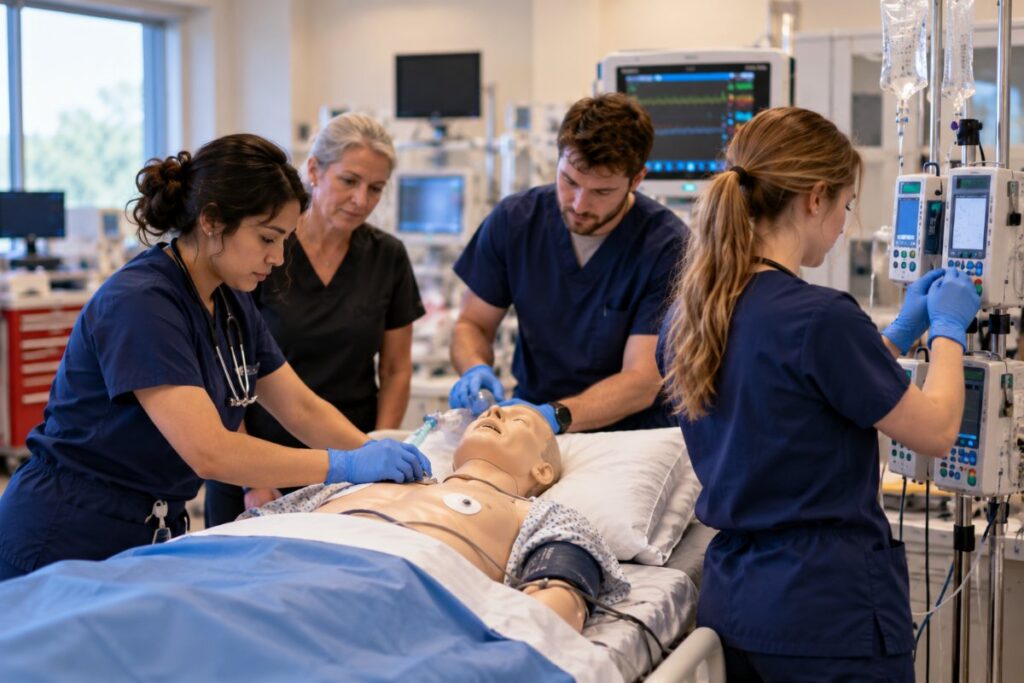
Union lists 37 clinical sites, including Level 1 trauma centers and rural all-CRNA groups. Here is how the three years run:
- Year 1: on campus in Jackson for sciences, anesthesia basics, simulation, and workshops
- Year 2: clinicals three days a week on two-month rotations, back on campus one day a week for obstetric, pediatric, cardiac, and neuro anesthesia courses; DNP projects begin
- Year 3: specialty rotations in cardiac, obstetrics, pediatrics, trauma, and regional anesthesia, four days a week or on call, with workshops on campus every Friday
Union does not publish its site names, so ask for the current list at your interview, along with how sites are assigned and how far the distant ones are from Jackson. With that many sites for each cohort, expect variety in settings — and expect to travel for some rotations.
Pass Rates, Attrition, and Employment
Union publishes its achievement rates on the program page. The Class of 2025 passed the NCE at 93% on the first attempt — the national average was 83.2% — and 96.4% with retakes. Employment within six months was 100%.
Union has also posted unofficial numbers for the Class of 2026: 82% on the first attempt and 92.9% with retakes, with 100% employment. The national average for that year was not yet available. Ask the program for the official figures once they are final.
Attrition runs low: 0% for the Class of 2027, 7% for 2028, and 0% for 2029 so far.
Living in Jackson While Attending Union

Jackson is a small city, and it is an affordable place to spend three years of school. One-bedroom apartments run about $950 a month (Zumper, October 2026). Memphis and Nashville are each about 90 minutes away on I-40.
Union strongly encourages students to live in Jackson or within about 60 miles for at least the first year, because long commutes eat into study time. It is also a Christian university, and the program describes itself as Christ-centered. Faculty offer to pray with students and their families. Factor that into your fit assessment either way.
Is the Union University CRNA Program Right for You?
Union is a great fit if you:
- Already hold your CCRN and have your shadowing hours banked
- Come from NICU, PICU, or flight nursing — all on Union’s accepted list
- Have one year of ICU experience and don’t want to wait for a second
- Would rather skip the GRE
- Want a hands-on, in-person first year with cadaver anatomy and a faculty mentor
- Want a faith-based campus environment
- Live in West Tennessee and want a program between Memphis and Nashville
Consider other options if you:
- Do not yet have the CCRN — it is required at application here
- Cannot log 40 shadowing hours before you apply
- Have never precepted another nurse
- Need a start date other than August — Union runs one fall cohort a year
- Cannot relocate near Jackson for the first year
- Want a public-university price point with an in-state discount
Frequently Asked Questions
Is Union University a good CRNA program?
Union’s Class of 2025 passed the NCE at 93% on the first attempt against a national average of 83.2%, with 100% employment within six months. Unofficial Class of 2026 results are 82% first-time and 92.9% with retakes. Attrition has run between 0% and 7% in recent cohorts, and the COA gave the program its maximum 10-year reaccreditation in 2022.
How much does the Union CRNA program cost?
Direct costs for incoming 2026-27 students are $45,528 per year — $44,553 tuition plus $975 in mandatory fees, billed across fall, spring, and summer terms. Over the 36-month program that comes to roughly $136,000 in tuition and fees. Everyone pays the same rate at this private university.
When is the Union CRNA application deadline?
Union has a priority deadline of October 1 and a final deadline of January 15 each year for the cohort starting the following August. For the August 2027 class, the remaining deadline is January 15, 2027.
How hard is it to get into Union’s CRNA program?
Union averages 300 applications, interviews about 100, and accepts 30 to 34 students each year — roughly one seat per nine applicants. A 3.0 GPA is the floor; the CCRN, 40 shadowing hours, preceptor experience, and a strong supervisor reference are all required.
Does Union require the GRE or CCRN?
No GRE. The CCRN is required at the time of application and must stay current through matriculation.
What ICU experience does Union accept?
One year of critical care, not counting orientation, within the last 3 years and in place by the time you start. Surgical, cardiothoracic, coronary, medical, pediatric, and neonatal ICU all count, along with flight nursing. ER, cath lab, stepdown, and rapid response experience do not.
Next Steps
If you are targeting the August 2027 cohort, get your CCRN in hand, finish your 40 shadowing hours, and submit through NursingCAS well before January 15, 2027. Questions go to graduate admissions: Amy Joyner at ajoyner@uu.edu or 731-661-5028.
You can compare all Tennessee CRNA programs side by side, or look at nearby programs in Mississippi and Arkansas. You can also compare programs in every state on our CRNA Schools by State page.
Contact the Program
Union University — Nurse Anesthesia Track
Program Chair: Molly Wright
Graduate Admissions: Amy Joyner · ajoyner@uu.edu · 731-661-5028
Nurse Anesthesia Coordinator: Khadija Payne · kpayne@uu.edu · 731-661-5124
Official page: uu.edu — Nurse Anesthesia Track
Cost sheet: Union nursing cost of attendance
Accreditation: Council on Accreditation (COA) · Salary data: BLS OEWS, May 2025