

Last updated: October 2026 | Researched and reviewed by Daniel Etheridge, CRNA
If you are considering the University of Tennessee, Knoxville’s CRNA program, this article will give you the information you need: cost, admission requirements, deadlines, and the details that set this program apart.
UT Knoxville’s Nurse Anesthesia Concentration is a 38-month entry-level BSN-to-DNP with a small cohort of 17 students starting each summer. The last three cohorts posted first-time NCE pass rates of 100%, 100%, and 93.7%, with 100% employment within six months every year.
Two details deserve your attention before you apply. The deadline is September 1 for the following summer’s start. And the ICU requirement is adult-only: the program states plainly that pediatric ICU experience does not count, and you must be working in an adult ICU when you apply.
Key Takeaways
- 38-month BSN-to-DNP, summer start
- 17 students per cohort
- Deadline: September 1 each year
- 1 year of adult ICU required
- PICU, ED, PACU, OR don’t count
- GRE only if nursing GPA < 3.3
- CCRN required before you start
- ≈$97K in-state (our estimate)
UT Knoxville Nurse Anesthesia Program Quick Facts:
| Degree | DNP (entry level, BSN to DNP) |
| Length | 38 months, full-time, year-round |
| Location | Knoxville, TN (hybrid: on campus plus online) |
| Class starts | Summer (late May/early June) |
| Application deadline | September 1 for the following summer |
| Class size | 17 students |
| Cost | ≈$97,000 in-state / ≈$185,000 out-of-state, tuition and fees (our estimate at Fall 2026 rates) |
| GRE / CCRN | GRE only if nursing GPA < 3.3 · CCRN required before program start |
| ICU requirement | 1 year current, full-time ADULT critical care; ED, PACU, OR, PICU excluded |
| Accreditation | COA 10-year continued accreditation (2024); next onsite review spring 2034 |
One of 9 CRNA Schools in Tennessee
UT Knoxville is one of 9 accredited CRNA programs in Tennessee and one of three in the Knoxville area, alongside South College and Carson-Newman University. It is also one of three University of Tennessee system programs, with UT Chattanooga and the UT Health Science Center in Memphis. They are three separately accredited programs, each with its own requirements and deadlines, so don’t confuse them when you apply.
UT Knoxville CRNA Program Overview
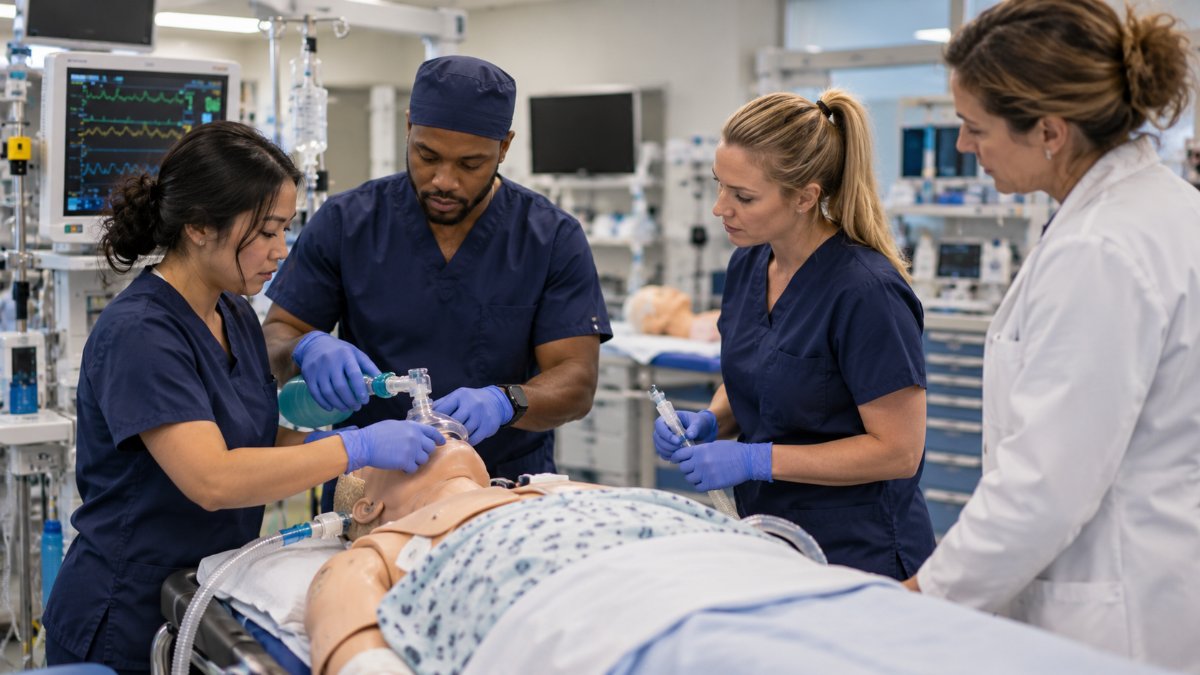
The program runs full-time and year-round as a hybrid: on-campus work in Knoxville combined with online synchronous and asynchronous coursework. UT’s application portal actually files it under distance education, but don’t read that as remote. You are required to live in the Knoxville area by the summer start, because that is where most of the clinical sites are.
The curriculum covers general and regional anesthesia across general surgery and the specialty areas, including neuro, cardiovascular/thoracic, obstetrics, and pediatrics, with simulation built in alongside clinical time. The program of study effective Fall 2026 adds up to 122 credit hours over ten terms.
In 2024 the program earned the maximum 10-year continued accreditation from the Council on Accreditation of Nurse Anesthesia Educational Programs (COA), with the next onsite review scheduled for spring 2034. The COA approved the program to award the DNP for entry into practice in June 2019.
UT Knoxville CRNA Program Admission Requirements
To be considered for the UT Knoxville nurse anesthesia concentration, you will need:
- A BSN from an accredited program and an unencumbered US RN license
- A cumulative GPA of 3.5 or above (recommended; this is a competitive 17-seat cohort)
- At least one year of current, full-time adult critical care experience, and you must be working in an adult ICU when you submit your application
- CCRN certification before the program start date; admission is contingent on it
- Three recommendations with specific roles: a former nursing professor, your immediate ICU supervisor who completes your evaluations, and an attending physician who works directly with you in the ICU
- Current BLS, ACLS, and PALS before matriculation
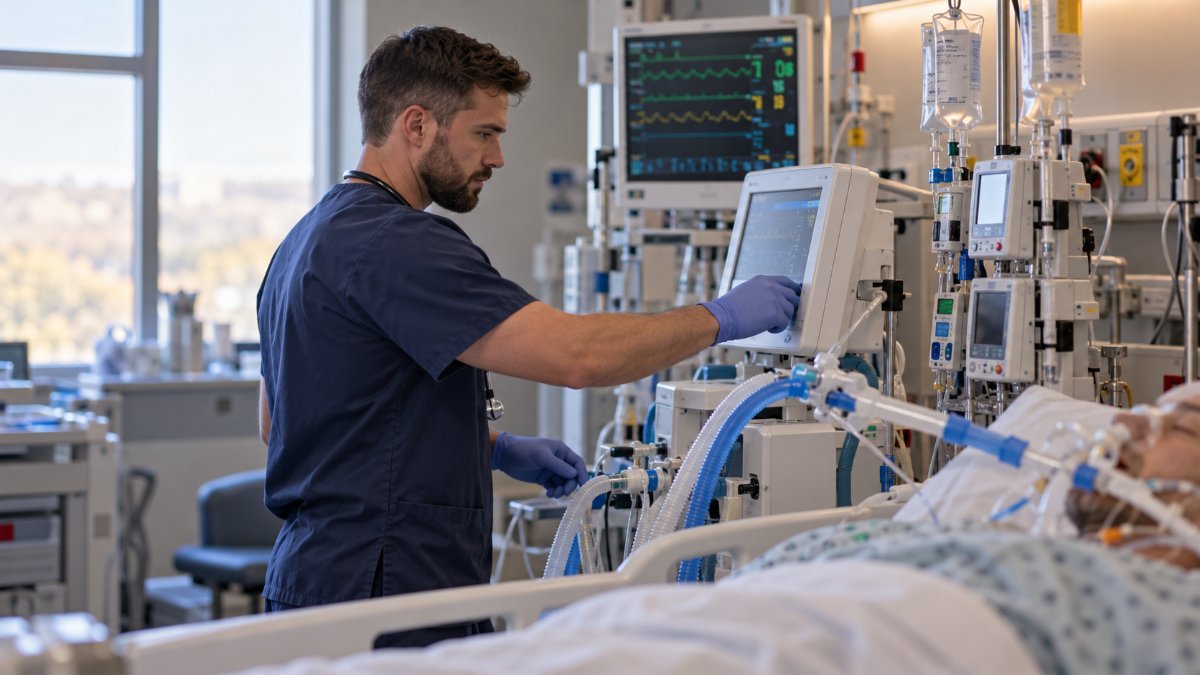
Read the ICU list carefully. Examples of accepted units: surgical ICU, trauma ICU, cardiovascular ICU, medical ICU, and coronary care. The program is explicit that emergency department, PACU, operating room, pediatric ICU, and intermediate care nursery experience do not fulfill the requirement. If your background is PICU or NICU, this is not the right fit. You should be comfortable with ventilators, vasoactive drips, EKG interpretation, and applying hemodynamic values at the bedside.
The GRE rule is conditional: only applicants with a cumulative GPA below 3.3 across all nursing degrees must take it, with a combined 300 and a 3.5 analytical writing score recommended.
The reference list is specific. An attending physician who works with you is not a letter most people have on file, so start those conversations months ahead.
Application Dates and Deadlines
The final application deadline is September 1 each year for the cohort starting the following summer. Initial reviews begin August 1, and the program strongly encourages you to have everything uploaded by then because interview spots are limited. Interview invitations go out in October, interviews are held in mid-November, and admission decisions follow in November.
You apply through UT Graduate Admissions, not NursingCAS. If you are reading this in the fall of 2026, you are looking at the September 1, 2027 deadline for the Summer 2028 cohort. That is plenty of runway to get the CCRN, the attending’s letter, and your ICU documentation in order.
UT Knoxville CRNA Program Tuition and Cost
UTK is a public university, so residency matters. At Fall 2026 graduate rates:
- In-state graduate tuition and fees: $6,966 per full-time semester (9+ credits)
- Out-of-state: $16,231 per full-time semester
- College of Nursing differential tuition: an additional $250 per credit hour
- Estimated program total: roughly $97,000 in-state and $185,000 out-of-state in tuition and fees across the 38 months
UTK does not publish a program total, so treat those numbers as our estimate: the posted Fall 2026 hourly and full-time rates applied to the 122-credit program of study, plus the nursing differential. Rates reset every year, so expect the real total to run a bit higher.
Budget for the usual extras too: books, equipment, board review ($1,500–$3,000), the NCE fee, and licensing. The gap between in-state and out-of-state is large, so if you are coming from another state, ask how Tennessee residency works before you enroll.
The return supports the investment. Nurse anesthetists earned a national average of $248,320 per year as of May 2025 (BLS).
Clinical Rotations and Training Sites
UTK does not publish a clinical site list on the program page. What it does say is that the Knoxville area hosts the majority of clinical sites, which is why you must live there by the summer start. Ask the program for the current site list, how rotations are assigned, and how much travel to expect at your interview.
Pass Rates, Attrition, and Employment
With 17 students per cohort, UTK’s outcomes are easy to read. First-time NCE pass rates: 100% in 2023, 100% in 2024, and 93.7% in 2025, and the 2025 cohort reached 100% with retakes. Attrition was 6%, 6%, and 0% (one student in each of the first two years, none in 2025). Employment within six months: 100% all three years.
Two clean 100% years, a third year that finished at 100% on retakes, and every graduate employed. In a program small enough that faculty know every student by name, that is a strong record.
Living in Knoxville While Attending UTK

Knoxville is a real college city with an affordable cost of living. One-bedroom apartments run about $1,180 a month (Zumper, October 2026). The campus sits along the Tennessee River near downtown.
With the Smokies about an hour away and a downtown that has grown up around the university, it is an easy place to spend three-plus years. The hybrid format also gives you some scheduling flexibility in the didactic phases.
Is the UT Knoxville CRNA Program Right for You?
UT Knoxville is a great fit if you:
- Are working in an adult ICU now and have a strong GPA (3.5+ is the recommended line)
- Qualify for Tennessee in-state tuition
- Want a small cohort where faculty know you
- Want strong outcomes: 100%, 100%, and 93.7% first-time pass rates with 100% employment
- Have a nursing GPA of 3.3 or higher and want to skip the GRE
- Want a hybrid didactic format with online components
- Want the stability of a 10-year COA award through 2034
Consider other options if you:
- Come from PICU, NICU, ED, PACU, or OR; the adult-ICU rule excludes all of them
- Cannot get a letter from an attending physician who works directly with you
- Are out-of-state and price-sensitive; roughly $185,000 is our estimate at non-resident rates
- Can’t relocate to the Knoxville area by the summer start
- Want a published clinical site list before you apply
- Miss the September 1 deadline; there is one cycle a year
Frequently Asked Questions
Is UT Knoxville a good CRNA program?
Its last three cohorts posted first-time NCE pass rates of 100%, 100%, and 93.7% with 100% employment within six months, and the COA granted it the maximum 10-year continued accreditation in 2024. With 17 seats per class, it is small, competitive, and consistent.
How much does the UT Knoxville CRNA program cost?
At Fall 2026 rates, roughly $97,000 in tuition and fees for Tennessee residents and about $185,000 for out-of-state students across the 38-month program, including the $250 per credit nursing differential. UTK does not publish a program total, so these are our estimates from posted rates.
What ICU experience does UT Knoxville accept?
One year of current, full-time adult critical care, such as surgical, trauma, cardiovascular, or medical ICU or coronary care, and you must be working in an adult ICU when you apply. The program explicitly excludes emergency department, PACU, operating room, pediatric ICU, and intermediate care nursery experience.
Does UT Knoxville require the GRE or CCRN?
The GRE only if your cumulative GPA across nursing degrees is below 3.3. The CCRN is required: admission is contingent on holding it before the program start date.
How long is the UT Knoxville CRNA program?
38 months, full-time and year-round, starting each summer in late May or early June. The Fall 2026 program of study totals 122 credit hours.
Next Steps
If you are targeting the Summer 2028 cohort, work backward from September 1, 2027, and aim to be fully uploaded by August 1: CCRN scheduled, adult-ICU hours current, and your three specific recommenders (professor, ICU supervisor, and attending) lined up early. Questions go to volnurse@tennessee.edu or 865-974-4151.
You can compare all Tennessee CRNA programs side by side, or look at nearby programs in Kentucky and North Carolina. You can also compare programs in every state on our CRNA Schools by State page.
Contact the Program
University of Tennessee, Knoxville, College of Nursing, Nurse Anesthesia Concentration
volnurse@tennessee.edu · 865-974-4151
1200 Volunteer Blvd, Knoxville, TN 37996
Official page: nursing.utk.edu, Nurse Anesthesia
DNP admissions: UTK DNP admissions
Tuition: UTK graduate tuition detail
Accreditation: Council on Accreditation (COA) · Salary data: BLS OEWS, May 2025