Last updated: October 2026 | Researched and reviewed by Daniel Etheridge, CRNA
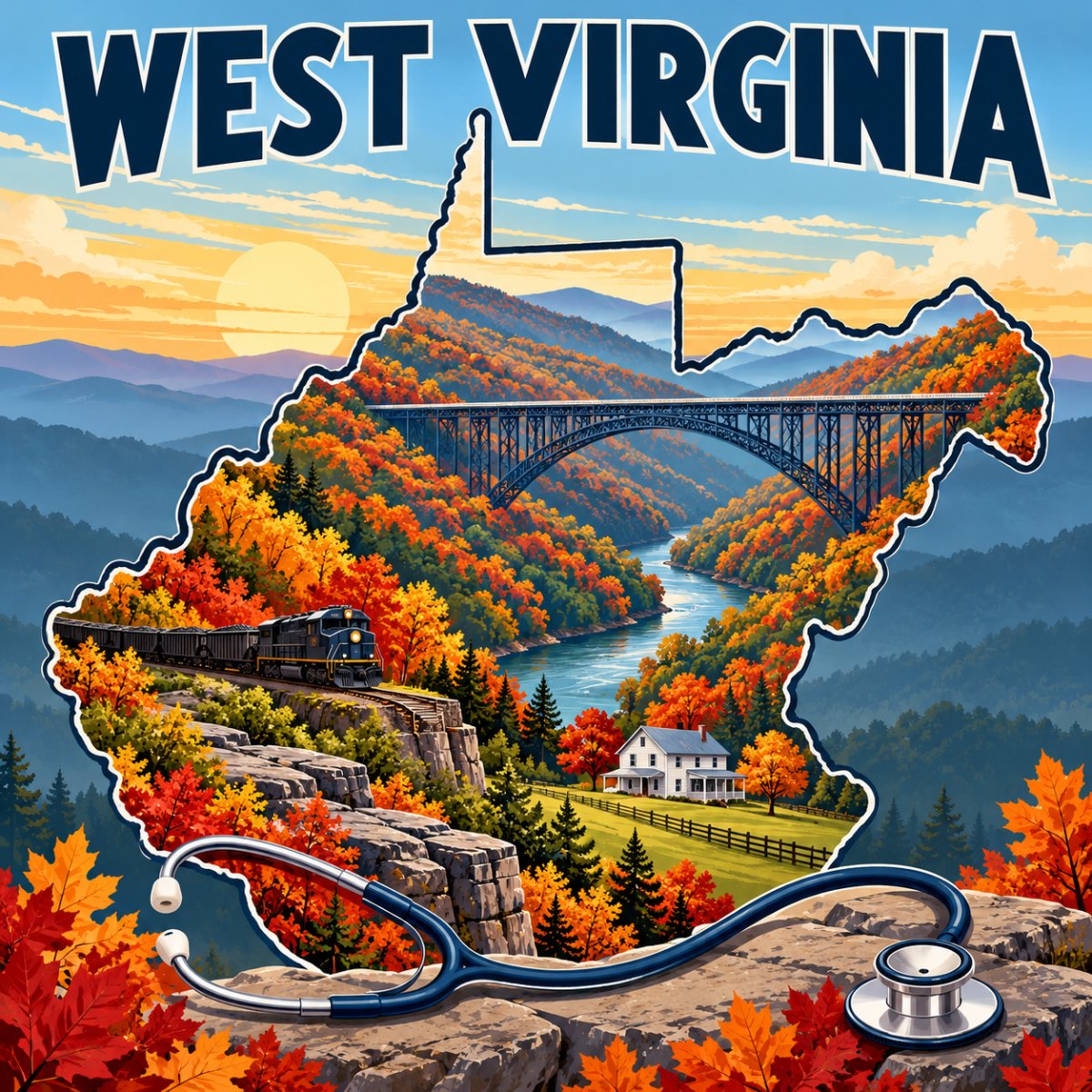
West Virginia has 2 accredited CRNA schools: the Charleston Area Medical Center / University of Charleston DNAP program in Charleston and the West Virginia University Nurse Anesthesia Program in Morgantown. Both are 36-month entry-level doctoral programs, neither requires the GRE or the CCRN, and both applications are open right now.
This page compares the two programs side by side and links to a full guide on each one.
Key Takeaways
- 2 accredited CRNA programs
- Both 36 months, both doctoral
- Neither requires GRE or CCRN
- WVU closes Nov 1, 2026
- CAMC/UC closes Dec 14, 2026
CRNA Schools in West Virginia: Comparison
| School | City | Degree | Length | Tuition + Fees (est.) | Class Size | Deadline |
|---|---|---|---|---|---|---|
| CAMC / University of Charleston | Charleston | DNAP | 36 months | ≈$108,000 (same rate for everyone) | 30 to 32 | December 14, 2026 |
| West Virginia University | Morgantown | DNP | 36 months | ≈$115,000 in-state / ≈$203,000 out-of-state (2026-27 rates) | 15, expanding to 20 | November 1, 2026 |
Cost figures are our estimates of tuition plus mandatory fees at currently posted rates, rounded. Each school’s guide shows the math and what to confirm with the program. Both classes start in Fall 2027.
West Virginia CRNA Program News
- Both applications are open as of October 2026. WVU closes November 1, 2026, and CAMC/UC closes December 14, 2026. Both are for classes starting in Fall 2027.
- WVU is expanding its class from 15 to 20 students. WVU announced the expansion in August 2026, and the COA approved the added capacity (Becker’s ASC). Ask the program which application cycle the larger class starts with.
- WVU earned a 10-year accreditation in 2025. The Morgantown program is accredited by the COA until 2035.
- The Charleston program now grants its degree through the University of Charleston. The first UC class graduates in August 2027, with clinical training still based at CAMC.
- CRNAs no longer need physician supervision in West Virginia. Senate Bill 810, signed April 30, 2025, lets CRNAs give anesthesia in cooperation with a physician, dentist, or podiatrist (AANA).
CAMC / University of Charleston DNAP Program
The Charleston program is a 36-month, in-seat DNAP that runs nine semesters, summers included. Classes start each August, and recent cohorts have admitted 30 to 32 students. Clinical training is based at Charleston Area Medical Center.
Tuition is $35,655 a year, the same for residents and non-residents, which puts tuition and standard fees at about $108,000. You need a BSN with a 3.0 GPA, at least one year of ICU experience, and a current ICU job. Applicants invited to interview must document 8 hours of CRNA shadowing. Read the full CAMC / University of Charleston CRNA program guide.
West Virginia University Nurse Anesthesia Program
WVU’s program in Morgantown is the state’s public option: an 88-credit DNP over nine semesters, accredited until 2035. Cohorts have been 15 students, with an expansion to 20 announced in August 2026. Clinical training starts at Ruby Memorial and spreads to 25 affiliated sites across West Virginia, Pennsylvania, Maryland, and Ohio.
For its August 2025 class, WVU reports a 73% first-time NCE pass rate, a 100% overall pass rate, 100% employment within six months, and 0% attrition. In-state cost is about $115,000 at 2026-27 rates, and out-of-state about $203,000. Read the full WVU CRNA program guide.
How to Qualify for CRNA School in West Virginia
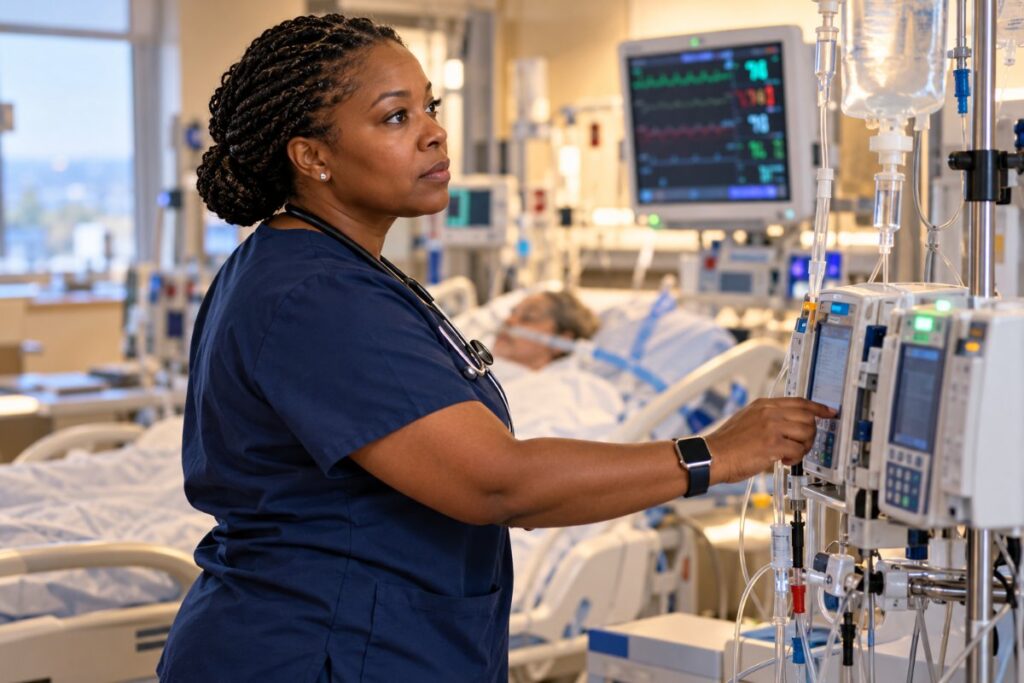
The two programs want similar applicants, with a few differences worth planning around:
- Both require a BSN with a 3.0 GPA and at least 1 year of ICU experience. CAMC/UC requires that you be working in an ICU now. WVU wants current, full-time experience, with 2 to 3 years preferred.
- Neither program requires the GRE or the CCRN. CAMC/UC gives extra points in its first review for certifications like the CCRN.
- WVU does not count ER, PACU, OR, cath lab, IR, or telemetry experience. CAMC/UC uses the COA’s definition of critical care. If your unit is borderline, call and ask.
- CAMC/UC requires 8 documented shadowing hours before your interview. WVU strongly recommends shadowing.
- CAMC/UC wants ACLS, BLS, and PALS at application. WVU wants BLS and ACLS, with PALS before clinicals.
Paying for CRNA School in West Virginia

Federal graduate borrowing for programs like nurse anesthesia is now capped at $20,500 a year and $100,000 lifetime, under the Department of Education rule that took effect July 1, 2026. Both West Virginia programs cost more than that for residents: about $108,000 at CAMC/UC and $115,000 at WVU.
WVU’s non-resident total of about $203,000 is well above the cap. Most students will fill the gap with savings or private loans, so build your budget before you apply.
CRNA Salary and Job Market in West Virginia

Nurse anesthetists earned a national average of $248,320 a year as of May 2025 (BLS). West Virginia has many small and critical access hospitals, and WVU sends its students on rotations to critical access hospitals across the state. The 2025 law removing physician supervision gives CRNAs more room to practice across the state.
Frequently Asked Questions
How many CRNA schools are in West Virginia?
Two: the CAMC / University of Charleston DNAP program in Charleston and the WVU Nurse Anesthesia Program in Morgantown. Both are 36-month, entry-level doctoral programs on the COA’s list of accredited programs.
What is the cheapest CRNA program in West Virginia?
For residents the two are close: about $108,000 in tuition and fees at CAMC/UC and about $115,000 at WVU, at currently posted rates. For out-of-state students, CAMC/UC costs less, because UC charges everyone the same rate while WVU’s non-resident total is about $203,000.
Do West Virginia CRNA schools require the GRE?
No. Neither program lists the GRE in its admission requirements, and neither requires the CCRN. The CCRN can still help: CAMC/UC gives extra points in its first review for certifications like the CCRN.
When are the application deadlines for West Virginia CRNA schools?
WVU’s deadline is November 1, 2026, and CAMC/UC’s is December 14, 2026. Both are for classes starting in Fall 2027. Both applications are open as of October 2026.
Can CRNAs practice independently in West Virginia?
West Virginia removed its physician-supervision requirement in 2025. Under Senate Bill 810, signed April 30, 2025, CRNAs give anesthesia in cooperation with a physician, dentist, or podiatrist rather than under supervision.
Are there CRNA programs near West Virginia?
Yes. The COA lists only the two programs above in West Virginia, but neighboring states have more options. See our guides to programs in Pennsylvania, Ohio, Kentucky, and Maryland.
Next Steps
Start with the guide that fits your location and budget: CAMC / University of Charleston in the south, or WVU in the north. You can also compare every state on our CRNA Schools by State page.
Sources: COA List of Accredited Programs · University of Charleston DNAP · UC cost sheet · WVU DNP Nurse Anesthetist · BLS OEWS May 2025 · AANA on WV SB 810