Tag: How to Become a Nurse Anesthetist With ICU Experience

  • What Experience Do I Need to Become a CRNA?

    What Experience Do I Need to Become a CRNA?

    A CRNA represents one of the most advanced specialties in nursing. For this reason, nurse anesthetists continue to be in demand and many nurses seek to advance their career by becoming a CRNA.

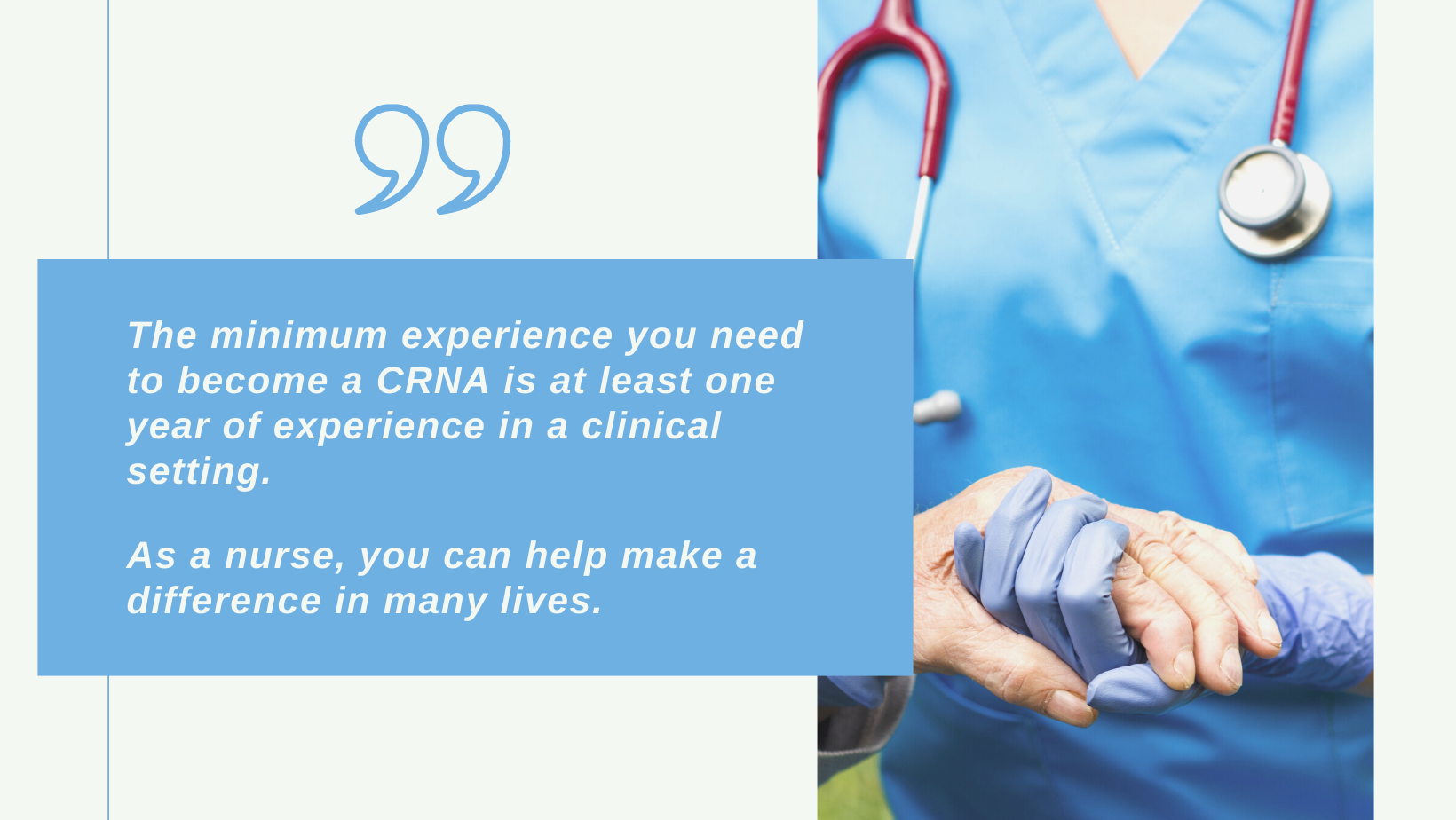
    The minimum experience you need to become a CRNA is at least one year of experience in a clinical setting. Hours of work in critical care areas such as cardiac care units, emergency rooms, or intensive care units are usually required before being accepted into the CRNA program.

    The nursing career is one of the most rewarding careers available. Are you considering a nursing career or advancing your nursing career? Read on.


    https://twitter.com/dan_lovinaria/status/1400515864336678916

    What is a CRNA?

    A CRNA is a registered nurse who administers anesthetics to patients, provides post-surgical care, and monitors their vital signs. CRNAs work in emergency rooms, clinics, outpatient settings, and intensive care units of hospitals. 

    As a CRNA, you’ll need these skills:

    • Interpersonal communication
    • Teamwork
    • Verbal and written communication
    • Emotional intelligence
    • Stamina
    • Organization
    • Time management

    Requirements for Nurse Anesthesia Educational Programs

    What does a CRNA do?

    A CRNA provides critical care through the safe delivery of anesthetics to patients in need of pain management. CRNAs oversee the anesthesia process, monitor vital signs throughout the surgical procedure, and provide specialized care after a surgical procedure. A CRNAs’ daily routine also involves:

    • Requesting diagnostic studies
    • Educating patients about side effects and risks
    • Creating anesthetic plans
    • Examining patient’s medical history. 
    • Administrative duties like managing finances and training staff.

    What are the Steps to Become a CRNA

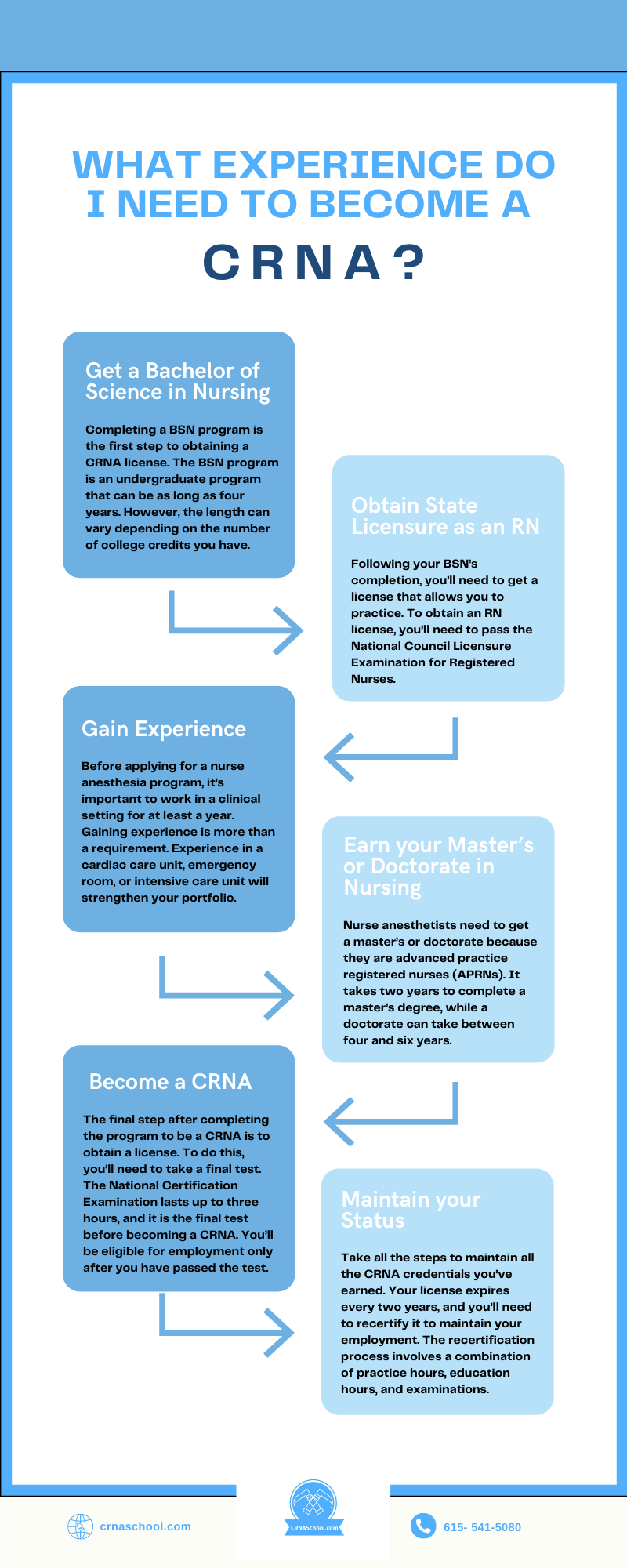
    Earning a CRNA involves several years of schooling. Here are the steps to become a CRNA:

    1. Get a Bachelor of Science in Nursing

    Completing a BSN program is the first step to obtaining a CRNA license. The BSN program is an undergraduate program that can be as long as four years. However, the length can vary depending on the number of college credits you have. 

    The accelerated BSN program is designed for bachelor’s degree holders in unrelated fields. With the accelerated BSN program, you can earn your BSN within 11 months. Maintaining an average grade point of 3.0 is important, especially if you want to later earn a master’s degree. 

    CRNA Requirements

    2. Obtain State Licensure as an RN

    Following your BSN’s completion, you’ll need to get a license that allows you to practice. To obtain an RN license, you’ll need to pass the National Council Licensure Examination for Registered Nurses. 

    The License requirement is different for each state. Therefore, you’ll need to carry out extensive research if you want to move to a different state later on. 

    3. Gain Experience 

    Before applying for a nurse anesthesia program, it’s important to work in a clinical setting for at least a year. Gaining experience is more than a requirement. Experience in a cardiac care unit, emergency room, or intensive care unit will strengthen your portfolio. 

    Earning a Critical Care Registered Nurse Certification can help you get accepted into the CRNA program. Some programs will require you to complete hours of work in critical care situations before you can earn the certification. 
    How to Become a Nurse Anesthetist

    4. Earn your Master’s or Doctorate in Nursing

    Nurse anesthetists need to get a master’s or doctorate because they are advanced practice registered nurses (APRNs). It takes two years to complete a master’s degree, while a doctorate can take between four and six years. 

    With a master’s degree, you can enter the workforce sooner than you would if you were working on a Ph.D. . However, the Ph.D. will increase your chances of achieving a higher position. Here are some of the requirements you’ll need, irrespective of the program you choose:

    • College transcripts
    • BSN degree
    • Minimum of two years working experience as an RN
    • Proof of a valid RN license
    • 3.0 GPA in college
    • Specialized certifications
    • Experience shadowing a CRNA  anesthesiologist 
    • Background check
    • Goal statement or personal essay
    • One year of experience working in the intensive care unit. 

    One of the most important things to do is to research the requirements of your school of choice. You must ensure that the school is accredited.
    CRNA Accredited Schools

    5. Become a CRNA

    The final step after completing the program to be a CRNA is to obtain a license. To do this, you’ll need to take a final test. The National Certification Examination lasts up to three hours, and it is the final test before becoming a CRNA. You’ll be eligible for employment only after you have passed the test. 

    Experience Needed for CRNA

    6. Maintain your Status

    Take all the steps to maintain all the CRNA credentials you’ve earned. Your license expires every two years, and you’ll need to recertify it to maintain your employment. The recertification process involves a combination of practice hours, education hours, and examinations. CRNAs will need to recertify their CRNA certification and their state-level APRN.


    Is a CRNA Degree Right for Me?

    The CRNA program won’t be a great choice for you if you like an easy and predictable job. The CRNA course is demanding and rigorous. Once you’ve become a CRNA, you’ll find yourself in cases that require critical thinking. 

    As a CRNA, you’ll need a high level of preparedness and responsibility. The job can be exciting, and it’s filled with many interesting moments. A CRNA role will be right for you if you are looking for a highly-respected and highly-compensated job. 


    https://www.youtube.com/watch?v=vuY9g3q2GvY

    Frequently Asked Questions

    There are so many questions surrounding the CRNA career because of the nature of the professional education and employment involved.

    Here are some frequently asked questions:

    1. How long is a CRNA education program? The CRNA program takes up to 36 months to complete. It includes clinical and classroom experience work. The curriculum includes physiology, chemistry, pharmacology, physics, pathophysiology, anatomy, and biochemistry. 
    2. Where do CRNAs work? Most CRNAs work in medical settings like ambulatory surgery centers, traditional hospitals, pain clinics, and doctor’s offices. Some work in the private sector, while others in the public sector. You’ll find many CRNAs working as independent contractors for hospitals and physicians. 
    3. How does a nurse become a CRNA? As a nurse with a BSN and an RN license, you can apply for the CRNA program. Once you graduate, you’ll need to pass the National Certification Examination to become a CRNA. 
  • Is It Possible To Become A CRNA Online?

    Is It Possible To Become A CRNA Online?

    Certified Registered Nurse Anesthetists are advanced practice nurses (APNs) that specialize in anesthesia. With almost any skill learned online these days, you might be wondering: can you become a nurse anesthesiologist online?

    Yes, it’s definitely possible to become a CRNA online. Aspiring nurse anesthetists can take advantage of online programs to obtain their degrees. Online programs are available from undergraduate programs all the way up to recertification. Online programs for CRNA usually work well to build a student-faculty relationship unaffected by distance learning.

    A CRNA possesses a great deal of independence and knowledge that they acquire with proper training and licenses. One mistake could be fatal to the patient.

    They understand the correct administration of drugs, and support surgeons, anesthesiologists, and patients in all types of surgeries and healthcare settings. 

    Certified registered nurse anesthetists play an essential role in the healthcare system. They fulfill their job requirements like any other medically-trained anesthesiologist. They are a subset of advanced practice nursing, but they follow a faster pathway to joining the labor force.

    Nurse Anesthetist Certification Requirements

    CRNA requirements involve obtaining a BSN and completing health assessment courses, physiology, pharmacology, anatomy, and health assessment. 

    After earning your bachelor’s degree, you can receive your R.N. license and gain a minimum of one year of working experience as an R.N. in a critical care setting.

    The next step is enrolling in an accredited nurse anesthesia program and graduating with a master’s degree. When you complete your education requirements, you must pass the National Certification Examination through the National Board of Certification and Recertification for Nurse Anesthetists.

    Requirements for Nurse Anesthesia Educational Programs

    Although degree programs differ from the others, there are minimum education requirements for CRNA you need to meet. The Council on Accreditation of Nurse Anesthesia Educational Programs enforces these requirements to gain and reserve accreditation. 

    They include:

    • Active R.N. license
    • Minimum of one year of experience as an R.N. in a serious care setting
    • Minimum 3.0-grade point average
    • Requirement courses
    • BSN degree
    • Official transcripts indicating academic success in Bachelors-level degree programs
    • Minimum GRE score of 300 or more
    • Personal letters of recommendation

    As a graduate of the CRNA program, you must pass the National Board of Certification and Recertification for Nurse Anesthetists’ credentialing exam. 

    You must continuously recertify on an 8-year cycle administered using a two-year check-in program to ensure that CRNAs uphold their licensure.

    Online Programs for CRNA

    List of Accredited Programs for CRNA

    How Many Years to Become a Nurse Anesthetist

    In addition to the years of education requirements, a minimum of one year of critical care clinical experience working as an R.N. is required before a person qualifies for entrance into a CRNA school program. In total, it takes about seven to eight years of education to become a CRNA.

    CRNA Accredited Schools

    Several schools are designed to prepare you to become a certified CRNA include:

    • University of Iowa
    • Drexel University
    • University of Minnesota-Twin Cities
    • Columbia University, NY
    • Duke University
    • University of Pennsylvania
    • Wayne State University
    • University of Cincinnati-Main Campus
    • University of Southern California
    • University of Pittsburgh-Pittsburgh Campus
    • Case Western Reserve University
    • Emory University
    • University at Buffalo
    • Rutgers University-New Brunswick
    • University of Kansas
    • University of Connecticut
    • Barry University
    • Loma Linda University
    • Oakland University
    • University of Alabama
    • University of Detroit

    Online Nurse Anesthetist Programs

    Online programs for CRNA prepare you to practice in all settings; however, you might concentrate on a particular department. According to the AANA, CRNA students can usually specialize in one of the following areas:

    • Neurosurgery
    • Pediatrics
    • Cardiovascular
    • Plastic
    • Obstetrics
    • Dental
    Online Nurse Anesthetist Programs

    Experience Needed for CRNA

    Which ICU Experience Is Best for CRNA?

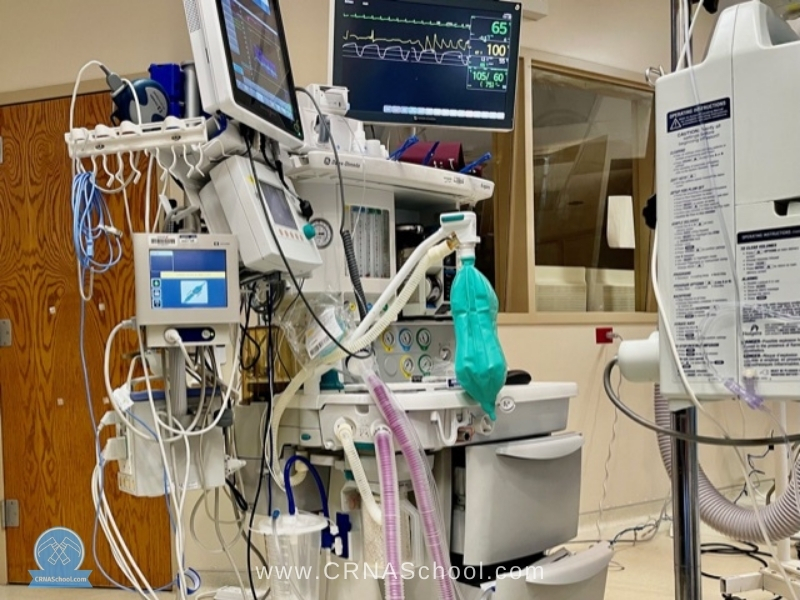
    As a CRNA, you must comprehensively understand how to use various technologies and tools to quickly and efficiently do your job. The most essential tools are the ones specifically related to anesthesia. These include, but are not limited to:

    • Anesthesia inhalers
    • Gas anesthesia apparatus
    • Electronic stethoscopes
    • IV infusion pumps
    • Airway kits
    • Cardiac monitoring units
    • Endotracheal or tracheostomy sets
    • Epidural anesthesia equipment

    As a competent CRNA, you should be skilled with numerous software applications designed for the job. Programs like eClinicalWorks software, ELemis Anesthesia Manager, Skyscape AnesthesiaDrugs, and several others that focus on anesthesia medications, dosages, and usages.

    Nurse Anesthetist Programs

    CRNA Qualifications and Capabilities

    The job of a CRNA goes beyond simply injecting medications. They offer anesthesia to patients undergoing diagnostic, surgical, therapeutic, and obstetrical medical procedures. They offer nerve blocks, spinal blocks, and other kinds of pain relief before, during, and after the process.

    They take a detailed approach to patient care, view records about the patients’ health, talk to the patient before the procedure and answer any questions; they monitor the patient throughout the procedure and make adjustments to ensure a smooth, seamless experience.

    Certification Requirements for CRNA

    COA accredited nurse anesthesia educational programs require a bachelor’s degree, a registered nursing (R.N.) license, and a minimum of one year of experience as a nurse in an acute care setting, according to the American Association of Nurse Anesthetists (AANA)’s CRNA Fact Sheet. Upon completing the program, aspiring CRNAs must pass the national certifying exam to practice as nurse anesthetists.

    CRNA is an advanced major practice for nurses. And even though the main requirements of becoming a certified registered nurse anesthetist vary from state to state, you must graduate from a nurse educational program accredited by the COA and pass the certification examination administered by the National Board of Certification and Recertification for Nurse Anesthetists (NBCRNA)

    Accredited Nurse Anesthesia Educational Program

    Accreditation of programs of nurse anesthesia at the masters, post-masters, or doctoral degree level in the United States is recognized by the Council of Higher Education Accreditation (CHEA) and the U.S. Department of Education (USDE)

    Programs Required to Become CRNA

    • GPA of 3.0 or higher
    • Life support certifications (BLS, ACLS, PALS)
    • Combined minimum GRE of 300 or better.

    Clinical Requirement for CRNA

    To become a CRNA, you must have completed more than 2,000 clinical hours and administered more than 600 clinical cases before graduation. 

    CRNAs can practise in all 50 states but must complete necessary training before graduation. 

    According to the COA Standards for Accreditation, you must meet specific training criteria, including at least one year of critical care nursing experience and a passing score on the National Certification Exam (NCE).