Last updated: August 2026 | Researched and reviewed by Daniel Etheridge, CRNA
The Cedar Crest College CRNA program in Allentown, Pennsylvania, has a 96% first-time NCE pass rate, zero attrition for four straight years, and 100% employment within six months in every year it has published data.
It is a small program that admits 25 students a year, and many applicants outside eastern Pennsylvania have never looked at it closely.
This article covers the program’s outcomes, admission requirements, cost, application timeline, and clinical training so you can decide if it is the right fit for you.
Key Takeaways
- The Class of 2025 had a 96% first-time NCE pass rate, attrition has been 0% every year since 2022
- Tuition and program fees total $139,170 per the school’s published cohort table
- No GRE, the CCRN is mandatory, one year of US ICU experience is the minimum, and there are 25 seats per year
- The first two semesters are 100% online before you move to campus, which is helpful if you are still working ICU shifts
- The last application window closed May 1, 2026 for Fall 2027, so expect a May 1, 2027 deadline for Fall 2028
Cedar Crest Nurse Anesthesia Program Quick Facts:
| Degree | DNP in Nurse Anesthesia (entry level) |
| Length | 36 months, full time (first two semesters 100% online) |
| Credits | 95 |
| Location | Allentown, PA (Lehigh Valley) |
| Class starts | August, one cohort per year |
| Class size | 25 students |
| Application deadline | Expected May 1, 2027 for Fall 2028 (last cycle closed May 1, 2026 — confirm with the program) |
| Tuition + program fees | $139,170 published (2023–26 cohort); budget ~$145K at 2026-27 rates. Private — same price for everyone |
| GRE / CCRN | No GRE · CCRN required (“mandatory”) |
| Outcomes | 96% first-time NCE (2025) · 0% attrition since 2022 · 100% employed within 6 months |
| Accreditation | COA — continued accreditation, 10 years, 2023 to 2033; also CCNE-accredited |
Cedar Crest is one of 15 CRNA programs in Pennsylvania and one of two in the Lehigh Valley, alongside the new St. Luke’s/DeSales program about 15 minutes south in Center Valley.
Why Cedar Crest Stands Out
The program’s outcomes are its biggest strength.
Over the last five graduating classes, first-time NCE pass rates were 89%, 90%, 80%, 90%, and 96%. Every graduate who did not pass on the first attempt passed within twelve months, so the cumulative pass rate is 100% every year.
Attrition has been 0% every year since 2022. Most programs lose a few students per cohort, so four straight years without losing a student says the program admits carefully and supports its students through graduation.
Employment is 100% within six months of graduation in every year the program has published.
The first two semesters are delivered 100% online. If you are an ICU nurse anywhere in the region, you can complete the first year of coursework without relocating, then move to Allentown for the simulation and clinical phases.
Very few programs in the Northeast offer this option.
The program is accredited by the COA (a 10-year continued accreditation term from 2023 through 2033) and by CCNE.
Students complete more than 2,000 clinical hours and administer more than 800 anesthetics, which is well above the minimum requirements.
Cedar Crest CRNA Program Admission Requirements
To be considered for the Cedar Crest CRNA program, you will need:
- A BSN from an accredited nursing program
- A GPA above 3.2
- An unencumbered RN license (Pennsylvania and New Jersey licensure must be documented before starting)
- At least one full year of ICU experience in the United States, completed before the application deadline
- CCRN certification (mandatory)
- Current BLS, ACLS, and PALS certification
- Three letters of recommendation (an academic reference, a supervisor, and a mentor or colleague)
- An essay under 500 words in APA format
- A current CV
- A documented CRNA shadowing experience using the program’s form
- An interview with the admissions committee
The CCRN is mandatory. The GRE is not required, and the program states that directly on its website.
Prerequisite courses include Anatomy and Physiology I and II, General Chemistry, and a nursing research course. Each must be completed with a B or better.
With 25 seats and outcomes this strong, the program is competitive. A 3.2 GPA and 12 months of ICU experience meet the minimum, but most admitted students will have more than that, along with strong CCRN scores and well-documented shadowing.
The program accepts 6 to 9 transfer credits of graduate coursework (core courses only, B or higher, evaluated case by case). If you have already started an MSN, ask about transferring credits.
Cedar Crest CRNA Program Tuition and Cost
Cedar Crest publishes a full cost table for each cohort, which most programs do not do.
For the class that entered in Fall 2023, tuition and program fees total $139,170. That includes $121,170 in tuition for 95 credits and $18,000 in program fees (library, clinical, a $3,000-per-year nurse anesthesia fee, and DNP project fees).
That table is for the 2023 cohort, and rates have increased since then. The posted 2026-27 rate is $1,319 per credit, which puts tuition alone at about $125,000 for a new student. With program fees, a student starting now should budget closer to $145,000 in tuition and fees. Other costs include:
- $50 application fee
- $1,500 deposit (applied to tuition)
- $1,000 graduation fee
- University activity and technology fees each semester
Cedar Crest is a private college, so there is no in-state discount and every student pays the same rate. The cost table on our Pennsylvania CRNA schools guide shows how each program in the state compares.
The school also publishes a list of out-of-pocket expenses, including books, equipment, licensure, clinical travel, board review, the NCE fee, and a personal ultrasound probe. Read it before you commit so you know the full cost of the program.
The national average CRNA salary is $248,320 (BLS, May 2025), so a $145,000 program with a 96% first-time pass rate is a sound investment.
Student Experience
The program runs 36 months full-time starting in August, with two online semesters followed by on-campus coursework. Cedar Crest’s campus sits on 84 acres in Allentown’s West End. It is small, green, and easy to get around.
The simulation center is impressive for a college this size. It includes a functional operating room, high-fidelity adult, birthing-mother, and newborn manikins, real anesthesia machines, video laryngoscopes, ultrasound, and students have hands-on access 20 hours a day. Workshops cover:
- Difficult airway management
- Central venous line placement
- Pediatric bootcamp
- Spinal and epidural anesthesia
- Obstetric anesthesia
- Double-lumen tube placement
- Trauma anesthesia
- Peripheral nerve blocks
With 25 students per cohort, everyone knows the program director and the faculty know every student. Your cohort will become your support system for three years, and the 0% attrition rate suggests that this small-program culture is working.
Plan on not working during the program. The program strongly discourages employment and tells students to expect 3 to 5 hours of study per weeknight, 6 to 8 hours per weekend day, and clinical weeks of 32 to 40 hours.
Living in Allentown While Attending the Cedar Crest CRNA Program
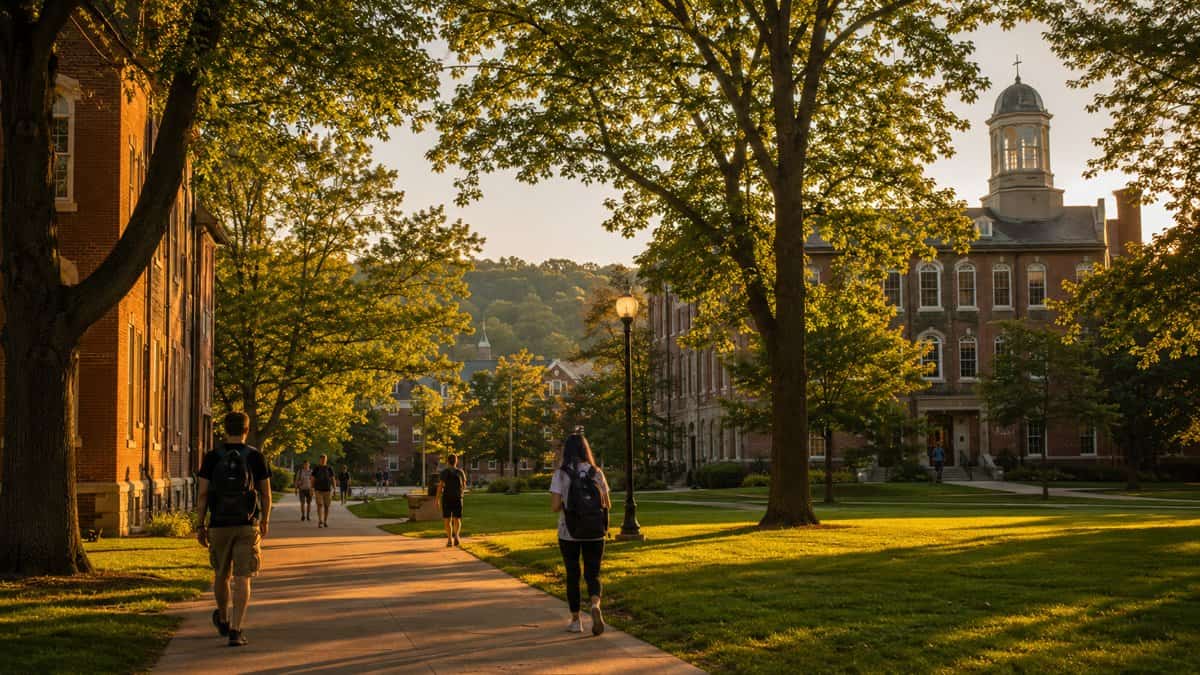
Allentown is the center of the Lehigh Valley, Pennsylvania’s third-largest metro area. It is 55 miles from Philadelphia and 80 miles from New York City. For ICU nurses at Lehigh Valley Health Network or St. Luke’s facilities, Cedar Crest is a local option, and with the first year online, you only need to be near campus for two of the three years.
The cost of living is well below Philadelphia, and the West End neighborhood around campus is residential with rentals available. I-78 and Route 22 make the whole valley commutable.
With the St. Luke’s/DeSales program now training students 15 minutes away, the Lehigh Valley has two CRNA programs. For local applicants, that means two options instead of one.
Application Dates and Deadlines
Cedar Crest’s application cycle runs early. The last window closed on May 1, 2026, fifteen months before the Fall 2027 start. If the pattern holds, applications for Fall 2028 will be due around May 1, 2027. Confirm the date with the program, since their page had not posted the new cycle as of this writing.
18 months out: Be working in a US ICU. The full year of experience must be completed before the application deadline in May 2027, not before the program starts. Schedule your shadowing and complete the program’s shadowing form.
12 months out: Pass the CCRN. It is mandatory, and a strong score will help you stand out for one of 25 seats. Verify that your anatomy and physiology, chemistry, and research prerequisites are at a B or better, and retake any that are not.
6 months out: Line up your three letters of recommendation, write your essay around specific ICU patient experiences (under 500 words, APA format), and submit well before May 1. Ensure that your application is complete before the deadline.
The Interview
Interviews are by invitation from the admissions committee. Expect detailed clinical questions about your ICU experience, including vasoactive drips, ventilator modes, and the physiology behind your sickest patients.
The program wants students who will pass the NCE and finish the program. Show them you are prepared for exams (your CCRN score helps), open to feedback, and clear about why you want to be a CRNA. Ask good questions about how clinical rotations are structured.
Clinical Rotations and Training Sites
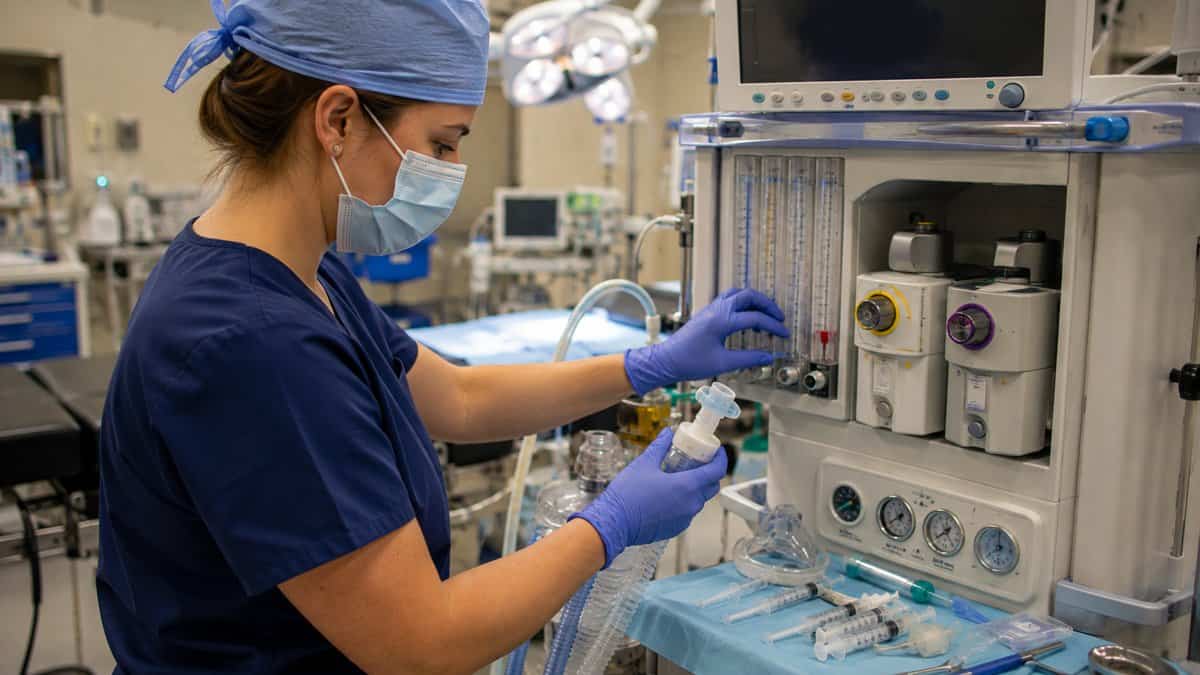
Cedar Crest does not publish a list of its clinical sites. The program does say it has a dedicated clinical scheduler, rotations at “top clinical sites across the tri-state area,” and specialty rotations at children’s hospitals, NICUs, and burn centers. Each student completes more than 2,000 clinical hours and more than 800 anesthetics.
The 96% first-time pass rate and 100% employment rate suggest the clinical training is strong. Still, ask the program for the current site list, the typical travel distance, and the case mix the last cohort completed. Budget for clinical travel, since the school lists it as an expected cost.
Is the Cedar Crest CRNA Program Right for You?
Cedar Crest is a great fit if you:
- Want strong, recent, published outcomes, including a 96% first-time NCE pass rate and 0% attrition since 2022
- Are working ICU shifts and want to complete the first two semesters online
- Want a small cohort where the faculty know you by name
- Have your CCRN, or will have it before you apply
- Live in the Lehigh Valley and want a proven local program
- Do not want to take the GRE
- Want a program that publishes its full cost table and outcome history
- Can plan around a long application timeline, since you apply about 15 months before you start
Consider other options if you:
- Are choosing mainly on price, since Cedar Crest is a private college and the state’s public programs cost less (see the Pennsylvania cost table)
- Need the next available start, since the Fall 2027 window has closed and the earliest entry is Fall 2028
- Want a large academic medical center name on your diploma
- Want a published clinical site list before you commit
- Cannot document a full year of US ICU experience by the May deadline
- Do not have your CCRN and cannot schedule it in time
- Prefer a big-city training environment over a mid-size metro area
In summary, Cedar Crest’s outcomes would be impressive at any program size, and at 25 students a year they show a program that supports its students through graduation. The trade-offs are private-college tuition, an early application deadline, and less published detail about clinical sites than we would like. None of those outweigh a 96% first-time pass rate.
Frequently Asked Questions
Is Cedar Crest a good CRNA program?
Yes. The Class of 2025 had a 96% first-time NCE pass rate, attrition has been 0% every year since 2022, employment is 100% within six months, and the program holds a 10-year COA accreditation term from 2023 to 2033.
It is a small program with 25 students per year and a strong outcome history.
How much does the Cedar Crest CRNA program cost?
The school’s published cohort table totals $139,170 in tuition and program fees ($121,170 in tuition for 95 credits plus $18,000 in program fees). That table reflects the class that entered in 2023.
At the posted 2026-27 rate of $1,319 per credit, newer cohorts should budget closer to $145,000 in tuition and fees.
Is the Cedar Crest CRNA program online?
Partly. The first two semesters are delivered 100% online, so you can keep working while you complete the early coursework.
After that, you finish the degree on campus in Allentown, using the simulation center and clinical placements across the tri-state area.
Does Cedar Crest require the GRE or CCRN?
The GRE is not required. The program states “No GRE is required.” The CCRN is mandatory, along with BLS, ACLS, and PALS.
You will also need a BSN, a GPA above 3.2, one full year of US ICU experience, three letters of recommendation, documented CRNA shadowing, and prerequisite courses at a B or better.
When is the Cedar Crest CRNA application deadline?
The last posted window closed May 1, 2026, for the class starting Fall 2027. Cedar Crest has about a 15-month gap between the deadline and the start of the program.
Expect applications for Fall 2028 to be due around May 1, 2027, and confirm the exact date with the program before planning your cycle.
How many students does Cedar Crest’s CRNA program accept?
Twenty-five students per year. The program keeps the class size small so mentorship stays personal and clinical scheduling stays manageable.
The results support that approach, with zero attrition in every published year since 2022 and 100% graduate employment.
Next Steps
If you are targeting Fall 2028, you likely have until around May 1, 2027. Use that time to complete your year of ICU experience, pass the CCRN, and complete your shadowing using Cedar Crest’s form. Confirm the exact deadline with admissions at sage@cedarcrest.edu or 610-740-3770.
You may also want to look at the Lehigh Valley’s other option, the new St. Luke’s/DeSales program in Center Valley with its December deadline, and the rest of the Pennsylvania CRNA programs, including Scranton, which is about 90 minutes north. You can also compare programs in every state on our CRNA Schools by State page.
Contact the program
Cedar Crest College Nurse Anesthesia Program
Program Director: Deborah Burnett-Olsen — deborah.burnett.olsen@cedarcrest.edu · 610.606.4666 ext. 3747
Graduate admissions (School of Adult and Graduate Education): sage@cedarcrest.edu · 610-740-3770
100 College Drive, Allentown, PA 18104
Official page: cedarcrest.edu — Nurse Anesthesia DNP
Tuition: Graduate tuition & fees
Accreditation: Council on Accreditation (COA) · Salary data: BLS OEWS (May 2025)