
Last updated: August 2026 | Researched and reviewed by Daniel Etheridge, CRNA
Here’s a requirement you won’t see often: none. The University of Scranton doesn’t require the CCRN — it’s “strongly recommended, but not required.”
Pair that with a one-year ICU minimum, no GRE on the checklist, and a 91% first-time board pass rate for the newest graduating class.
One thing first, though: if you want a seat in the cohort that starts in summer 2027, your application is due September 1, 2026. That’s weeks away, not months. Let’s get you what you need to decide fast.
Key Takeaways
- Applications for the 2027 cohort close September 1, 2026 — the program admits one class per year
- About $112,900 in tuition (83 credits × $1,360); mandatory fees are extra and not itemized publicly
- Class of 2026 outcomes: 91% first-time NCE pass, 92% employed, 4% attrition — and they averaged 862 anesthesia cases
- CCRN recommended but not required, 1 year of ICU within the last 5 years, no GRE on the requirements list
Scranton Nurse Anesthesia Program at a Glance
| Degree | DNP in Nurse Anesthesia (entry level) |
| Length | 36 months, continuous full-time |
| Credits | 83 |
| Location | Scranton, PA — hilltop campus above downtown, 800 Linden St. |
| Class starts | May (summer term), one cohort per year |
| Application deadline | September 1, 2026 (for the cohort starting summer 2027) |
| Est. total program cost | ≈$112,880 tuition (83 × $1,360; fees extra — private, all states pay the same) |
| GRE / CCRN | GRE not listed · CCRN strongly recommended, not required |
| Employment | 92% employed (Class of 2026); 91% first-time NCE pass |
| Accreditation | COA-accredited — maximum 10-year term (next review October 2032) |
Scranton is one of 17 CRNA programs in Pennsylvania (soon to be 15 — two are closing in 2026), and the anchor program for the state’s northeast corner.
Its nearest neighbors are the Geisinger/Commonwealth program in Danville, about an hour southwest, and Cedar Crest College in Allentown, about an hour south.
Why Scranton Stands Out
Start with the track record. This program has been around long enough to publish seven years of outcomes, and the trend line is pointing the right way: first-time NCE pass rates went 83% → 86% → 91% over the last three graduating classes.
The Class of 2026 also averaged 862 anesthesia cases and more than 2,000 clinical hours each. Those are deep numbers — COA minimums are far below that — and they come from rotations across more than 20 sites across Pennsylvania, New York, and neighboring states.
Second, the accreditation story is clean and boring, in the best way. The COA granted Scranton its maximum 10-year continued accreditation at the October 2022 review; the next review isn’t until October 2032.
Third, the entry requirements are plainly stated and short. One year of critical-care experience within the last five years, a 3.0 GPA floor, no GRE on the checklist, and no CCRN requirement.
And it’s a Jesuit university, which shapes the culture: small classes, cura personalis, and a nursing department that’s been part of the university’s identity for decades.
Getting Accepted: What It Actually Takes
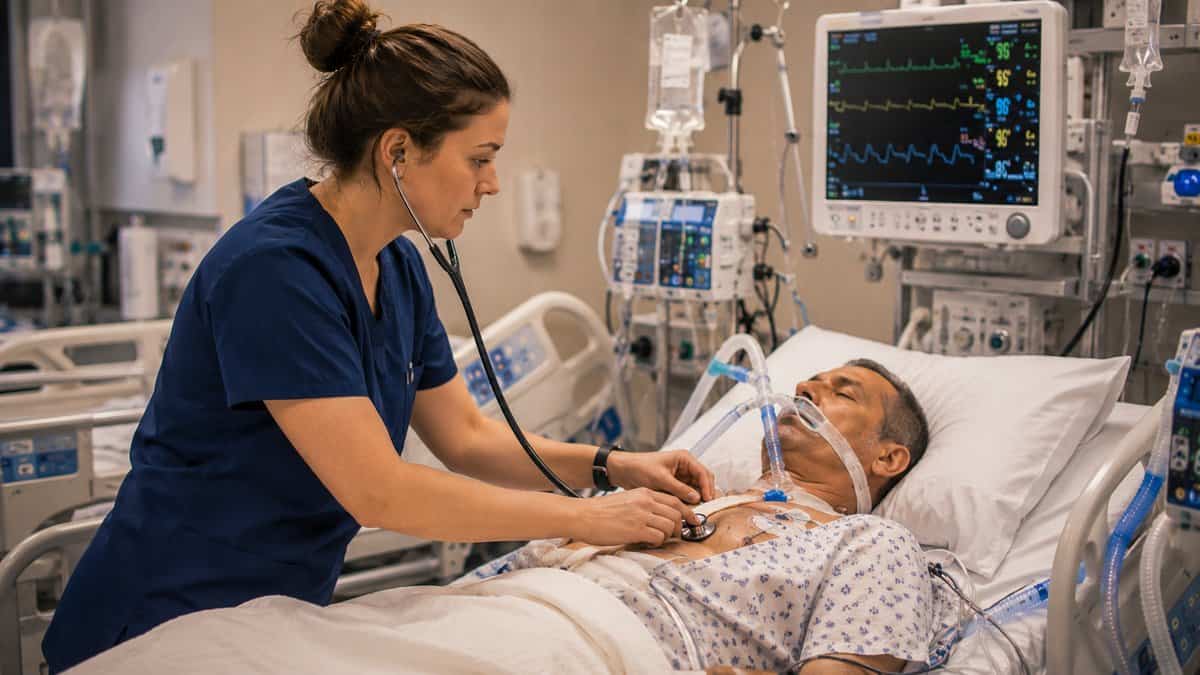
The published list: a BSN from a CCNE, ACEN, or CNEA-accredited program, a current unencumbered US RN license, an undergraduate GPA of at least 3.00, and a minimum of one year of critical-care nursing experience within five years of application.
Notice what’s missing: no GRE, no mandatory CCRN, no published shadowing-hours quota. On paper, the entry checklist is short.
Now the honest part: a low floor doesn’t lower the bar for who actually gets in. “Strongly recommended” CCRN language means most competitive applicants will have it — showing up without it puts you behind the applicants who do.
The same logic applies to your ICU year. One year is the minimum; a candidate with two years in a high-acuity unit, a CCRN, and strong references is the realistic competition.
Treat the minimums as the door, not the destination.
The Financial Reality: About $113,000 in Tuition — Plus Fees
Tuition runs $1,360 a credit for the nurse anesthesia doctorate. Across the program’s 83 credits, that’s $112,880 in tuition.
Two caveats you should plan around. First, Scranton doesn’t publish an itemized fee schedule for this program, so budget beyond the tuition line — books, equipment, clinical travel, and university fees all land on top.
Second, and this one’s unusual: the university notes that nurse anesthesia students are not covered by its Tuition Guarantee program. Your per-credit rate can rise each year you’re enrolled, so the real three-year total will likely run a few thousand higher than today’s math.
The usual hidden costs apply everywhere: board review courses ($1,500–$3,000), the NCE fee, licensing, background checks, and — the big one — three years of little to no income.
Against a national average CRNA salary of $248,320 (BLS, May 2025), the payback math still works strongly in your favor.
One more Scranton-specific line item: clinical travel. Rotation sites range from 5 to 200 miles from campus, and students arrange their own transportation and housing. Budget real money for gas and short-term stays.
Outcomes: Seven Years of Published Numbers
Scranton posts its results, and the recent ones read well. Class of 2026: 91% first-time NCE pass, 95% including retakes, 92% employed, 4% attrition.
Class of 2025: 86% first-time. Class of 2024: 83% first-time with 100% eventual pass and 100% employment.
The longer history includes a rougher patch — 73% first-time in 2020 and 15% attrition in 2022 — which makes the three-year climb since more meaningful, not less.
Programs that publish their bad years earn the right to be believed in their good ones.
Student Experience
This is a full-time, 36-month continuous program starting in the summer term. The first summer’s courses are online; everything after that is on campus.
Plan on not working — between coursework, simulation, and clinical rotations averaging 2,000+ hours, there isn’t room.
The cohort is small — roughly two dozen students in recent years — inside a university of about 5,000. You get small-program attention with real university resources: library, labs, gym, and a walkable hilltop campus overlooking downtown.
The clinical phase is where Scranton asks the most of you. With sites spread across several states, expect stretches living out of a bag near a distant hospital.
Students consistently graduate with case counts well above national minimums — that’s the trade.
Location & Cost of Living in Scranton
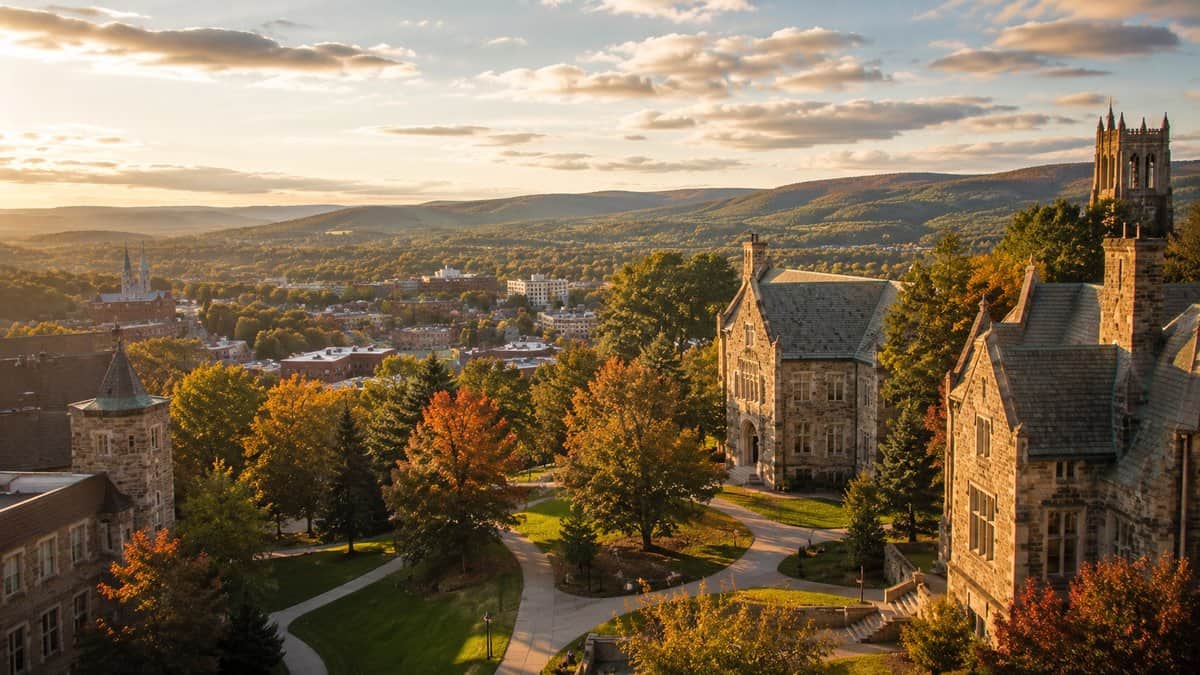
Scranton sits in northeastern Pennsylvania at the junction of I-81 and I-84, about two hours from Philadelphia and New York City. The university’s campus is a compact hill just above downtown.
The cost of living is one of the quiet advantages here. Northeastern Pennsylvania rents run well below big-city levels — a meaningful discount stacked over three years of student life.
For working ICU nurses in the Wyoming Valley, the Poconos, or the NY Southern Tier, Scranton is the program you can reach without relocating. Wilkes-Barre is 20 minutes down I-81; Binghamton is about an hour north.
Application Strategy: The Clock Is Running
Right now (targeting summer 2027 entry): The deadline is September 1, 2026. If your ICU year is banked and your GPA clears 3.0, this is sprint territory.
Request transcripts this week, brief your recommenders today, and get your application in ahead of the buzzer.
If you’re targeting 2028:
18 months out: Get into (or stay in) a high-acuity ICU — remember the experience must be within five years of applying. Line up shadowing days with a CRNA even though no quota is published; it strengthens your essay and interview.
12 months out: Sit the CCRN anyway. It’s not required here, but it’s the single best signal that your critical-care knowledge is exam-proven, and it keeps every other program on your list viable.
6 months out: Polish your application story around specific patients — the hemodynamics you managed, the drips you titrated, the moments anesthesia became the goal. Submit early; a September 1 deadline rewards July applicants.
The Interview
Expect clinical depth on your ICU patients: vents, pressors, invasive lines, and the reasoning behind your interventions. A program that waives the CCRN will still test the knowledge behind it in the room.
Because this is a Jesuit school, expect genuine interest in who you are, not just what you know.
Have a clear, honest answer for why anesthesia and why now — and a thoughtful question or two about the clinical-travel footprint, which shows you understand how this program actually runs.
Clinical Training: 20+ Sites in PA, NY & Beyond
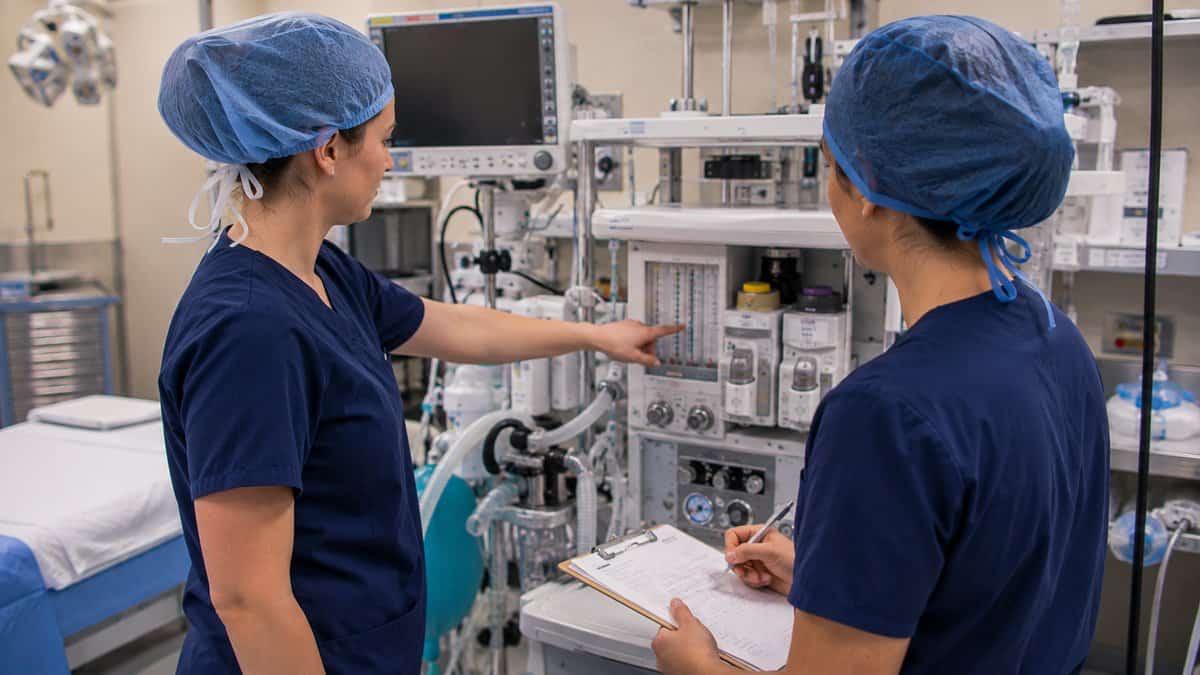
Scranton’s clinical network spans more than 20 affiliated sites across Pennsylvania, New York, and neighboring states, from 5 to 200 miles out.
The program publishes its current contract list — more than 20 sites, including four Geisinger hospitals, three Lehigh Valley Health Network locations, Moses Taylor in Scranton, UPMC Williamsport, Bassett Medical Center in New York, and Children’s Hospital of Philadelphia.
That spread is the reason graduates average 862 cases — community hospitals, tertiary centers, and a nationally known children’s hospital cover the full case mix.
At many of these sites, Scranton students are the only anesthesia learners in the building — no residents competing for cases. Distance is the honest cost of that depth.
Is Scranton Right for You? An Honest Assessment
Scranton is a great fit if you:
- Want a program with rising, published outcomes — 83% → 86% → 91% first-time NCE over three years
- Have one solid year of ICU experience and want a program that will consider you now
- Haven’t taken the CCRN and want a strong program that doesn’t require it
- Want doctoral tuition around $113K with a 10-year accreditation behind it
- Live in northeastern PA or the NY Southern Tier and want to train without relocating
- Value high case counts — graduates averaged 862 cases across 20+ clinical sites
- Want a small, values-driven Jesuit cohort culture
Consider other options if you:
- Can’t spend stretches on the road — clinical sites run up to 200 miles out, with travel and housing on you
- Need every dollar itemized up front — mandatory fees aren’t published, and tuition isn’t rate-locked
- Want a program where all training happens under one roof, close to campus
- Want published class sizes before committing
- Missed September 1 and can’t wait a full cycle for the next cohort
- Prefer an urban campus scene — Scranton is a small city, and the program’s life revolves around clinicals
The honest bottom line: this is a stable, well-accredited program trending upward, with plainly stated requirements and unusually deep clinical exposure.
The costs to weigh are travel-heavy clinicals and un-itemized fees — real, but knowable. If the September deadline is workable, Scranton belongs on your short list.
Frequently Asked Questions
Is the University of Scranton a good CRNA program?
Yes, by the numbers. It holds the COA’s maximum 10-year accreditation (next review October 2032), its first-time NCE pass rate climbed to 91% for the Class of 2026, attrition is 4%, and graduates averaged 862 anesthesia cases — well above national minimums.
How much does the Scranton CRNA program cost?
About $112,880 in tuition at the current $1,360-per-credit rate across 83 credits.
Mandatory fees aren’t itemized publicly and nurse anesthesia students aren’t covered by the university’s Tuition Guarantee, so budget several thousand more — plus clinical travel to sites up to 200 miles away.
Does Scranton’s CRNA program require the CCRN or GRE?
Neither is required. Critical-care certifications like the CCRN are “strongly recommended, but not required,” and the GRE doesn’t appear on the admission requirements at all.
You do need a BSN, an unencumbered US RN license, a 3.0 GPA, and one year of critical-care experience within the last five years.
When is the Scranton CRNA application deadline?
September 1, 2026, for the cohort starting in summer 2027.
The program admits one class per year with a May start, so missing this window means waiting a full cycle. The application is open now through the university’s graduate admissions portal.
How long is the Scranton nurse anesthesia program?
36 months of continuous full-time study — 83 credits leading to a Doctor of Nursing Practice (DNP).
Graduates log 2,000+ clinical hours and averaged 862 anesthesia cases in the most recent class.
Next Steps
If Scranton is on your list for 2027: the deadline is September 1, 2026, so move this week — transcripts, letters, license verification, and your essay. Questions go to graduate admissions at (570) 941-4416 or the nursing department at (570) 941-7673.
If you’re building toward 2028: bank a second ICU year, take the CCRN, and compare against the other Pennsylvania CRNA programs before you decide.
Contact the program
University of Scranton Nurse Anesthesia Program
Program Administrator: Susan Elczyna, PhD, CRNA (susan.elczyna@scranton.edu) · (570) 941-5583
Department of Nursing: nursing@scranton.edu · (570) 941-7673 · 800 Linden Street, Scranton, PA 18510
Graduate admissions: 570-941-4416
Official page: scranton.edu — Nurse Anesthesia
Admissions requirements: gradadmissions.scranton.edu
Accreditation: Council on Accreditation (COA) · Salary data: BLS OEWS (May 2025)