
Last updated: August 2026 | Researched and reviewed by Daniel Etheridge, CRNA
Pittsburgh anesthesia education is having a changing-of-the-guard moment. One long-running program closes its doors on August 31, 2026 — and Duquesne is stepping into the gap with a brand-new DNP built from scratch.
The program earned its initial COA accreditation in May 2025 and welcomed its first cohort that fall. That makes it the newest CRNA program in western Pennsylvania, with a curriculum designed for today’s doctoral standards rather than retrofitted from an old master’s degree.
New means unproven, though. Let’s walk through what Duquesne costs, how the hybrid format works, and who should — and shouldn’t — bet three years on a program this young.
Key Takeaways
- Brand-new entry-level DNP: COA-accredited May 2025, first cohort Fall 2025, accreditation runway to May 2031
- 36 months, 92 credits, hybrid format, 18 COA-approved clinical sites around Pittsburgh
- Published cost is $163,040 all-in — but newer university rate sheets suggest budgeting closer to $180K
- Fall 2027 applications are open now and close February 15, 2027; GRE not required
Duquesne Nurse Anesthesia Program at a Glance
| Degree | DNP in Nurse Anesthesia (BSN-to-DNP, entry level) |
| Length | 36 months (9 semesters), hybrid format |
| Credits | 92 |
| Location | Pittsburgh, PA — campus on the Bluff, above downtown |
| Class starts | August (one cohort per year) |
| Application deadline | February 15, 2027 (Fall 2027 cohort — window open now) |
| Est. total program cost | ≈$163,040 published — budget ~$180,000 at 2026-27 rates (private; all states pay the same) |
| GRE / CCRN | GRE not required · CCRN not listed as required — confirm with admissions |
| Employment | No outcomes yet — first cohort graduates August 2028 |
| Accreditation | COA-accredited (initial May 2025; next review May 2031) |
Duquesne is one of 17 CRNA programs in Pennsylvania (soon to be 15 — two are closing in 2026). In Pittsburgh, it joins the University of Pittsburgh and La Roche University as the city’s three ongoing options.
⚠️ Don’t confuse Duquesne’s two anesthesia programs. Duquesne previously offered a DNAP degree in partnership with the Allegheny School of Anesthesia. That partnership program is voluntarily closing on August 31, 2026 and is no longer accepting students.
This page covers Duquesne’s own in-house DNP in Nurse Anesthesia — the new program with a future. If you find Duquesne pages or forum posts mentioning a “DNAP,” that’s the closing one.
Why Duquesne Stands Out
Start with the format. The 92-credit curriculum is hybrid — online coursework blended with on-campus intensives — which is still rare among Pennsylvania’s entry-level programs.
For a nurse with a family or a mortgage outside the city, that flexibility can decide whether school is possible at all. Clinical training is another story: it happens in person, beginning the first summer and running straight through year three.
Second, the clinical network. Duquesne lists 18 COA-approved clinical sites, including Allegheny General, Forbes, and Jefferson hospitals in the AHN orbit.
With the Allegheny School of Anesthesia winding down, those ORs need students — and Duquesne’s cohorts arrive with less competition for cases than students in more crowded markets.
Third, the fresh build. This curriculum was written for the COA’s current doctoral standards, not adapted from a decades-old master’s program.
And the program sits inside a nursing school with a national reputation, led by faculty with deep roots in the specialty.
Getting Accepted: What It Actually Takes
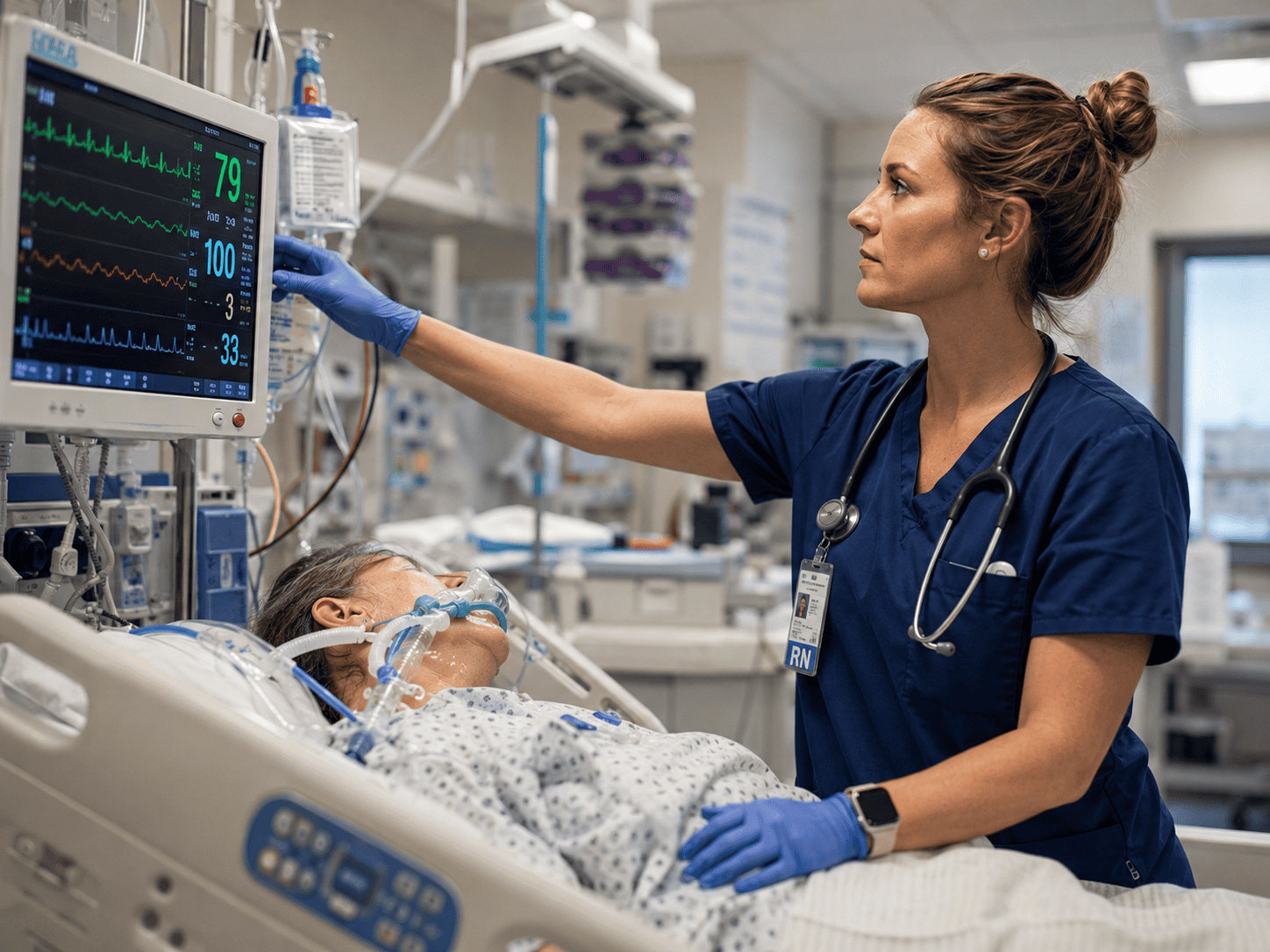
The published requirements are refreshingly plain. You need a BSN (or MSN) from an accredited program with a 3.2 GPA or higher, a current unencumbered RN license, and a minimum of two years of critical-care nursing experience by the time you enter.
Duquesne defines critical care broadly: any unit where you routinely manage invasive hemodynamic monitoring, vents, and vasoactive drips. SICU, CTICU, CCU, MICU — and yes, PICU and NICU count here, which isn’t true everywhere.
Prerequisites: Anatomy & Physiology I and II with labs, chemistry with lab, pharmacology, statistics, and a research or evidence-based-practice course — all with a B or better, completed within the last ten years (five preferred).
You’ll also need current BCLS, ACLS, and PALS certifications, plus two references: one academic letter from nursing faculty and one professional letter from a current manager or supervisor.
Two things Duquesne doesn’t demand: the GRE (it’s optional, supplemental only) and — at least on the published requirements — the CCRN. Confirm the CCRN question with admissions directly, and earn it anyway.
Nothing proves ICU mastery to an admissions committee faster.
Shadowing is “strongly recommended” rather than required. Treat that as required — in a program too new to have published acceptance stats, every discretionary box you check matters more.
The Financial Reality: Plan on $163,000 to $180,000

Here’s the published math. Duquesne’s program page lists $1,765 per credit across 92 credits, plus a $220 annual nursing fee — a program-published total of $163,040.
Now the honest caveat. The university’s 2026-27 graduate rate sheet lists the nurse anesthesia DNP at $1,918 per credit, with fees still marked “to be determined.”
At that rate, tuition alone runs about $176,500 — before fees. The program page itself notes that revisions are ongoing.
So: treat $163,040 as the floor, budget closer to $180,000, and get the current per-credit rate in writing from admissions before you sign anything.
Then add the usual hidden costs — books, equipment, board review ($1,500–$3,000), the NCE fee, licensure, background checks — and three years of mostly-foregone RN income.
The return still works. CRNAs nationally averaged $248,320 in the May 2025 BLS data, so even the high-end estimate pays for itself within a few working years.
Student Experience
You’d be joining the program’s second or third cohort ever. That cuts both ways, so let’s be honest about each edge.
The upside: new programs tend to over-deliver on attention. Faculty know every student, feedback loops are short, and the curriculum hasn’t accumulated decades of “we’ve always done it this way.”
The hybrid rhythm also means fewer commutes during didactic stretches — a real quality-of-life difference in year one.
The unknown: no graduate has walked the stage yet. The first cohort finishes in August 2028, so there’s no NCE pass rate, no attrition history, no employment data.
Duquesne says so plainly on its own accreditation page, which is the right way to handle it.
Plan on treating this as a full-time-plus commitment either way. Clinical residencies stack up quickly after the first summer, and anesthesia school workloads don’t care what format the lectures come in.
Location & Cost of Living in Pittsburgh

Duquesne’s campus sits on the Bluff, directly above downtown Pittsburgh — walkable to UPMC Mercy and a short drive or bus ride from most of the city’s hospitals.
Pittsburgh remains one of the most affordable big cities in the Northeast for students. One-bedrooms run about $1,375 a month at the median (Zumper, June 2026), with plenty below that in South Side, Oakland, and the eastern neighborhoods.
Compare that to Philadelphia’s $1,849 average and the savings over three years approach $17,000 — before you even factor in the hybrid format letting some students keep their current housing entirely.
If you’re commuting in for intensives from Westmoreland, Butler, or Washington counties, campus is right off I-376 and the Boulevard of the Allies.
Ask admissions how many on-campus days each semester actually requires — that answer should shape your housing math.
Application Strategy: The 18-Month Runway
18 months out: Get into a high-acuity ICU if you’re not there already — you need two full years by entry, so count backward from August. Book CRNA shadowing days now and log them.
Check your transcript against the six prerequisites; enroll this semester if anything’s missing or older than ten years.
12 months out: Sit for the CCRN even though it isn’t listed — it’s the cheapest credibility you can buy. Line up your two recommenders: the nursing-faculty letter takes longest if you’ve been out of school a while.
Email admissions with your clarifying questions (class size, CCRN stance, on-campus day counts, current tuition rate) and keep the answers in writing.
6 months out: The Fall 2027 window is open now and runs through February 15, 2027. Submit in the fall, not at the February buzzer — new programs build their classes as applications arrive.
Polish your essay around one specific patient story that shows judgment under pressure.
The Interview
Duquesne interviews by invitation. Expect clinical drilling on your sickest patients — the drips you titrated, the vents you managed, and why.
Be ready for one question established programs never ask: why a new program? Have a real answer.
“Smaller cohorts, newer curriculum, and I’ve read the accreditation timeline” lands a lot better than a shrug.
Maturity matters more here than polish. A young program is building its reputation on its first few classes, and they’re selecting people who will pass the NCE on the first attempt.
Clinical Training
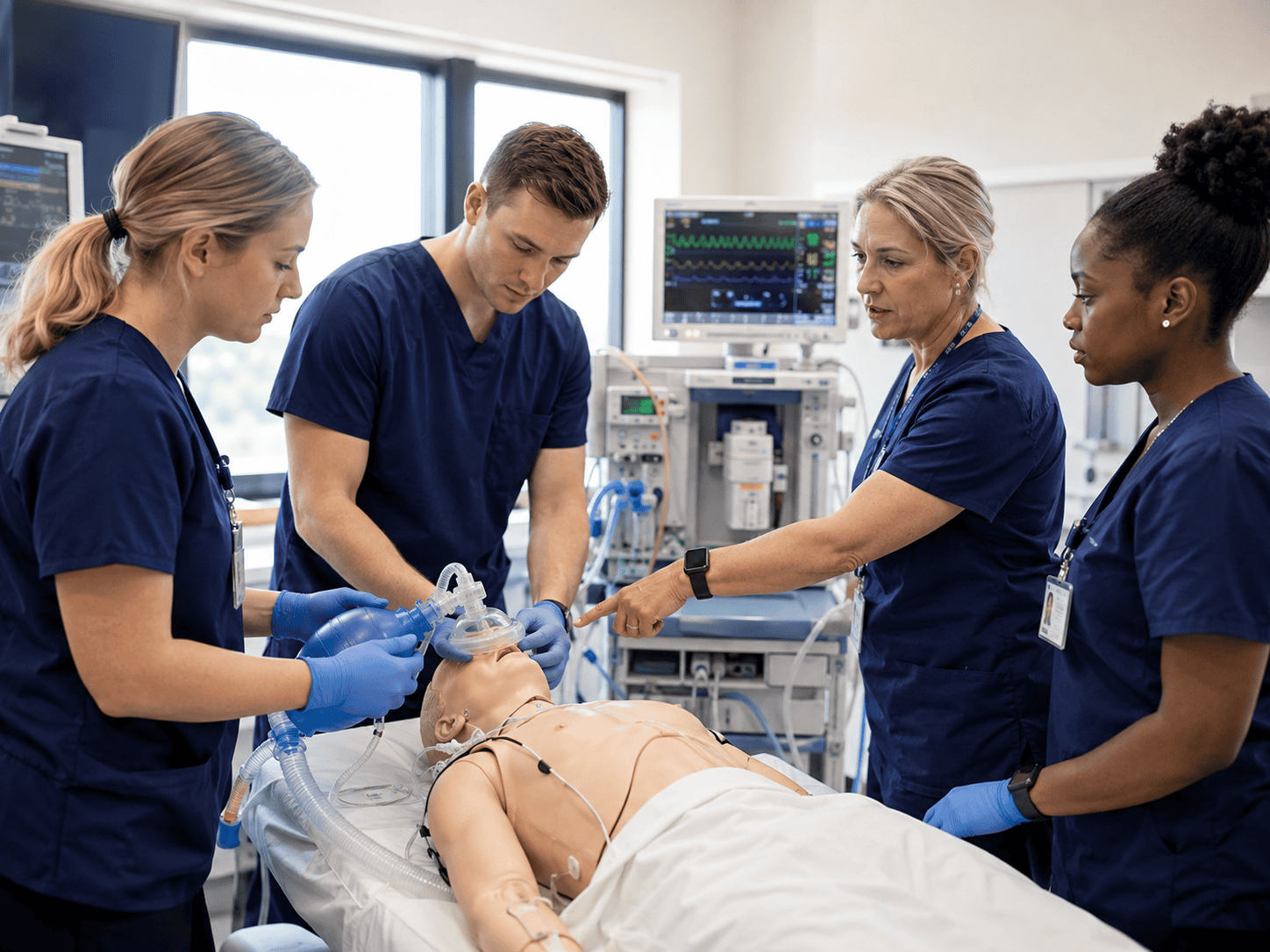
Clinical practicums begin the first summer and continue through graduation — an integrated model, not a didactic-then-clinical split.
Duquesne lists 18 COA-approved sites across the region, anchored by AHN hospitals including Allegheny General, Forbes, and Jefferson.
The program hasn’t published total case counts or clinical hours yet, which is typical for a program this new.
Ask admissions two questions: what case mix did the first cohort actually see, and how are sites assigned? The answers will tell you how the network is maturing.
Is Duquesne Right for You? An Honest Assessment
Duquesne is a great fit if you:
- Want a hybrid format that limits campus days without cutting clinical depth
- Live in or near Pittsburgh and want to train in AHN’s ORs as the Allegheny School winds down
- See a new program as a chance for more faculty attention, not a risk to avoid
- Have two-plus years of ICU time and a clean 3.2+ GPA — the published bar is clear
- Want to skip the GRE entirely
- Value a nursing school with a national reputation behind the anesthesia program
- Want an accreditation runway that’s already locked to May 2031
Consider other options if you:
- Need published outcomes before committing — there are none until the first cohort graduates in August 2028
- Want a settled, in-writing tuition number today — the per-credit rate is visibly in flux ($1,765 vs. $1,918)
- Prefer a fully in-person program with a fixed daily campus rhythm
- Want a program with a large, established alumni network feeding job referrals
- Need published class sizes and acceptance rates to gauge your odds
- Would rather choose a program that already has a cohort of published outcomes
- Can’t complete the six prerequisites inside the ten-year freshness window in time
Red flags? None in the record — initial accreditation is clean with a full runway to May 2031, and the university is transparent about pending outcomes.
The honest caution is simply newness: no pass rates, no employment data, and a tuition schedule still settling. For the right applicant, that trade buys attention and access.
Frequently Asked Questions
Is Duquesne a good CRNA program?
It’s promising but unproven. The entry-level DNP earned initial COA accreditation in May 2025 with a runway to May 2031, runs 36 months hybrid across 18 Pittsburgh-area clinical sites, and sits inside a nationally ranked nursing school.
But its first cohort graduates in August 2028, so there are no pass rates or employment outcomes yet.
How much does the Duquesne CRNA program cost?
The program publishes $163,040 all-in: $1,765 per credit across 92 credits plus a $220 annual fee. But the university’s 2026-27 rate sheet lists $1,918 per credit, so realistic budgeting for a Fall 2027 start is closer to $180,000.
Duquesne is private — in-state and out-of-state pay the same.
Does Duquesne’s CRNA program require the GRE?
No. The GRE may be submitted as supplemental material but is not required.
Core requirements: a BSN with a 3.2+ GPA, two years of critical-care experience by entry, six prerequisite courses at B or better, BCLS/ACLS/PALS, and two references. The CCRN isn’t listed as required — confirm with admissions.
How long is the Duquesne CRNA program?
36 months — nine consecutive semesters totaling 92 credits, starting each August. Coursework is hybrid (online plus on-campus intensives), while clinical training runs in person beginning the first summer.
Graduates earn a DNP and sit the NCE for CRNA certification through the NBCRNA.
What happened to Duquesne’s DNAP program?
Duquesne’s older DNAP, offered with the Allegheny School of Anesthesia, is voluntarily closing on August 31, 2026 and stopped accepting students.
It’s being replaced by Duquesne’s own DNP in Nurse Anesthesia, which welcomed its first cohort in Fall 2025. If you see “Duquesne DNAP” online, that’s the closing program.
Next Steps
If Duquesne is on your list: the Fall 2027 window is already open, so get the current per-credit rate from admissions in writing this week. Verify your ICU years and prerequisite freshness, book shadowing days, and start the faculty reference early.
Then compare honestly against the other Pennsylvania CRNA programs before you commit.
Contact the program
Duquesne University School of Nursing, Nurse Anesthesiology Program
Director of Nurse Anesthesia Studies: Michael Neft, PhD, DNP, MHA, RN, CRNA, FNAP, FAANA, FAAN
Assistant Director: Rebecca Vrescak, DNAP, MHS, BSN, CRNA
600 Forbes Avenue, Pittsburgh, PA 15282
Program: nursing@duq.edu · (412) 396-6550
Admissions: Brian Bost, bostb@duq.edu · (412) 396-6539
Official page: duq.edu — DNP Nurse Anesthesia
Accreditation: Council on Accreditation (COA) · Salary data: BLS OEWS