

Last updated: July 2026 | Researched and reviewed by Daniel Etheridge, CRNA
Here’s the question I get about Penn more than any other school: “Is an Ivy League CRNA degree worth a quarter of a million dollars?”
It’s the right question to ask. Penn’s nurse anesthesia program is one of the most expensive in the country — and also one of only a handful that just earned the COA’s maximum 10-year reaccreditation, in June 2026.
The accreditor looked at everything and said: we don’t need to check on you again until 2036. That doesn’t happen by accident.
So the honest answer is: it depends on who you are and what you’re buying. Let’s walk through the real numbers, the real requirements, and who this program actually fits — because it’s not everyone.
Key Takeaways
- 92% first-time NCE pass rate (class of 2024), 100% employed within 6 months, near-zero attrition
- About $260,000 all-in — Pennsylvania’s most expensive CRNA program, roughly $90K over its Philadelphia neighbors
- No GRE. Two years of qualifying ICU required — ER, NICU, and step-down time don’t count
- Apply November – February 15; the cohort starts the following May
- Reaccredited June 2026 through May 2036 — the COA’s maximum vote of confidence
Penn Nurse Anesthesia Program at a Glance
| Degree | Doctor of Nursing Practice (DNP), Nurse Anesthesia — entry level |
| Length | 36 months / 9 consecutive semesters, full-time, on campus |
| Credits | 35.5 course units |
| Location | Philadelphia, PA (University City campus) |
| Class starts | May (summer term), once a year |
| Application deadline | February 15 (application opens in November) |
| Est. total program cost | ≈ $260,000 — same for in-state and out-of-state (2026-27 rates) |
| GRE / CCRN | GRE not required; CCRN not listed in requirements |
| Employment | 100% of the Class of 2024 employed within 6 months |
| Accreditation | COA-accredited through May 2036 (reaccredited June 2026) |
Penn is one of 17 CRNA programs in Pennsylvania (soon to be 15 — two are closing in 2026), and one of four right in Philadelphia.
Why Penn Stands Out
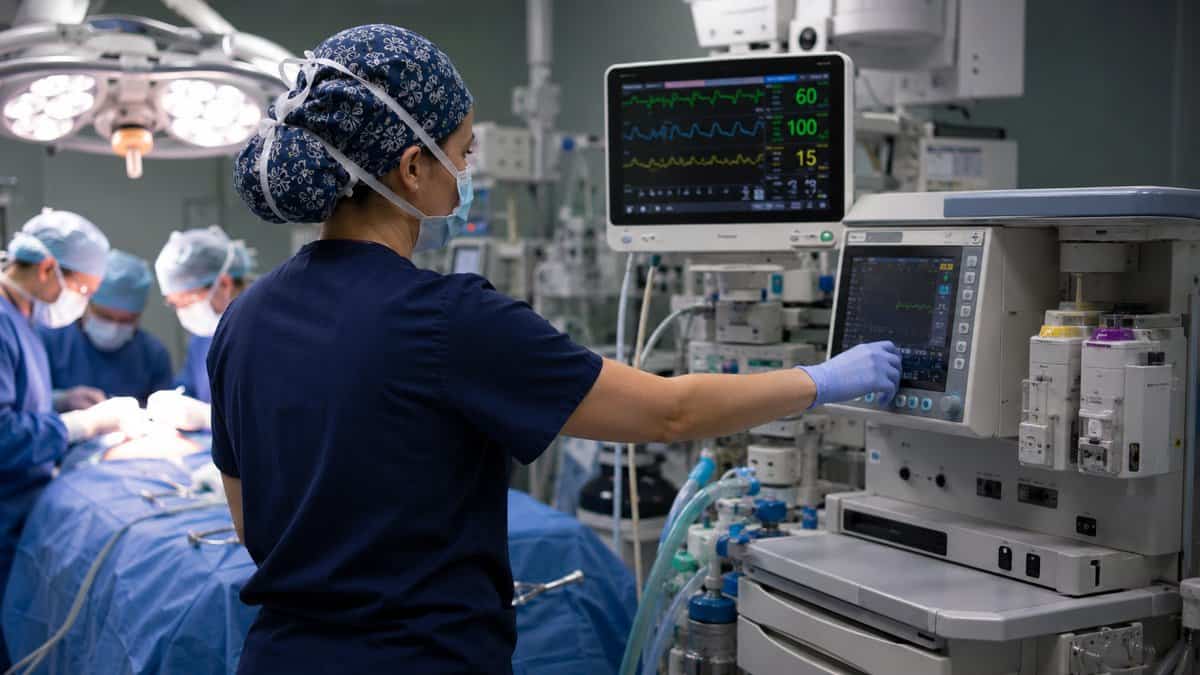
Three things separate this program from the pack, and only one of them is the name on the diploma.
First, that fresh 10-year reaccreditation.
The COA reviewed Penn in June 2026 and granted approval through May 2036 — the longest runway the accreditor gives. Programs with weak outcomes or shaky finances get short review cycles.
A 10-year pass is the accreditor’s way of saying this program is boringly, reliably excellent.
Second, the curriculum just got rebuilt. Starting with the cohort that entered in 2026, Penn rolled out a redesigned 35.5-credit-unit plan of study — a genuinely current curriculum rather than one that’s been photocopied forward for a decade.
Third, the outcomes back up the brand.
The class of 2024 posted a 92% first-time pass rate on the National Certification Examination (NCE), attrition was one single student (3.6%), and 100% of graduates were employed within six months. Nobody leaves Penn without a job.
One thing that’s not a differentiator: the degree itself. Penn’s DNP makes you eligible for the exact same NBCRNA certification as every other accredited program in the state.
The letters after your name will read the same. What you’re paying extra for is the network, the clinical exposure, and the doors the brand opens later — in leadership, academia, or competitive fellowship-style roles.
Getting Accepted: What It Actually Takes
The published minimums are a BSN (or graduate nursing degree) with a 3.0 GPA and two years of ICU experience. Read that again: those are minimums. Competitive applicants at a school like Penn typically bring more.
The ICU requirement has teeth, and Penn is specific about what counts.
Accepted: Trauma ICU, cardiovascular ICU, surgical ICU, neuro ICU, burn ICU, pediatric ICU, medical ICU, and coronary care. Not accepted: NICU, emergency room, PACU, step-down units, and interventional radiology.
If you’re currently in the ER planning to apply, you need to transfer to an adult or peds ICU and put in two full years post-orientation before matriculation.
The GRE was dropped in July 2021, and CCRN certification isn’t listed in the admission requirements at all — unusual for a top program.
That said, most serious applicants sit for the CCRN anyway. It’s cheap insurance that your ICU knowledge is where it needs to be, and it strengthens every application you submit, not just this one.
What successful applicants tend to have: 3.5+ GPA, two-plus years in a high-acuity ICU (think large academic medical center, patients on multiple drips and devices), shadowing hours with a CRNA, and a clear answer to “why anesthesia, and why now?”
Penn doesn’t publish its class size or acceptance rate, which tells you something in itself — assume it’s competitive and build the strongest file you can.
The Financial Reality: Around $260,000 All-In
Let’s do the math nobody puts on a brochure.
Penn charges by the course unit: $7,106 per CU at 2026-27 rates, and the current curriculum runs 35.5 CUs. That’s $252,263 in tuition alone.
Add the general fee (up to $2,134 per term at full-time load), a technology fee of $132 per CU, and a clinical fee of $385 per term, and the true academic cost lands north of $260,000 — before books, equipment, or certification expenses.
And that assumes rates never rise across your three years, which they will.
Worth knowing: Penn’s own DNP cost page still displays a total from the 2020–2023 cohort that’s roughly $40,000 lower than what today’s per-unit rates produce.
Trust the current bursar rates, not the stale summary — or better, ask admissions for a written current-cohort estimate.
Then the hidden costs every CRNA student pays regardless of school: board review courses ($1,500–$3,000), the NCE exam fee, state licensing, background checks, and the big one — three years of mostly-foregone income, since this is a full-time program.
. All three sit in the same city and the same job market. Statewide, working CRNAs in Pennsylvania average about $233,320 a year (BLS OEWS, May 2025) — so even at Penn’s price, the degree pays for itself faster than almost any other doctorate in healthcare.
The question isn’t whether the ROI is positive. It’s whether Penn’s particular strengths are the ones you’ll actually use in your career.
Student Experience
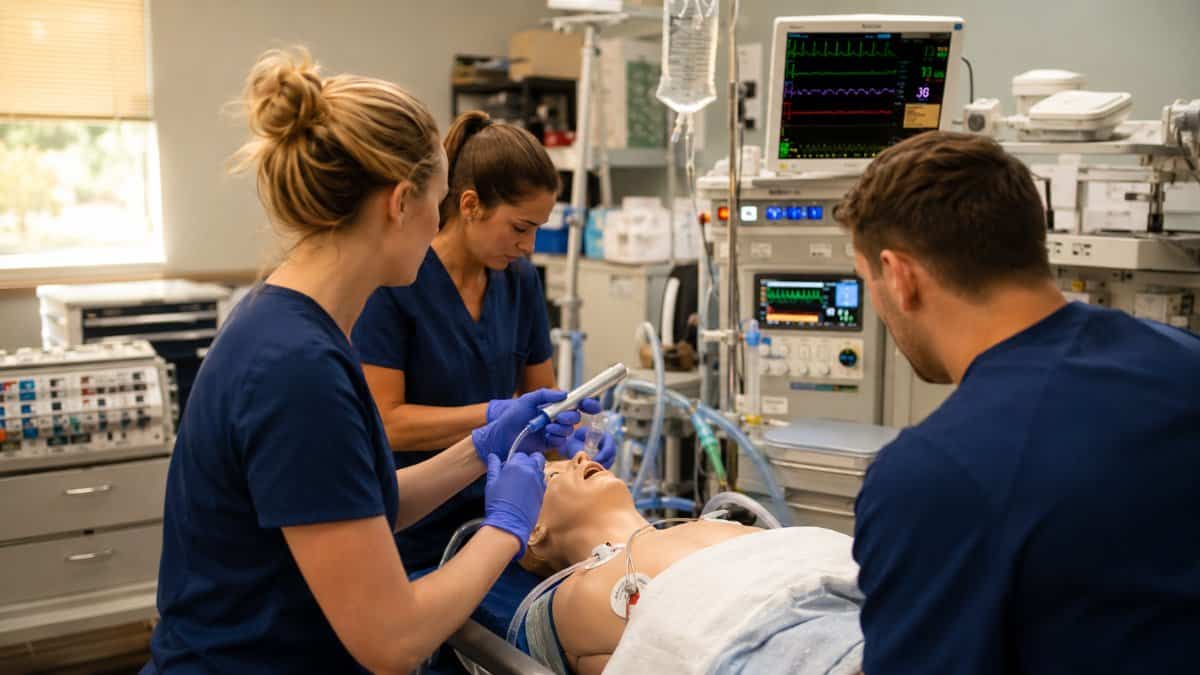
The program runs nine consecutive semesters — summer through spring, three years straight, no summers off.
That’s the standard shape of front-loaded doctoral anesthesia training: didactic-heavy early, then progressively more time in the OR as you advance.
Attrition tells you a lot about how a program treats its students once they’re in. Penn’s recent numbers: one student lost from the class of 2024, one from 2023, and zero from the three classes before that. Programs that admit carefully and support their students post those kinds of numbers.
Programs that over-admit and let the curriculum sort people out do not.
Plan on treating school like a full-time job and then some. Most anesthesia programs — Penn included — are realistic that working as an RN during the program is close to impossible after the first semesters.
Location & Cost of Living in Philadelphia

Penn Nursing sits in University City, West Philadelphia, surrounded by one of the densest medical districts on the East Coast.
A one-bedroom apartment in Philadelphia averages about $1,849 a month (RentCafe, June 2026) — call it $1,500–$1,700 in student-friendly neighborhoods like Spruce Hill or Cedar Park within biking distance of campus, more if you want a new building in Center City.
Over 36 months, housing alone adds $55,000–$70,000 to your real cost of attendance. Philly is still meaningfully cheaper than Boston or New York for a comparable program, and you don’t need a car for daily life — SEPTA and a bike cover it.
If you’re commuting-curious: the city is reachable from South Jersey and Delaware, which matters because Penn students come from all three states’ ICUs.
Application Strategy: The 18-Month Runway
18 months out: Get into a qualifying ICU if you’re not in one (remember — no ER, NICU, or step-down credit here). Start shadowing a CRNA and log the hours. If your science GPA has soft spots, retake a course now, not later.
12 months out: Sit for the CCRN even though Penn doesn’t require it. Line up your recommenders — an ICU manager and a physician or CRNA who has actually watched you manage sick patients. Start drafting your essay around a specific patient story, not a generic “I love the OR.”
6 months out: The application opens in November and closes February 15, with decisions in May for a start the following summer. Submit early — never at the deadline. Rehearse interview answers out loud. Have a real human read your essay cold and tell you what they remember afterward.
The Interview
Penn interviews by invitation after the February deadline. Expect what top anesthesia programs generally run: a mix of behavioral questions (“tell me about a time a patient deteriorated on your shift”) and clinical judgment probing your ICU depth — vasoactive drips, vent management, why you did what you did.
They’re checking whether two years in the unit actually taught you two years’ worth. Know your own patients’ physiology cold, and have honest answers about failure and stress. Polish matters less than substance.
Clinical Training
Penn’s home turf is the Penn Medicine system and the University City medical corridor, one of the busiest academic-medicine clusters in the country.
High case volume and high acuity are the point of training in a city like this. For the current list of clinical sites and how rotations are assigned — which can change year to year — ask admissions directly; it’s a fair and expected question, and the answer matters more than any ranking.
Is Penn Right for You? An Honest Assessment
Penn is a great fit if you:
- Want doors open beyond the OR — leadership, academia, policy — where the Ivy network genuinely pays off
- Have two-plus years in a high-acuity adult ICU and a file that competes above the minimums
- Value a freshly rebuilt curriculum and a program the COA just cleared for ten years
- Want to train in a dense academic-medicine environment with maximum case complexity
- Have a financial plan (savings, working spouse, loan strategy) that survives $260K plus living costs
- Like big-city living, or at least can tolerate it for three years
- Are the kind of applicant who’d rather compete for a harder seat than settle for a sure one
Consider other options if you:
- Are cost-sensitive — Philadelphia has several other accredited programs (including Drexel and Jefferson) worth pricing out
- Plan to practice bedside anesthesia in a community hospital, where the brand premium buys you little
- Have ER, NICU, or step-down experience and can’t move to a qualifying ICU for two more years
- Want a smaller-city cost of living — programs in Erie, Scranton, or York cost less to attend and to live near
- Need residency-based tuition pricing (Penn has none; some public programs elsewhere do)
- Prefer knowing exact class size and acceptance odds before applying — Penn doesn’t publish either
- Would take on the debt without a clear repayment plan — a 92% pass rate doesn’t co-sign your loans
No red flags in the data: outcomes are strong, attrition is near zero, and the accreditation runway is the longest available. The only honest caution is the price tag — it’s a premium product at a premium price, and the premium only makes sense for some careers.
Frequently Asked Questions
Is UPenn a good CRNA program?
Yes, by every measurable standard: a 92% first-time NCE pass rate (class of 2024), 100% employment within six months, near-zero attrition, and a fresh COA reaccreditation through May 2036 — the maximum the accreditor grants.
The trade-off is cost: roughly $260,000 all-in, the highest in Pennsylvania.
How much does the UPenn CRNA program cost?
About $260,000 total at 2026-27 rates: $7,106 per course unit across 35.5 units ($252,263 in tuition) plus general, technology, and clinical fees. Penn is private, so in-state and out-of-state students pay the same. Add living costs — Philadelphia one-bedrooms average about $1,849/month.
Does Penn’s CRNA program require the GRE?
No. Penn dropped the GRE requirement in July 2021. You’ll need a BSN with a 3.0+ GPA and a minimum of two years of qualifying ICU experience — trauma, CV, surgical, neuro, burn, pediatric, medical ICU, or CCU. ER, NICU, PACU, and step-down time don’t count.
When is the application deadline?
February 15, with the application opening the prior November. Decisions arrive in May, and the cohort starts the following summer (May term). That means applying in early 2027 puts you in the class that starts May 2028 — plan your ICU timeline backward from there.
How long is the program?
36 months — nine consecutive semesters with no breaks, running summer through spring for three straight years. It’s a full-time, entry-level BSN-to-DNP; graduates leave eligible for the NCE and CRNA certification.
Next Steps
If Penn is on your list: confirm your ICU qualifies, get a current cost estimate and class-size answer straight from admissions, and put February 15 on your calendar with a personal deadline a month earlier. Compare it honestly against the other Pennsylvania programs — including its Philadelphia neighbors — before you decide the premium is your premium.
Contact the program
Penn School of Nursing, DNP Nurse Anesthesia Program — Program Administrator: Dawn Bent, DNP, MSN, CRNA
Admissions: admissions@nursing.upenn.edu · (215) 898-4271
Program office: (215) 746-4449
Official page: nursing.upenn.edu/dnp-nurse-anesthesia · Accreditation: Council on Accreditation (COA) · Salary data: BLS OEWS