
Last updated: July 2026 | Researched and reviewed by Daniel Etheridge, CRNA
Drexel’s nurse anesthesia program is a 39-month DNP based in University City, Philadelphia, with a spring start each year.
It’s one of three CRNA programs in the city, and it competes on results rather than name recognition.
Add a 94.4% first-time board pass rate and a clearly published cost structure, and Drexel earns a hard look from anyone shopping Philadelphia programs. Here’s the full picture — including the parts that aren’t on the brochure.
Key Takeaways
- 94.4% first-time NCE pass rate (class of 2025) with 100% employed within 6 months
- Hybrid format: roughly 9 months of online coursework, then ~30 months on campus in Philadelphia — confirm the specifics of the online phase with the program
- About $166,600 all-in — roughly $90K less than Penn across town
- CCRN required plus 2 years of ICU — a higher entry bar than most Pennsylvania programs
- Apply by December 4, 2026 for the cohort starting Spring 2028
Drexel Nurse Anesthesia Program at a Glance
| Degree | Doctor of Nursing Practice (DNP), Nurse Anesthesia — entry level (BSN or post-MSN entry) |
| Length | 39 months / ~13 quarters — first ~9 months online, then ~30 on campus |
| Credits | 135 quarter credits |
| Location | Philadelphia, PA (University City campus) |
| Class starts | March (spring quarter), once a year |
| Application deadline | December 4, 2026 (for the Spring 2028 cohort) |
| Est. total program cost | ≈ $166,600 — same for in-state and out-of-state (2026-27 rates) |
| GRE / CCRN | GRE not listed — confirm with admissions; CCRN required |
| Employment | 100% of the Class of 2025 employed within 6 months |
| Accreditation | COA-accredited through October 2031 |
Drexel is one of 17 CRNA programs in Pennsylvania (dropping to 15 as two close in 2026), and one of four in Philadelphia proper.
Why Drexel Stands Out

Three things stand out.
First, the structure: roughly nine months of online coursework before the 30 onsite months begin. It’s a different rhythm than the fully onsite programs across town, and how the online phase works day to day is worth a direct conversation with the program before you apply.
Second, the outcomes. The class of 2025 passed the National Certification Examination at 94.4% on the first attempt, with 5% attrition and 100% employment within six months.
Those three numbers together are the whole story of a well-run program: students get in, get through, pass, and get hired.
Third, the quarter system. Drexel runs on quarters (135 quarter credits ≈ 90 semester credits), which keeps courses shorter and the pace brisk.
Some students love the rhythm; others find it relentless. Know which one you are.
Accreditation is solid and boring, the way you want it: the COA granted Drexel the maximum 10-year continuation at its 2021 review, with the next review not due until October 2031.
Getting Accepted: What It Actually Takes
Drexel’s requirements run stricter than most on two fronts, so read closely.
The ICU bar is two years, not one — full-time, post-orientation, with the sickest patients. Qualifying units include surgical, cardiothoracic, coronary, medical, pediatric, and neonatal ICUs.
Drexel leaves some room for other units if you can demonstrate real competence with unstable patients, invasive monitoring, ventilators, and critical-care drips — but treat two years in a high-acuity adult ICU as the practical floor.
CCRN is required, not recommended. Drexel spells it out: CCRN or a population-specific equivalent. If you haven’t sat for it yet, that’s your first to-do — before essays, before references.
The rest: minimum 3.2 GPA, BSN from an accredited program (or an MSN — Drexel’s post-master’s entry path doesn’t require a CRNA credential, so it’s still entry-level), RN licensure eligibility in Pennsylvania, New Jersey, and Delaware, plus BLS, ACLS, and PALS. The GRE isn’t listed among the requirements; confirm its status with admissions rather than assuming.
One more strategic note: the application deadline is December 4, 2026 — for a cohort that starts in Spring 2028. Drexel’s runway is longer than most programs’.
Applying this winter means starting more than a year later, so count backward when planning your ICU time: you need two years completed, and the clock doesn’t pause while you wait.
The Financial Reality: About $166,600 All-In
The math: $1,207 per quarter credit at 2026-27 rates × 135 quarter credits = $162,945 in tuition, plus the general university fee (about $280 per term across roughly 13 quarters). Call it $166,600 before books, equipment, and certification costs — and before the annual rate increases every university applies, so budget a cushion on top.
Drexel doesn’t publish a single all-in total, so treat that figure as a careful estimate built from their own posted rates, and ask admissions for a written cost sheet during your cycle.
The usual hidden costs apply: board review courses ($1,500–$3,000), the NCE fee, licensure in three states (PA/NJ/DE — a genuine line item most applicants forget), background checks, and the big one, foregone income.
Against Pennsylvania’s average CRNA salary of about $233,320 (BLS OEWS, May 2025), the payback math works strongly in your favor.
Student Experience
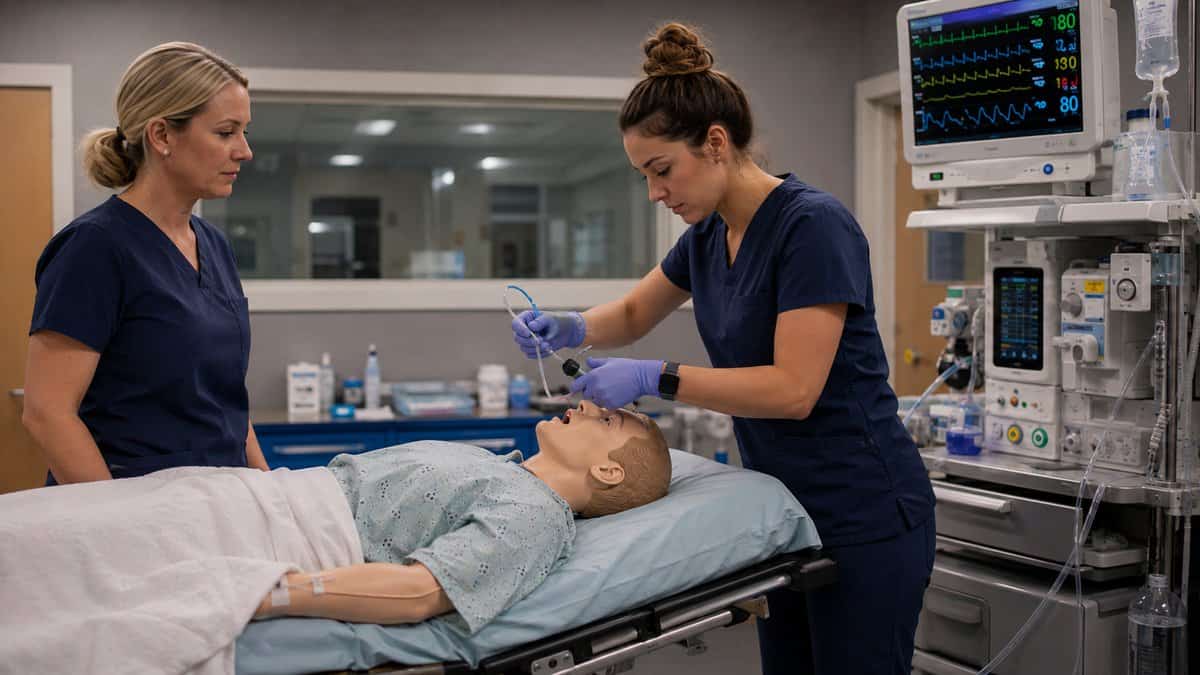
Expect two distinct phases. Phase one: full-time didactic coursework on the quarter system.
Discipline matters here — the science load is doctoral-level from day one, and the online quarters demand real self-direction.
Phase two, Philadelphia: 30 months onsite and in clinical rotations, full-time-plus. Working during this stretch is unrealistic, same as every anesthesia program.
The 5% attrition figure (class of 2025) says the structure works — one student in twenty doesn’t finish, which is low for a 39-month doctoral grind. And 100% of 2025 graduates were employed within six months, which tells you Philadelphia-area hospitals trust the product.
Location & Cost of Living in Philadelphia

Drexel’s campus sits in University City, directly adjacent to Penn’s — the two schools share a neighborhood, a medical corridor, and a transit web.
A Philadelphia one-bedroom averages about $1,849 a month (RentCafe, June 2026), with student-friendly pockets in West Philly running $1,500–$1,700. Here’s where Drexel’s structure pays again: you only need Philadelphia housing for the ~30 onsite months, not all 39.
That’s roughly $16,000 of rent you don’t pay compared to a fully residential 39-month program.
No car needed — SEPTA, the trolley, and a bike cover University City easily. Commuters from South Jersey and Delaware do it daily, which fits, since you’ll hold licenses in all three states anyway.
Application Strategy: The Long Runway
18+ months out: Get into a qualifying ICU if you’re not there, and start the two-year clock. Sit for the CCRN — it’s required, so earlier is better.
Begin shadowing a CRNA.
12 months out: Confirm your GPA math (3.2 floor — if you’re close, a strong grad-level science course can help). Line up references who’ve watched you manage crashing patients.
Verify your licensure eligibility in PA, NJ, and Delaware.
By fall 2026: Applications for Spring 2028 are due December 4, 2026. Submit weeks early, not the night of.
Then use the long gap between acceptance and matriculation deliberately: bank money, absorb every high-acuity assignment your unit offers, and arrive in March 2028 sharper than the minimums.
The Interview
Interviews follow the deadline, by invitation. Expect the standard anesthesia-program mix — behavioral questions and clinical knowledge pulled straight from your ICU world: vasoactive agents, vent strategies, why you intervened when you did.
Drexel’s CCRN requirement means every candidate in the room has certified critical-care knowledge, so what separates people is depth and composure, not vocabulary. Bring specific patient stories, including one where things went wrong.
Clinical Training
The onsite phase runs through Drexel’s clinical network across the Philadelphia region — one of the densest hospital markets in the country. Case volume and acuity come with the territory.
Rotations and site assignments shift year to year, so ask admissions (NAPadmissions@drexel.edu) for the current site list and how assignments work; it’s a standard question and the answer matters more than any marketing page.
Is Drexel Right for You? An Honest Assessment
Drexel is a great fit if you:
- Already hold the CCRN and have (or will have) two full years in a high-acuity ICU
- Learn well independently and manage your own study schedule
- Want strong published outcomes (94.4% first-time pass, 100% employment)
- Can handle licensure logistics in three states without melting down
- Like a brisk quarter-system pace with shorter, denser courses
Consider other options if you:
- Only have one year of ICU experience — Drexel’s two-year floor is firm, and La Salle across town admits at one year
- Learn poorly online and want in-person faculty contact from week one — Jefferson and Penn are fully onsite from the start
- Don’t yet have the CCRN and won’t sit for it soon — it’s a hard requirement here
- Want the shortest path — at 39 months, Drexel runs 3 months longer than Penn or Jefferson
- Your GPA is under 3.2 with no plan to strengthen it
- Want a school that publishes its class size and acceptance data up front
- Can’t plan around the long runway — applying December 2026 for a March 2028 start requires patience and a stable life plan
No red flags in the record: strong pass rates, low attrition, full employment, and a clean 10-year accreditation. The honest cautions are structural — the two-year ICU floor, the required CCRN, and a timeline that rewards planners and punishes impulse-appliers.
Frequently Asked Questions
Is Drexel a good CRNA program?
Yes. The class of 2025 posted a 94.4% first-time NCE pass rate — currently the best in Philadelphia — with just 5% attrition and 100% employment within six months.
The COA gave it the maximum 10-year accreditation through October 2031, and the ~$166,600 estimated cost undercuts Penn by nearly $100,000.
How much does Drexel’s CRNA program cost?
Roughly $166,600 all-in at 2026-27 rates: $1,207 per quarter credit across 135 quarter credits ($162,945 tuition) plus university fees. Drexel is private, so in-state and out-of-state students pay the same.
Is Drexel’s CRNA program online?
Partially. The first nine months or so of didactic coursework run online, after which students complete about 30 months onsite in Philadelphia for labs and clinical rotations.
It’s the only Philadelphia program structured this way. Ask the program directly what the online phase involves — Drexel classifies every quarter as full-time study.
What are Drexel’s CRNA requirements?
A BSN (or MSN) with a 3.2+ GPA, a minimum of two years of full-time ICU experience post-orientation, CCRN certification (required), RN licensure eligibility in PA, NJ, and DE, and BLS/ACLS/PALS. The GRE isn’t listed in the requirements — confirm current policy with admissions.
When is Drexel’s CRNA application deadline?
December 4, 2026, for the cohort starting in Spring 2028. Drexel runs a longer runway than most programs — plan your ICU experience and CCRN timing around the gap between acceptance and matriculation.
Next Steps
If Drexel fits: sit for the CCRN now, confirm your ICU time clears two years before matriculation, and email admissions for the current cost sheet and class size. Then compare it honestly against the rest of Pennsylvania’s programs — especially its three Philadelphia neighbors — before committing to the long runway.
Contact the program
Drexel University College of Nursing and Health Professions — Nurse Anesthesia Program
Program Director: Suzanne Ariza, PhD, CRNA
Admissions: NAPadmissions@drexel.edu
Official page: drexel.edu/cnhp/academics/doctoral/DNP-NA · Tuition rates: Drexel graduate tuition · Accreditation: Council on Accreditation (COA) · Salary data: BLS OEWS