

Last updated: October 2026 | Researched and reviewed by Daniel Etheridge, CRNA
If you are considering Lincoln Memorial University’s CRNA program, this article will give you the information you need: cost, admission requirements, deadlines, and outcomes.
LMU’s Caylor School of Nursing offers a 36-month, 109-credit entry-level DNP with a nurse anesthesia concentration. The program is based in Harrogate, Tennessee, near Cumberland Gap, where Tennessee, Kentucky, and Virginia meet.
Classes start each January. Didactic courses are delivered online, with required on-campus intensive sessions, and clinical rotations are spread across Tennessee, Kentucky, Virginia, and Georgia.
Key Takeaways
- 36 months, 109 credits, DNP
- January start, Harrogate, TN
- $37,992/yr tuition and fees
- Sept 15 priority deadline
- 1 year ICU; adult ICU preferred
- GRE only if GPA is under 3.4
- 83% first-time pass (2025)
Lincoln Memorial Nurse Anesthesia Program Quick Facts:
| Degree | DNP (entry level), Nurse Anesthesia Concentration |
| Length | 36 months, 109 credits, nine semesters, full-time only |
| Location | Harrogate, TN |
| Class starts | January |
| Application deadline | Rolling; September 15 priority deadline each year |
| Tuition and fees | $37,992 per year (2026-27); about $114,000 for the program (est.) |
| GRE | Required only if cumulative GPA is below 3.4 |
| CCRN | Preferred, not required |
| ICU requirement | 1 year minimum; adult critical care preferred |
| First-time pass rate | 83.33% (2025) |
| Clinical sites | Tennessee, Kentucky, Virginia, and Georgia |
| Accreditation | COA; most recent decision was continuing accreditation |
One of 9 CRNA Schools in Tennessee
LMU is one of 9 accredited CRNA programs in Tennessee. The closest alternatives are in the Knoxville area: the University of Tennessee, Knoxville, South College, and Carson-Newman University in Jefferson City.
Lincoln Memorial CRNA Program Overview

All didactic nurse anesthesia courses are delivered online. Students attend intensive sessions lasting two to four days during five of the program’s nine semesters.
For the final five terms, students are in the operating room four days a week (more when on call) and in class one day a week. LMU tells applicants to expect about 60 hours a week, and there is no part-time option.
LMU’s nurse anesthesia program moved from the master’s to the doctoral level and enrolled its first DNP cohort in January 2022. Its most recent COA accreditation decision was continuing accreditation.
LMU has also announced plans to enroll nurse anesthesia students at its Tampa, Florida campus, pending COA approval. LMU states that students will not be enrolled there until the COA approves it. The COA deferred that decision at its June 2026 meeting. LMU says the intensive sessions are held at both the Harrogate campus and its Brandon (Tampa) location.
Lincoln Memorial CRNA Program Admission Requirements
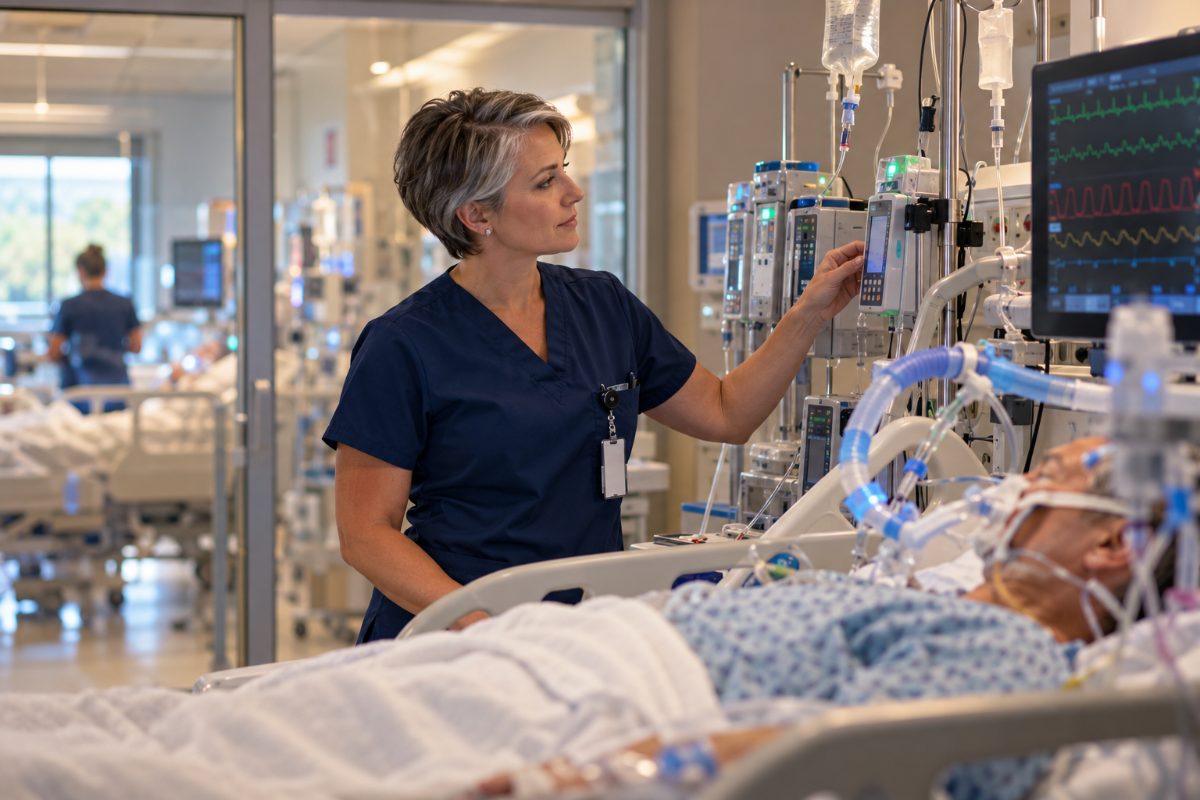
To be considered for the LMU nurse anesthesia program, you will need:
- A BSN from an accredited nursing program
- A cumulative GPA of 3.0 or better
- An undergraduate statistics course
- Two undergraduate chemistry courses, one of them organic chemistry, at least one with a lab
- At least one year of RN experience in critical care (Level I or II trauma center preferred)
- An unencumbered Tennessee RN license; clinicals also require licensure in Kentucky, Georgia, Virginia, West Virginia, and other states where you rotate
- At least three recommendations, including one from nursing faculty or a critical care supervisor and one from another healthcare professional
- A statement of professional goals
- BLS, ACLS, and PALS current through December of the year you apply
- An in-person or Zoom interview
Adult critical care is preferred. Neonatal and pediatric ICU experience is considered individually. Step-down, ER, OB, OR, and PACU do not count as critical care, and the one-year minimum is not waived.
The GRE is required only if your cumulative GPA is below 3.4. The CCRN is preferred, not required.
Application Dates and Deadlines
LMU uses rolling admission, with a priority deadline of September 15 each year for the class that starts the following January. Applications are reviewed in the order they are received, and later applications are also considered.
The September 15, 2026 priority date for the January 2027 class has passed. The next priority date is September 15, 2027, for the January 2028 class. Questions go to Jennie Gamble at 423-869-6830 or jennie.gamble@lmunet.edu.
Lincoln Memorial CRNA Program Tuition and Cost
LMU’s 2026-27 cost of attendance for the DNP Nurse Anesthesia program lists $35,625 in tuition and $2,367 in program fees for three semesters, for a total of $37,992 a year in tuition and fees. At that rate, the 36-month program comes to roughly $114,000. Rates can change each year.
LMU’s full yearly cost-of-attendance budget is $74,299. Besides tuition and fees, it includes:
- Health insurance: $4,068 (can be waived with comparable coverage)
- Books, supplies, and equipment: $2,925
- Housing: $9,900
- Food: $7,500
- Transportation: $7,800
- First professional credential: $1,494
Nurse anesthetists earned a national average of $248,320 a year as of May 2025 (BLS).
Clinical Rotations and Training Sites
LMU’s clinical sites are in Tennessee, Kentucky, Virginia, and Georgia, and sites can change from semester to semester. The current list includes the University of Tennessee Medical Center and Fort Sanders Medical Center in Knoxville, Holston Valley Medical Center and Bristol Regional Medical Center in Tennessee, Pikeville Medical Center and several ARH hospitals in Kentucky, Clinch Valley Medical Center in Virginia, and Floyd Medical Center and Hamilton Medical Center in Georgia.
All students are expected to rotate to every site. Students pay for their own travel, and most need housing for at least some rotations.
Pass Rates, Attrition, and Employment
LMU’s program statistics (revised June 2026):
| Class | First-time pass | Pass within 60 days | Employment | Attrition |
|---|---|---|---|---|
| 2025 | 83.33% | 100% | 100% | 7% |
| 2024 | 67% | 100% | 100% | 50% |
| 2023 | 58% | 100% | 100% | 8% |
| 2022 | 80% | N/A | 92.7% | 6% |
| 2021 | 75% | N/A | 100% | 21% |
Employment is measured 6 to 12 months after graduation.
Living in Harrogate While Attending LMU

Harrogate is a small town in the mountains at Cumberland Gap. Knoxville is about an hour south.
LMU offers on-campus housing options, and its cost-of-attendance budget uses $9,900 a year for housing. Plan for extra housing costs during clinical rotations away from Harrogate.
Is the Lincoln Memorial CRNA Program Right for You?
LMU is a good fit if you:
- Have one year of adult ICU experience
- Have a GPA of 3.4 or higher and want to skip the GRE
- Want online didactic courses with short campus intensives
- Live in East Tennessee, Kentucky, or Virginia
- Want tuition and fees under $40,000 a year
Consider other options if you:
- Want a city during school
- Do not want to travel or pay for housing during rotations
- Have a GPA under 3.4 and do not want to take the GRE
- Need a part-time option
- Want a fall start
Frequently Asked Questions
How much does the Lincoln Memorial CRNA program cost?
LMU lists $35,625 in tuition plus $2,367 in program fees for 2026-27, or $37,992 a year in tuition and fees for three semesters. At that rate, the 36-month program comes to roughly $114,000. Rates can change each year.
When is the LMU CRNA application deadline?
LMU uses rolling admission with a priority deadline of September 15 each year for the class that starts the following January. Later applications are also considered.
Does LMU require the GRE for the CRNA program?
Only if your cumulative GPA is below 3.4. At 3.4 or higher, no GRE is required. The CCRN is preferred but not required.
What ICU experience does LMU accept?
A minimum of one year as an RN in critical care, with Level I or Level II trauma center experience preferred. Adult critical care is preferred; neonatal and pediatric ICU experience is considered individually. Step-down, ER, OB, OR, and PACU do not count.
What is the LMU CRNA pass rate?
LMU reports first-time National Certification Exam pass rates of 83.33% for 2025, 67% for 2024, and 58% for 2023. All three classes reached 100% within 60 days of graduation.
Where is the LMU CRNA program located?
The program is based at LMU in Harrogate, Tennessee, near Cumberland Gap. Didactic courses are online, with required on-campus intensives, and clinical sites are in Tennessee, Kentucky, Virginia, and Georgia.
Next Steps
If you are aiming for the January 2028 class, plan to apply before the September 15, 2027 priority date. Check your statistics and chemistry prerequisites, and keep BLS, ACLS, and PALS current through December of the year you apply.
You can compare all Tennessee CRNA programs side by side, look at nearby programs in Kentucky, or compare programs in every state on our CRNA Schools by State page.
Contact the Program
Lincoln Memorial University, Caylor School of Nursing, DNP Nurse Anesthesia
Program Director: Dr. Raleigh Todd
Admissions: Jennie Gamble, 423-869-6830, jennie.gamble@lmunet.edu
6965 Cumberland Gap Parkway, Harrogate, TN 37752
Official page: lmunet.edu: DNP Nurse Anesthesia
Admission requirements: LMU admission requirements
FAQ: LMU nurse anesthesia FAQ
Accreditation: Council on Accreditation (COA)