
Last updated: August 2026 | Researched and reviewed by Daniel Etheridge, CRNA
The La Salle University nurse anesthesia program is a 41-month, entry-level DNP based on La Salle’s campus in Philadelphia.
It is the newest CRNA program in Pennsylvania. The first cohort started in January 2024, and no class has graduated yet.
That means there are no pass rates to show you. What there is: a COA-accredited program, a director who came from one of the region’s oldest anesthesia schools, and an online first year that lets you keep working.
One thing to clear up first. La Salle’s name is attached to two different CRNA programs. This article is about the stand-alone La Salle University program. The other one, the Frank J. Tornetta School of Anesthesia at Einstein Medical Center Montgomery, is closing on December 31, 2026. More on that below.
Key Takeaways
- COA accredited since November 2023, with the next review in October 2029; the first cohort started in January 2024 and has not graduated yet, so there are no NCE results
- Plan on roughly $142,650 in tuition and fees at 2026-27 rates: 85 credits at $1,620 per credit plus university, simulation, and graduation fees, plus $250 per clinical site
- The CCRN is required, the GRE is not listed, and you need 15 hours of shadowing and four letters of recommendation, including one from a physician
- Applications for the Spring 2028 cohort are open September 1, 2026 through January 15, 2027
La Salle Nurse Anesthesia Program Quick Facts:
| Degree | DNP, Post-BSN (entry level) |
| Length | 41 months, 10 semesters, 85 credits, full time |
| Location | 1900 West Olney Ave., Philadelphia, PA (first year online) |
| Class starts | January |
| Application window | September 1, 2026 – January 15, 2027 for the Spring 2028 cohort |
| Class size | Not published (closed cohort) |
| Tuition + fees | ≈ $142,650 (2026-27 rates): $137,700 tuition + $2,850 general university fees + $2,000 simulation fee + $100 graduation fee, plus $250 per clinical site. Private, all states pay the same |
| GRE / CCRN | GRE not listed · CCRN required (or an equivalent such as CEN, with scores) |
| Outcomes | No graduates yet (first cohort expected to finish in 2027) |
| Accreditation | COA accredited as of November 8, 2023 (next review October 2029) |
La Salle is one of 15 CRNA programs in Pennsylvania and one of four in Philadelphia, alongside Penn, Drexel, and Jefferson.
Two La Salle Programs: The Tornetta Closure Explained
For years, La Salle’s DNP coursework fed into the Frank J. Tornetta School of Anesthesia at Einstein Medical Center Montgomery in Norristown. La Salle taught the core doctoral courses, and Tornetta ran the anesthesia residency. That combined program was 51 months long.
That partnership is ending. The COA states the Tornetta program will voluntarily close on December 31, 2026. La Salle’s own page for it says the program is currently paused, and the Tornetta website says applications are on hold due to a change in program ownership.
In the meantime, La Salle built its own program. The catalog states that La Salle launched a stand-alone post-BSN to DNP nurse anesthesia program in spring 2024, and the COA accredited it as of November 8, 2023. Its director, Robert Simon, DNP, CRNA, was previously Tornetta’s assistant program director and didactic education coordinator.
So La Salle did not lose a CRNA program. It replaced a partnership with a program it runs itself, with a shorter 41-month curriculum. If you are searching for “La Salle CRNA,” this is the program that is accepting applications.
We could not find any statement from La Salle or Einstein describing how Tornetta students are being transitioned. If you were a Tornetta student or applicant, contact La Salle directly.
Why La Salle Stands Out
The online first year is the practical advantage. All of the first-year non-anesthesia courses (pathophysiology, pharmacology, statistics, epidemiology, assessment, ethics, research) are delivered fully online. You can keep working in the ICU and stay where you live until the anesthesia coursework begins in the second year.
The program is individualized. La Salle states that every student’s curricular plan is individualized and includes at least 2,000 clinical hours.
The faculty are experienced even if the program is new. The director spent years running the didactic side of the Tornetta school, and La Salle’s nursing program has been around a long time.
The mission is distinctive. La Salle’s FAQ describes the program in terms of faith, service, and community, with a focus on underserved and vulnerable populations. If that matters to you, it will show in the interview.
La Salle CRNA Program Admission Requirements
To be considered for the La Salle CRNA program, you will need:
- A BSN from an ACEN- or CCNE-accredited program
- A cumulative nursing GPA of 3.2 or higher
- A current, unencumbered United States RN license
- At least one year of critical care experience in the United States, its territories, or a US military hospital
- CCRN certification, or a similar equivalent such as the CEN, with exam score results
- Current ACLS and PALS
- An introductory statistics course (descriptive and inferential) and an undergraduate nursing research course on your transcript
- Four letters of recommendation: one from a nurse manager, one from a physician, and two from other healthcare professionals
- At least 15 hours of shadowing an anesthesia provider within the last year
- A statement of interest covering why you want to be a CRNA, why La Salle, and where you see yourself in five years
La Salle defines critical care as a unit where you routinely manage invasive hemodynamic monitors, cardiac assist devices, mechanical ventilation, and vasoactive infusions. SICU, CTICU, CCU, MICU, PICU, and NICU are all named as examples.
The CCRN is required. La Salle is one of the stricter Philadelphia programs on that point.
A physician letter is required. Most programs ask for a supervisor and an academic reference. Start building that relationship with an intensivist or anesthesiologist now.
The GRE is not listed among the requirements. An older La Salle page from the Tornetta era mentions a GRE waiver for a 3.2 GPA, but that page is not the stand-alone program’s requirements. Follow the current admissions page.
La Salle does not mention an interview on its admissions page. Ask.
La Salle CRNA Program Tuition and Cost
Plan on roughly $142,650 in tuition and mandatory fees at 2026-27 rates, plus $250 for each clinical site you rotate through.
Here is the breakdown:
- Tuition: $1,620 per credit for 85 credits, or $137,700
- General university fee: $285 per semester for 10 semesters, or $2,850
- Nurse anesthesia simulation fee: $2,000, paid once in the spring of the second year
- Graduation fee: $100
- Nursing clinical site fee: $250 per site (the number of sites is not published)
- Application fee: $100
One thing to check. La Salle’s 2026-27 tuition table lists two anesthesia DNP rows: “Doctor of Nursing Practice – Anesthesia” at $1,050 per credit and “Doctor of Nursing Practice (La Salle standalone)” at $1,620 per credit. The lower rate matches the Tornetta partnership rate from prior years. We used the stand-alone rate for this program. Confirm with admissions which rate applies to you.
At $1,620 per credit, La Salle has one of the highest per-credit rates in the state, and the 41-month length adds an extra year of living costs. La Salle is private, so every student pays the same rate. The cost table on our Pennsylvania CRNA schools guide shows how it compares to Penn, Drexel, and Jefferson.
The national average CRNA salary is $248,320 (BLS, May 2025). The degree still pays for itself, but you are paying a premium for a program without a track record.
Pass Rates, Attrition, and Employment
There are none yet. The first cohort started in January 2024 on a 41-month curriculum, so the first graduates are expected in 2027 and the first NCE results after that.
That is the honest answer, and it is the biggest thing to weigh. Every other Philadelphia program can show you five or more years of results. La Salle cannot, because the program is too new.
Ask the program how the first cohort is doing: how many started, how many are still enrolled, and how they performed on the Self-Evaluation Exam. The answers will tell you what the first NCE results are likely to look like.
Student Experience
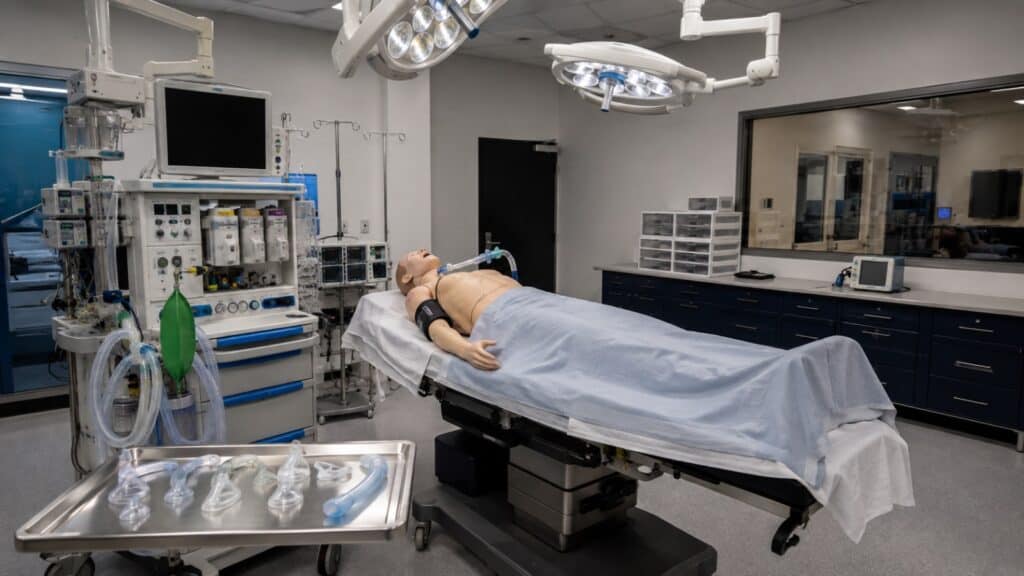
The program is hybrid. Year one is fully online. Starting in the second spring, anesthesia coursework moves to campus, with hands-on simulation lab work on the technology and equipment used in anesthesia practice.
The cohort is closed, meaning you move through the program with the same group, and La Salle does not accept transfer credits.
La Salle strongly encourages students not to work once anesthesia courses begin, and you need the director’s approval to work during the program.
The program runs 41 months across 10 semesters, including summers. Plan for a full year longer than most Pennsylvania programs.
Living in Philadelphia While Attending the La Salle CRNA Program
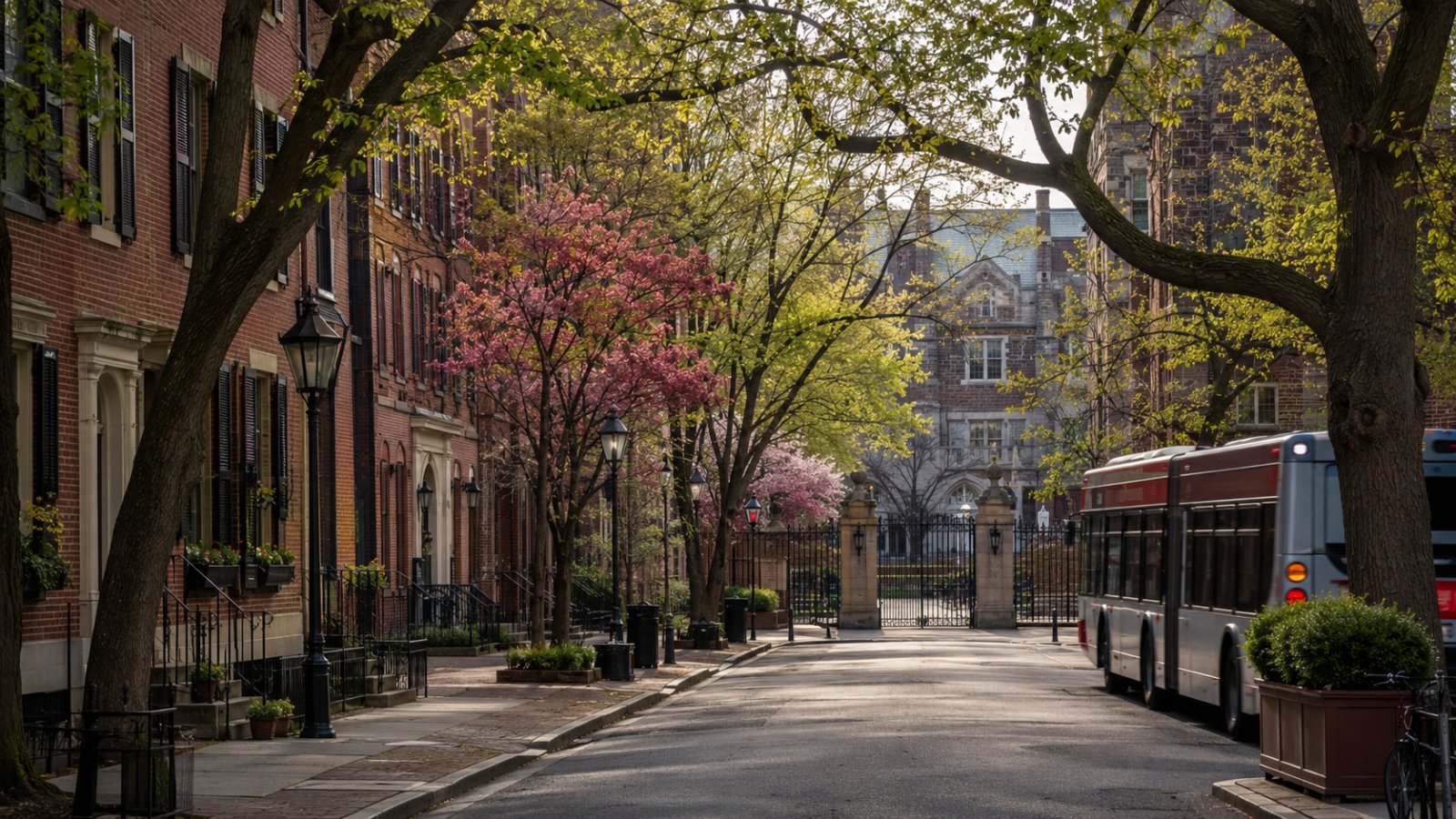
La Salle’s campus is at 1900 West Olney Avenue in the Logan and Olney section of North Philadelphia. SEPTA’s Broad Street Line and several bus routes serve the area, and Olney Transportation Center is nearby.
Rent near campus is lower than Center City or University City, where Jefferson, Penn, and Drexel students live. Many students commute from the Northeast, Montgomery County, or across the river.
Since year one is online, you only need to be near Philadelphia for the last 29 months. You will need a car for clinical, and La Salle does not publish its site list, so ask how far students travel.
Application Dates and Deadlines
La Salle’s program page states that applications for Spring 2028 will be open from September 1, 2026 through January 15, 2027. The admissions page still shows an older date, and the catalog says December 31, so use the program page and confirm with admissions.
If you are targeting January 2028:
18 months out (now): Be in an adult ICU that meets La Salle’s definition. Line up 15 hours of shadowing with an anesthesia provider; it has to be within the last year when you apply.
12 months out: Pass the CCRN. It is required. Confirm your statistics and nursing research courses are on your transcript. Ask a physician for a letter, since that one takes the longest.
6 months out: Collect your four letters, write your statement of interest around a specific patient, and submit early in the window. Do not wait until January.
The Interview
La Salle’s admissions page does not describe an interview process. Ask whether one is part of the cycle.
If there is one, expect clinical questions about your ICU patients along with questions about La Salle’s mission. The FAQ language about faith, service, and underserved populations is a hint about what the faculty value.
Bring two questions: how the first cohort is doing, and where students are placed for clinical. Both answers will help you decide.
Clinical Rotations and Training Sites
La Salle does not publish its clinical sites. The student handbook states that site assignments are made by the program director, and the program promises at least 2,000 clinical hours on an individualized plan.
Ask for the current site list, the typical travel distances, and the number of sites students rotate through, since each one adds a $250 fee.
Is the La Salle CRNA Program Right for You?
La Salle is a great fit if you:
- Want to keep working through a fully online first year
- Have your CCRN and a year of adult ICU experience
- Can get a physician letter of recommendation
- Value a mission-driven, service-oriented program
- Live in North Philadelphia, the Northeast, or Montgomery County and want a shorter commute than Center City
- Want a smaller, closed cohort with an individualized plan
- Do not want to take the GRE
Consider other options if you:
- Want to see NCE pass rates, attrition, and employment data before you commit, since La Salle has none yet
- Are choosing mainly on price, since $1,620 per credit is one of the highest rates in Pennsylvania
- Want a 36-month program, since La Salle is 41 months
- Want a published clinical site list
- Want a published class size
- Do not have your CCRN and cannot get it before January 15
- Want an established alumni network in Philadelphia operating rooms
In summary, La Salle is a new program with experienced leadership, a flexible online first year, and a mission you will either connect with or not. The trade-offs are a high per-credit rate, an extra year of length, and no outcomes yet. If those numbers matter to you, wait for the first cohort’s results before you apply.
Frequently Asked Questions
Is La Salle a good CRNA program?
It is too new to say. The stand-alone La Salle program was accredited by the COA in November 2023 and enrolled its first cohort in January 2024. No class has graduated yet, so there are no NCE pass rates, attrition figures, or employment data. The next COA review is October 2029.
How much does the La Salle CRNA program cost?
About $142,650 in tuition and mandatory fees at 2026-27 rates: 85 credits at $1,620 per credit, plus a $285 per-semester university fee, a $2,000 simulation fee, and a $100 graduation fee. Add $250 per clinical site and Philadelphia living costs for 41 months.
Is the La Salle CRNA program closing?
No. The Frank J. Tornetta School of Anesthesia at Einstein Medical Center Montgomery, which partnered with La Salle for years, is voluntarily closing on December 31, 2026. La Salle’s own stand-alone nurse anesthesia program is separate, COA accredited, and accepting applications for Spring 2028.
Does La Salle CRNA require the GRE or CCRN?
The CCRN is required, or a similar equivalent such as the CEN with exam scores. The GRE is not listed among the current requirements. You will also need ACLS, PALS, a 3.2 nursing GPA, one year of critical care experience, 15 shadowing hours, and four letters of recommendation including one from a physician.
How long is the La Salle CRNA program?
41 months across 10 semesters, with 85 credits. The first year of non-anesthesia courses is fully online, and anesthesia coursework begins in the second year.
Next Steps
If you are targeting Spring 2028, the application window is September 1, 2026 through January 15, 2027. Get your CCRN, schedule your 15 shadowing hours, and ask a physician for a letter now. Questions can go to the program director, Dr. Robert Simon, at simonrw@lasalle.edu, or to La Salle at 215-951-1000.
If you want to compare programs first, start with the full Pennsylvania CRNA program list, including Penn, Drexel, and Jefferson nearby. You can also compare programs in every state on our CRNA Schools by State page.
Contact the program
La Salle University Nurse Anesthesia Program (Post-BSN to DNP)
Program Director: Robert W. Simon, DNP, MS, CRNA, CHSE, CNE (simonrw@lasalle.edu)
1900 West Olney Avenue, Philadelphia, PA 19141 · 215-951-1000
Official page: lasalle.edu — DNP Nurse Anesthesia
Admission requirements: lasalle.edu — Admission Requirements
Tuition: Tuition and fees
Accreditation: Council on Accreditation (COA) · COA program closures · Salary data: BLS OEWS (May 2025)