
Last updated: October 2026 | Researched and reviewed by Daniel Etheridge, CRNA
The UPMC Hamot School of Anesthesia/Gannon University nurse anesthesia program is a 36-month, entry-level DNP based at UPMC Hamot in Erie, Pennsylvania.
It is one of the few hospital-owned CRNA programs left in the country. UPMC Hamot has owned and run the school since 1965, and Gannon University awards the degree.
That structure matters for one reason: students do not compete with residents or other programs for cases. The school reports that students average more than 1,000 anesthetic cases before graduation, and the 2026 graduating class posted a 100% first-time NCE pass rate.
Key Takeaways
- 100% first-time pass rate in 2026
- About $119,500 in tuition and fees
- GRE and CCRN both required
- Two years of ICU experience needed
- Next deadline: Sept. 15, 2027
UPMC Hamot/Gannon Nurse Anesthesia Program Quick Facts:
| Degree | DNP with a concentration in Nurse Anesthesia (Gannon University), plus a certificate from the UPMC Hamot School of Anesthesia (entry level) |
| Length | 36 months, 81 credits, full time only |
| Location | UPMC Hamot, 201 State St., Erie, PA (first two semesters online) |
| Class starts | Spring (May) |
| Application deadline | September 15, 2027 for the class starting Spring 2028 (the 2026 cycle is closed) |
| Class size | About 20 students |
| Tuition + fees | ≈ $119,470 (2026-27 rates): $112,590 tuition + $3,380 Gannon fees + $3,500 UPMC Hamot matriculation fee. Private, all states pay the same |
| GRE / CCRN | GRE required (code 2270) · CCRN required |
| Outcomes | 100% first-time NCE (2026), 95% (2025), 93% (2024); 100% cumulative pass every year; 100% employed within 6 months (2026) |
| Accreditation | COA accredited, 10 years effective January 2022 (next review October 2031) |
UPMC Hamot/Gannon is one of 15 CRNA programs in Pennsylvania and the only one in the northwest corner of the state. The nearest programs are in Pittsburgh, about two hours south: Pitt, Duquesne, and La Roche.
Why UPMC Hamot/Gannon Stands Out
Case volume is the biggest differentiator. Most programs promise a minimum. This one reports that students average more than 1,000 cases, with UPMC Hamot as the primary site for trauma, cardiovascular, obstetric, neuro, and general cases.
The school has been doing this a long time. It was chartered at Hamot Medical Center in 1965 and first accredited by the COA in 1970. It moved its academic affiliation to Gannon in 1990, and the DNP was approved by the COA in October 2021. The first DNP class of 19 students graduated in May 2025.
The outcomes are consistent. First-time NCE pass rates from 2020 through 2026 were 94%, 94%, 95%, 82%, 93%, 95%, and 100%. The cumulative pass rate has been 100% every one of those years.
The online front end is another advantage. The first two semesters (summer and fall of year one) are delivered online, so you stay home and keep your job until January. Then you spend the remaining 28 months in Erie.
The program also provides housing at five outside rotation sites, which most programs do not do.
UPMC Hamot/Gannon CRNA Program Admission Requirements

To be considered for the UPMC Hamot/Gannon CRNA program, you will need:
- A BSN from an accredited program in the United States
- A cumulative GPA of 3.0 or higher in undergraduate math and science courses, and 3.0 or higher in the last 60 hours of nursing coursework
- A current RN license
- A minimum of two years of recent, full-time critical care experience
- A competitive GRE score, sent to Gannon using code 2270
- CCRN, ACLS, PALS, and BLS certification
- An introductory statistics course and an undergraduate nursing research course, both with a B or better
- Four letters of recommendation: one from your current nursing supervisor and three other professional references
- An in-person interview, if selected
Two years of ICU experience is the minimum here, not one. That is stricter than most Pennsylvania programs.
The school is specific about what counts. Preferred experience is CTICU, MICU, PICU, NICU, or SICU. Emergency department experience only counts if it was in a large trauma center. PACU experience only counts if the unit recovers open heart, cardiothoracic, cardiovascular, or neuro patients before SICU admission. Your experience needs to show invasive hemodynamic monitoring, ventilator management, and vasoactive drips.
The GRE is required. That is now rare in Pennsylvania, and there is no waiver.
One note on the CCRN: the school’s own requirements page lists it, but Gannon’s admissions page does not. Follow the school’s page. Bring your CCRN.
The school’s FAQ says meeting the published criteria does not guarantee an interview. About 20 seats a year and a 1,000-case average make this a competitive program.
UPMC Hamot/Gannon CRNA Program Tuition and Cost
Plan on roughly $119,500 in tuition and mandatory fees, at 2026-27 rates.
Here is the breakdown:
- Tuition: $1,390 per credit for 81 credits, or $112,590 (this is the program cost figure on the school’s home page)
- Gannon University fees: $580 per semester in full-time semesters and $80 in part-time semesters, about $3,220 over the program
- Gannon graduation fee $150 and ID fee $10
- UPMC Hamot matriculation fee: $3,500, paid to the hospital
That comes to about $119,470. A student health fee applies in semesters with 12 or more credits, and the amount is not published, so the real number is a little higher. Books are listed at $1,200 and up, and you will need a laptop or iPad.
One thing to watch: the school’s website shows three different total tuition figures on three different pages ($112,590, $102,060, and $92,745). Only the $112,590 figure matches the current per-credit rate. The other two are old. Ask for the current number in writing.
Gannon and UPMC Hamot are private, so every student pays the same rate. The cost table on our Pennsylvania CRNA schools guide shows where this program sits. It is in the lower half of the state’s cost range, and Erie housing is cheap.
The national average CRNA salary is $248,320 (BLS, May 2025), so a program under $120,000 with a 100% pass rate is a strong investment.
Pass Rates, Attrition, and Employment
Here is the school’s published statistics table:
| Graduating class | Attrition | First-time NCE pass | Cumulative NCE pass | Employed within 6 months |
| 2026 | 5% | 100% | 100% | 100% |
| 2025 | 0% | 95% | 100% | 95% |
| 2024 | 6% (1 of 17) | 93% | 100% | 94% |
| 2023 | 5% (1 of 18) | 82% | 100% | 100% |
| 2022 | 0% | 95% | 100% | 100% |
| 2021 | 0% | 94% | 100% | 100% |
| 2020 | 0% | 94% | 100% | 100% |
Seven years of published data is more than most programs give you. The one weaker year, 82% in 2023, was followed by 93%, 95%, and 100%. Attrition has never been more than about one student a year.
Student Experience
The school’s FAQ is blunt about the workload: the average student commits a minimum of 56 hours per week to the program. Part-time study is not available, and you should not plan to work once you move to Erie.
The first two semesters are online. You transition to Erie in January of year one, and the remaining 28 months are on site at UPMC Hamot with didactic and clinical training.
Simulation happens at Gannon’s Morosky College of Health Professions and Sciences simulation center and in the school’s own simulation classroom.
With about 20 students per cohort and a faculty that has been running this school for decades, you will know everyone. The director, Rachel Wolfe, DNP, CRNA, was named PANA’s Didactic Instructor of the Year in 2026.
Living in Erie While Attending the UPMC Hamot/Gannon CRNA Program

UPMC Hamot is at 201 State Street in downtown Erie, near the bayfront. Gannon’s campus is also downtown, so both are close to downtown apartments.
Erie’s cost of living is low. Rent is well below Pittsburgh and far below Philadelphia. Winters are long and the lake-effect snow is real, so plan for it.
I-90 and I-79 meet in Erie. Cleveland is 90 minutes west, Buffalo 90 minutes east, and Pittsburgh two hours south. You will need a car, and the school provides housing at the five outside rotation sites, so you will not pay double rent during those months.
Since the first two semesters are online, you only need to be in Erie for 28 of the 36 months.
Application Dates and Deadlines
The 2026 application cycle is closed. Applications and all required documentation are due by September 15, 2027, for the DNP class starting Spring 2028.
If you are targeting Spring 2028, the deadline is September 15, 2027. Use the time to finish two years of ICU experience, your CCRN, and a competitive GRE score.
If you are targeting Spring 2028:
18 months out: Be in a high-acuity adult ICU. Two full years of experience must be complete by the time you apply. If you are in the ED or PACU, check the school’s rules on what counts before you invest more time there.
12 months out: Take the GRE. It is required, and a competitive score helps. Pass the CCRN. Confirm your statistics and nursing research courses show a B or better.
6 months out: Ask your current nursing supervisor for a letter, plus three more professional references. Submit before September 15.
The Interview
Interviews are in person in Erie and are offered to the most qualified applicants. Both the UPMC Hamot School of Anesthesia admissions committee and Gannon’s Villa Maria School of Nursing sign off on admissions.
Expect detailed clinical questions about your sickest ICU patients: drips, ventilator modes, invasive monitoring, and the reasoning behind your decisions. The school’s experience requirements tell you what they care about, so review your hemodynamics.
Ask about the case mix at UPMC Hamot and what a typical week looks like in the outside rotations. Ask which figure is the current program cost. Both answers will help you decide.
Clinical Rotations and Training Sites
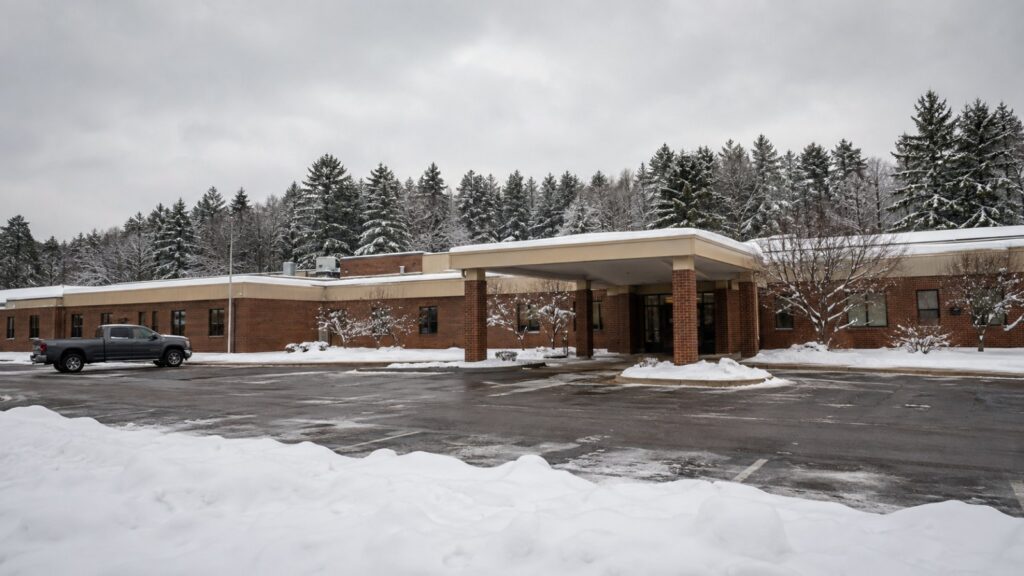
The school lists nine clinical sites:
- UPMC Hamot (Erie), the primary site, with trauma, major cardiovascular, obstetric, neuro, and general surgical cases
- UPMC Hamot Surgery Center (Erie)
- UPMC Hamot Women’s Hospital (Erie)
- Erie VA Medical Center, a new rotation focused on CRNA-driven regional anesthesia and block placement
- UPMC Children’s Hospital of Pittsburgh (housing provided)
- UPMC Williamsport, a Level II trauma center where CRNAs practice at an increased scope (housing provided)
- UPMC Wellsboro, a critical access hospital with a CRNA-only staff (housing provided)
- UPMC Northwest in Seneca (housing provided)
- Punxsutawney Area Hospital (housing provided)
The mix covers big-hospital trauma and cardiac cases, pediatrics at UPMC Children’s, and independent CRNA practice at rural hospitals. That last piece is valuable if you want to work in a CRNA-only setting after graduation.
Is the UPMC Hamot/Gannon CRNA Program Right for You?
UPMC Hamot/Gannon is a great fit if you:
- Want high case volume with no competition from residents
- Have two or more years in a high-acuity ICU
- Are willing to take the GRE
- Want a program with seven years of published outcomes and a 100% cumulative pass rate
- Want to keep working through the first two online semesters
- Want rural and CRNA-only rotations, with housing provided
- Want a lower-cost program in an affordable city
- Live in northwest Pennsylvania, western New York, or northeast Ohio
Consider other options if you:
- Have only one year of ICU experience, since two is the minimum here
- Do not want to take the GRE
- Are an ED or PACU nurse who does not meet the school’s trauma-center or high-acuity criteria
- Want a big-city training environment
- Cannot commit 56 hours a week for 36 months
- Want a program with a single clear published cost, since the school’s site currently shows three
- Want to stay in one place, since outside rotations require travel across the state
In summary, this is a mature, hospital-owned program with the best case volume and the most consistent outcomes in this part of the state. The trade-offs are a two-year experience requirement, a GRE requirement, Erie winters, and a website that needs a cleanup.
Frequently Asked Questions
Is the UPMC Hamot/Gannon CRNA program a good program?
Yes. The 2026 graduating class had a 100% first-time NCE pass rate, and the cumulative pass rate has been 100% every year since 2020. Employment within six months was 100% in 2026, and students average more than 1,000 cases because the hospital-owned program has no residents to compete with.
How much does the UPMC Hamot/Gannon CRNA program cost?
About $119,470 in tuition and mandatory fees at 2026-27 rates. That is $112,590 in tuition (81 credits at $1,390 per credit), about $3,380 in Gannon University fees, and a $3,500 matriculation fee paid to UPMC Hamot. Books and a student health fee are extra.
Does the UPMC Hamot/Gannon CRNA program require the GRE?
Yes. The school requires a competitive GRE score sent to Gannon University using code 2270. There is no waiver. The CCRN, ACLS, PALS, and BLS are also required.
How much ICU experience does UPMC Hamot/Gannon require?
Two years of recent, full-time critical care experience. Preferred units are CTICU, MICU, PICU, NICU, and SICU. Emergency department experience only counts in a large trauma center, and PACU only counts in a high-acuity recovery unit.
Is the UPMC Hamot/Gannon CRNA program online?
Partly. The first two semesters (summer and fall of year one) are online. Starting in January, the remaining 28 months are on site at UPMC Hamot in Erie, Pennsylvania.
When is the UPMC Hamot/Gannon CRNA application deadline?
September 15, 2027 for the DNP class starting Spring 2028. The 2026 cycle is closed.
Next Steps
If you have two years of ICU experience, your CCRN, and a GRE score, the Spring 2028 application closes September 15, 2027. Request transcripts, contact your supervisor and three other references, and submit. Questions can go to schoolofanesthesia@upmc.edu or 814-877-2938.
If you want to compare programs first, start with the full Pennsylvania CRNA program list, including the three Pittsburgh programs two hours south. You can also compare programs in every state on our CRNA Schools by State page.
Contact the program
UPMC Hamot School of Anesthesia/Gannon University
Program Director: Rachel A. Wolfe, DNP, CRNA, CCRN, CPN
Hamot Professional Building, UPMC Hamot, 201 State St., Erie, PA 16550
School of Anesthesia: schoolofanesthesia@upmc.edu · 814-877-2938 · toll free 800-937-9133 ext. 2938
Gannon Graduate Admissions: graduate@gannon.edu · 814-871-7407
Official page: hamotschoolofanesthesia.org · gannon.edu — Nurse Anesthesia DNP
Accreditation: Council on Accreditation (COA) · Salary data: BLS OEWS (May 2025)