
Last updated: August 2026 | Researched and reviewed by Daniel Etheridge, CRNA
The Villanova University CRNA program is a 36-month, entry-level DNP located on the university’s Main Line campus outside Philadelphia. A new class starts each summer.
This program is fully accredited and admitting students and it is currently accepting applications for the Summer 2027 cohort with a September 1, 2026 deadline.
Key Takeaways
- Fully COA-accredited through October 2031
- 93% first-time NCE pass in 2025 (national average: 89.3%), with 15 years of published outcomes
- Tuition is $15,800 per semester. Plan on roughly $143,000 in tuition and fees,
- Applications for Summer 2027 close September 1, 2026 — CCRN required at the time you apply
Villanova Nurse Anesthesia Program Quick Facts:
| Degree | DNP (entry level) |
| Length | 36 months, full-time |
| Location | Villanova, PA — M. Louise Fitzpatrick College of Nursing, Main Line Philadelphia |
| Class starts | Summer (June) |
| Application window | June 1 – September 1, 2026 (Summer 2027 cohort) |
| Class size | 29 (2025 cohort) |
| Tuition + fees | $15,800 per semester + $157 general fee; ≈$143,000 over a continuous three-year calendar (semester count not published — confirm with the program; private, all states pay the same) |
| GRE / CCRN | GRE only if GPA below 3.4 · CCRN REQUIRED at application |
| Outcomes | 93% first-time NCE (2025); 100% employment within 6 months |
| Accreditation | COA-accredited (next review October 2031) |
Villanova is one of 15 CRNA programs in Pennsylvania. It sits about a dozen miles from the Philadelphia cluster: Penn, Drexel, Jefferson, and La Salle.
The Crozer Health Closure and Program Status
For many years this program operated as the Crozer-Chester Medical Center/Villanova University Nurse Anesthesia Program, based in Springfield, PA.
Crozer Health’s owner then went through bankruptcy. Taylor Hospital closed in April 2025, and Crozer-Chester Medical Center closed on May 2, 2025.
By July 2024, the COA already listed the program as the Villanova University DNP Nurse Anesthesia Program, run from Villanova’s own campus. The move under Villanova happened before the hospitals closed.
The program appears on the COA’s July 2026 list of accredited programs with its next review scheduled for October 2031.
It does not appear on the COA’s closure or adverse-action pages. A new cohort started in June 2026, and the current clinical site list of about 35 sites across Pennsylvania, New Jersey, and Delaware does not include any Crozer facilities.
Villanova has taken down its FAQ page about the transition, so we cannot say how the change affected students who were in the program at the time.
Why Villanova Stands Out
Villanova publishes 15 years of outcome data. Most programs post two or three years of numbers, but Villanova’s statistics page goes back to 2011 and includes the national averages for comparison.
The 2025 cohort had a 93% first-time pass rate on the NCE, compared to a national average of 89.3%. The cumulative pass rate is 100% in almost every year on the table.
The clinical network is another strength. Students rotate through roughly 35 sites, including the Hospital of the University of Pennsylvania, CHOP, Lankenau, Penn State Hershey, and Lancaster General.
The case mix covers academic medical centers, community hospitals, and surgery centers in three states.
Villanova limits its clinical ratio to 2 students per instructor. Students complete more than 2,000 clinical hours and at least 700 cases before graduation.
Villanova CRNA Program Admission Requirements
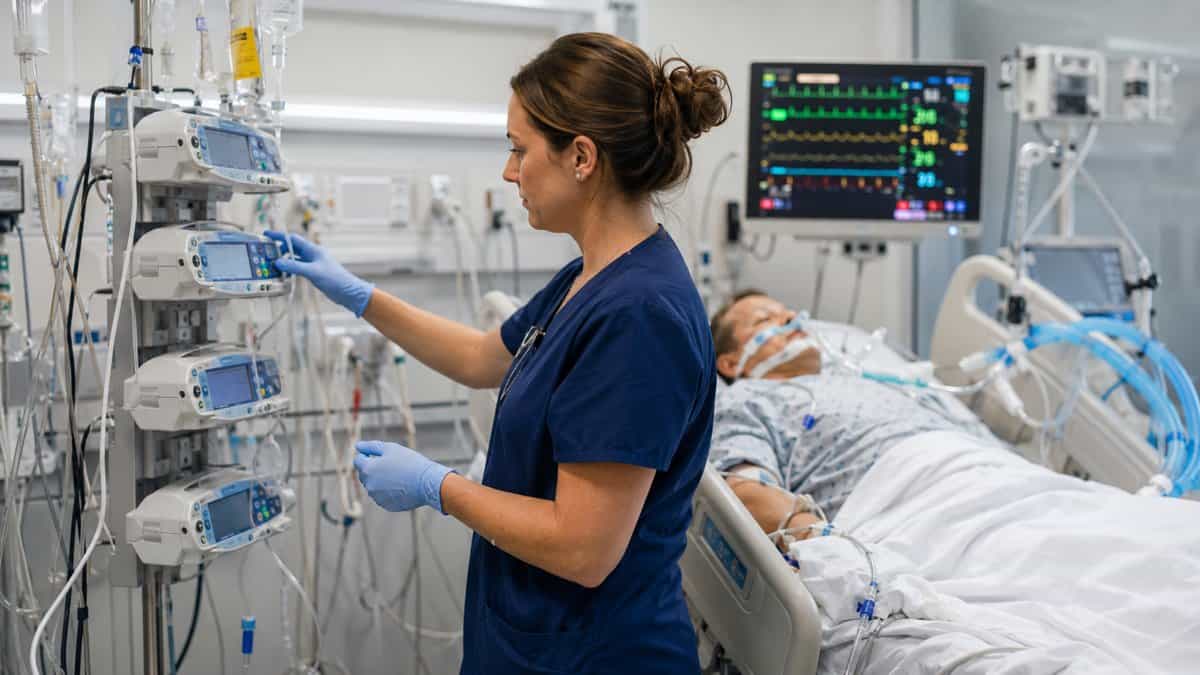
To be considered for the Villanova CRNA program, you will need:
- A BSN from an accredited nursing program
- A current, unencumbered RN license in the United States
- A cumulative GPA of 3.0 or higher
- A 3.0 or higher in every science course (each course is evaluated individually, not averaged)
- CCRN certification at the time of application (Pediatric CCRN or CFRN are accepted as equivalents)
- At least one year of full-time critical care experience after orientation, earned in the US within the last five years (two years preferred)
- Three letters of recommendation, including one academic reference and one from a direct clinical supervisor
- Current BLS and ACLS certification
The CCRN must be completed before you apply, not pending. Pediatric CCRN and CFRN are accepted, which is more flexible than most programs.
Two years of ICU experience is preferred. With 29 seats per cohort, applicants with two years will have an advantage.
Villanova does not accept NICU experience or exclusive emergency room experience. Your critical care experience needs to be in an adult ICU.
The GRE is only required if your cumulative GPA is below 3.4. If you do need to take it, the program prefers scores at the 50th percentile or higher.
Selected applicants are invited to an interview.
Villanova CRNA Program Tuition and Cost
Tuition is $15,800 per semester for cohorts starting in June 2026 and later, plus a $157 general fee each semester.
Villanova does not publish how many semesters are billed over the 36 months, so there is no official program total.
A three-year calendar that runs year-round works out to roughly $143,000 in tuition and fees. Use that as your planning number, but get the exact semester count from the program in writing before you commit.
Villanova is a private university, so every student pays the same rate regardless of state. The cost table on our Pennsylvania CRNA schools guide shows how each program in the state compares.
You will also need to budget for housing on the Main Line, which is one of Philadelphia’s more expensive suburbs, plus books, board review courses, the NCE fee, and licensing.
The national average CRNA salary is $248,320 (BLS, May 2025), so the investment pays off over time.
Pass Rates, Attrition, and Employment
The 2025 numbers are strong. The first-time NCE pass rate was 93% against a national average of 89.3%, employment was 100% within six months, and attrition was zero.
The full table shows some variation from year to year. The 2024 cohort had a 79% first-time pass rate against a national average of 83.4%, and 2023 was right at the national average.
Two things put that in perspective. The cumulative pass rate reaches 100% nearly every year, which means graduates who miss the first attempt pass on a retake. And a program that publishes a 79% year next to a 93% year is a program that will keep publishing its numbers.
Ask admissions what changed after 2024. The 2025 results suggest the program made adjustments.
Student Experience
This is a full-time, on-campus program, so you should plan on not working. The 36 months run continuously from the June start. Classes are held in Driscoll Hall, and simulation training comes before clinical rotations begin.
The 2:1 clinical ratio means you will not be the third student waiting behind one preceptor for airway experience.
With 29 students per cohort and a program that has been graduating CRNAs since before 2011, Villanova has a large alumni network in Philadelphia-area operating rooms.
Living on the Main Line While Attending the Villanova CRNA Program

The campus is located at 800 East Lancaster Avenue in Villanova, on Philadelphia’s Main Line. SEPTA’s Paoli/Thorndale regional rail line stops near campus and runs directly into Center City.
The Main Line is a safe, established area, but rent in Bryn Mawr, Wayne, and Radnor is expensive. Many students choose a longer commute and cheaper apartments toward Norristown or West Philadelphia. Housing can change your total cost of attendance by thousands of dollars over three years, so budget carefully.
Clinical sites are spread across three states, so you will need a reliable car.
Application Dates and Deadlines
If you are targeting Summer 2027, the application portal closes September 1, 2026. If your CCRN is current and you have at least one year of ICU experience, request your transcripts, contact your recommenders (one academic and one supervisor), and double-check that every science course meets the 3.0 requirement. Ensure that you submit your application before the deadline.
If you are planning for 2028:
18 months out: Get into an adult ICU, not NICU and not the emergency room. Aim for the two years the program prefers.
12 months out: Pass the CCRN. It must be completed when you apply. If your GPA is under 3.4, schedule the GRE with enough time to retake it.
6 months out: Line up your academic letter of recommendation, since that is the one most applicants have trouble getting. Write your essay around a specific patient experience. Submit in June rather than waiting until the deadline.
The Interview
Villanova interviews selected candidates and reviews the program and curriculum during the interview. Expect detailed clinical questions about your ICU patients, including hemodynamics, drips, and the decisions you made, along with the standard questions about why you want to be a CRNA and why Villanova.
Come prepared with a question about the Crozer transition and a question about what changed after the 2024 pass rates. Both show you did your homework, and both answers will help you decide.
Clinical Rotations and Training Sites
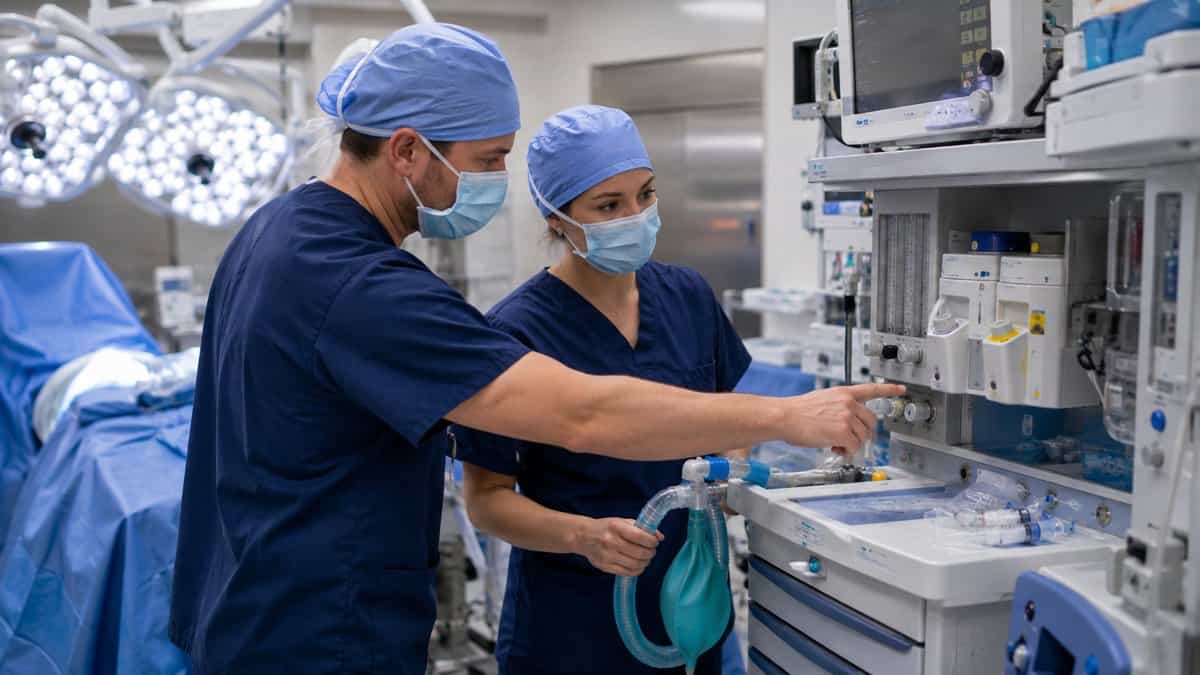
Villanova has roughly 35 affiliated clinical sites across Pennsylvania, New Jersey, and Delaware, including:
- Hospital of the University of Pennsylvania (HUP) and Penn Presbyterian
- Children’s Hospital of Philadelphia (CHOP)
- Lankenau, Bryn Mawr, and Abington
- Jefferson Northeast and St. Christopher’s
- Penn State Hershey and Lancaster General
- Reading, WellSpan York, and UPMC Harrisburg
- Inspira and Virtua-Lourdes in New Jersey
- Nemours, Bayhealth, Beebe, and St. Francis in Delaware
- VA medical centers and outpatient surgery centers
This range of sites gives students pediatric cases at dedicated children’s hospitals, academic medical center cases, and community hospital experience. Students complete a minimum of 2,000 clinical hours and 700 cases.
Is the Villanova CRNA Program Right for You?
Villanova is a great fit if you:
- Want a program with 15 years of published outcomes compared against national averages
- Want a strong clinical network (HUP, CHOP, Hershey) with a 2:1 clinical ratio
- Have your CCRN (or Pediatric CCRN/CFRN) and one to two years of adult ICU experience
- Have a GPA of 3.4 or higher and want to skip the GRE
- Want to train in the Philadelphia region
- Live on or near the Main Line, or want SEPTA rail access to Center City
- Want a program that kept its accreditation through a partner hospital’s closure
Consider other options if you:
- Are a NICU or exclusive ER nurse, since Villanova does not count that experience
- Are choosing mainly on price (see the Pennsylvania cost table to compare the state’s programs)
- Want a published program total before you commit, since the semester count is not posted
- Are concerned about the 2024 cohort’s 79% first-time pass rate and want to see more recent data first
- Need to keep working, since this is a full-time, on-campus program
- Cannot get an academic reference letter from your BSN program
- Want to limit driving, since the 35-site, three-state network requires travel
In summary, Villanova’s accreditation is secure through 2031, its outcomes are published and mostly strong, and its clinical network is one of the best in the region. The two open questions are the exact program cost and the 2024 pass rate, and both can be answered with one email to admissions before September 1.
Frequently Asked Questions
Is the Villanova CRNA program still open after Crozer closed?
Yes. The program moved fully under Villanova before Crozer Health’s hospitals closed in May 2025. It is COA accredited through October 2031, a new cohort started in June 2026, and applications are open through September 1, 2026.
Is Villanova a good CRNA program?
Yes, based on published outcomes. The 2025 cohort had a 93% first-time NCE pass rate (national average 89.3%) and 100% employment within six months, and the program has published 15 years of results. The 2024 cohort had a 79% first-time pass rate, and the 2025 class improved on that.
How much does the Villanova CRNA program cost?
Tuition is $15,800 per semester plus a $157 general fee for cohorts starting June 2026 and later. Villanova does not publish a program total. A continuous three-year calendar comes to roughly $143,000 in tuition and fees, so confirm the exact semester count with the program.
Does Villanova CRNA require the GRE or CCRN?
The CCRN is required at the time of application, and Pediatric CCRN or CFRN are accepted. The GRE is only required if your cumulative GPA is below 3.4, and the program prefers scores at the 50th percentile or higher.
What ICU experience does Villanova accept?
You need at least one year of full-time critical care experience in the US, completed after orientation and within the last five years. Two years is preferred. NICU experience and exclusive ER experience are not accepted, so adult ICU experience is the safest route.
Next Steps
If you are applying for Summer 2027, the portal closes September 1, 2026. Verify your CCRN, contact your three recommenders, pull transcripts, and submit early. Questions can go to nursing.recruitment@villanova.edu.
If you want to compare programs first, start with the full Pennsylvania CRNA program list, including Penn and Drexel, which are both nearby. You can also compare programs in every state on our CRNA Schools by State page.
Contact the program
Villanova University DNP Nurse Anesthesia Program
M. Louise Fitzpatrick College of Nursing
Program Director: Patricia Kostelnak, DNAP, CRNA, APRN (patricia.kostelnak@villanova.edu)
Driscoll Hall Office 319, 800 East Lancaster Ave, Villanova, PA 19085 · 610-519-6310
Admissions: nursing.recruitment@villanova.edu
Official page: villanova.edu — Nurse Anesthesia DNP Track
Accreditation: Council on Accreditation (COA) · Salary data: BLS OEWS (May 2025)